 English
 日本
日本 한국인
한국인 Français
 Deutsch
 español
 Italiano
 Portugal
 Việt Nam
 türkiye
 عرب
عرب Русский
 čeština
 แบบไทย
 Eesti
Eesti Gaeilge
 Hmoob
Hmoob íslenskur
 Cymraeg
 български
 اردو
اردو Polski
 Hrvatski
 українська
 bosanski
 فارسی
فارسی lietuvių
 latviski
 עִברִית
 Română
 Ελληνικά
 dansk
dansk Magyar
 norsk
norsk Suomalainen
 Nederlands
 svenska
 slovenský
 Slovenščina
 हिंदी
हिंदी Indonesia
 Melayu
 Malti
Malti Kreyòl ayisyen
 català
 বাংলা
বাংলা Српски
 o'zbek

In mining, chemical, environmental protection, metallurgy, and other industrial sectors, solid-liquid separation is a critical step in all production processes. Separation efficiency and throughput directly impact a company's production efficiency, operational costs, and environmental compliance. Traditional equipment often faces challenges such as low efficiency, limited capacity, high labor costs, and unstable filter cake moisture content when handling large volumes of complex materials. The mobile vacuum belt filter, however, leverages its continuous, automated, and highly efficient technological advantages to become the core equipment for enhancing solid-liquid separation efficiency and production capacity. Its performance is particularly outstanding in large-scale industrial production, providing robust support for enterprises to reduce costs and increase efficiency.
I. Core Working Principle of Vacuum Belt Filters
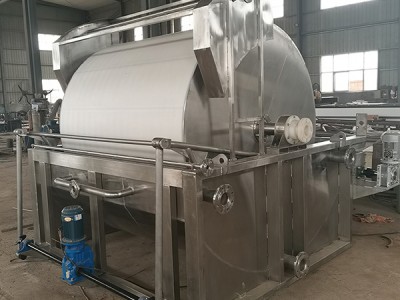
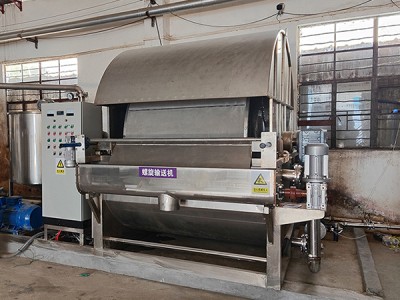
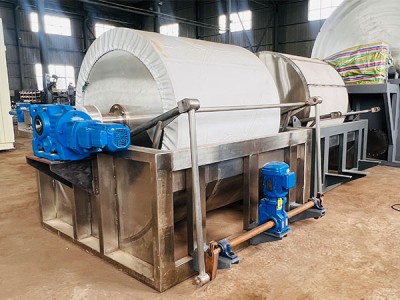
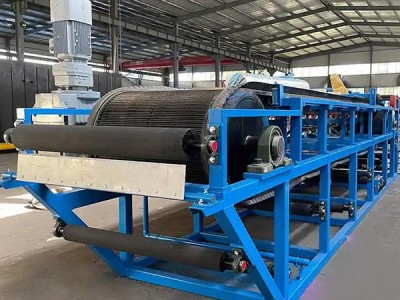
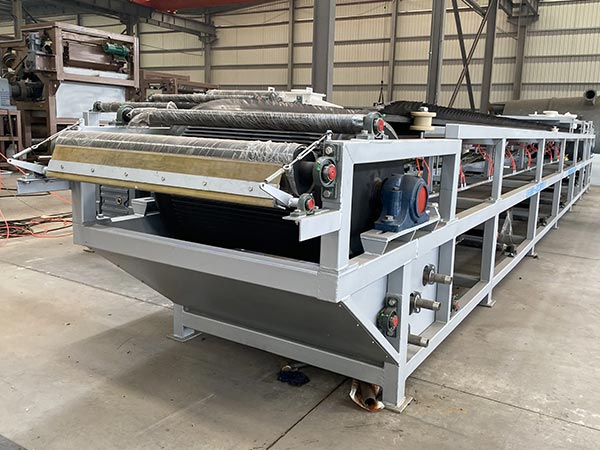
The exceptional separation capability of vacuum belt filters stems from their scientifically designed operating principle. Utilizing vacuum negative pressure as the driving force, this equipment employs continuously running filter belts to achieve the seamless filtration, washing, dewatering, and discharge of solid-liquid mixtures. The entire process flows continuously without intermittent waiting, fundamentally overcoming the production capacity limitations inherent in traditional equipment.
The specific workflow is divided into four core stages:
· First is the feeding and filtration stage, where material is evenly distributed across the running filter belt via a uniform distribution device. Under vacuum suction, the liquid phase rapidly permeates the filter cloth into the vacuum chamber to form filtrate, while the solid phase is retained on the filter belt surface to form an initial filter cake.
· Next is the cake washing stage. For materials requiring purification, washing liquid is evenly sprayed onto the filter cake. Under vacuum force, the washing liquid thoroughly permeates the cake, removing soluble impurities to achieve efficient separation of solids from contaminants without compromising separation efficiency.
· Next comes the deep dewatering stage. The filter cake moves with the filter belt into the high-vacuum zone. Enhanced vacuum pressure further removes interstitial and bound water from the cake, significantly reducing its moisture content and improving separation efficiency.
· Finally, the filter cake is discharged and the filter cloth is cleaned. The dewatered cake is automatically stripped by the discharge device to complete unloading. Subsequently, the filter cloth enters the cleaning system, where residual material is removed via high-pressure water rinsing. This ensures the cloth's permeability, preparing it for the next filtration cycle.
This continuous operation mode eliminates the intermittent cycle of “filtering - unloading - cleaning” found in traditional equipment. With no idle waiting time, operational efficiency is maximized, laying the foundation for increased production capacity. Simultaneously, precise control of vacuum negative pressure, uniform belt speed, and seamless coordination across all stages ensure stable and highly efficient solid-liquid separation. This enables the equipment to consistently achieve optimal separation results when processing materials with varying characteristics.
II. Key Advantages of Vacuum Belt Filters in Enhancing Solid-Liquid Separation Efficiency
√ Continuous Operation
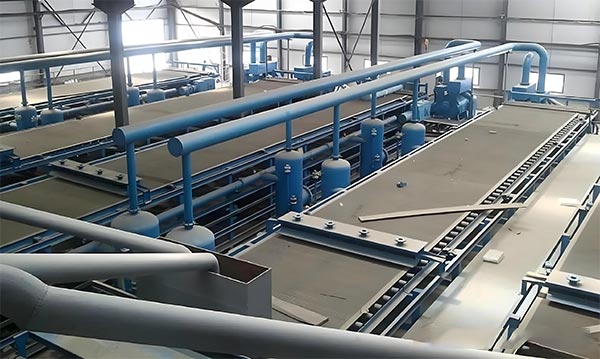
Traditional equipment requires shutdowns for unloading and filter cloth cleaning, resulting in limited effective operating time. The mobile vacuum belt filter employs a continuous belt design enabling 24/7 uninterrupted operation, with effective runtime exceeding 95%. Under equivalent specifications, its daily processing capacity reaches 3-5 times that of traditional plate-and-frame filter presses. Eliminating material buildup and production interruptions, it completely resolves capacity bottlenecks.
√ Efficient Material Distribution & Filter Cloth Design
Features a specialized uniform distribution device ensuring even material spread and consistent filter cake thickness, preventing localized overload and vacuum wastage. Custom filter cloths match material properties, utilizing highly permeable, corrosion-resistant materials. The continuous, seamless design combined with high-pressure cleaning prevents clogging and maintains efficiency during long-term operation.
√ Enhanced Separation Performance
Equipped with a multi-stage vacuum regulation system, it flexibly adjusts negative pressure based on material properties. This prevents clogging during initial filtration, reduces moisture content during dewatering, and saves energy for easily filterable materials. The vacuum chamber's sealed design ensures stable negative pressure, achieving separation efficiency exceeding 95%. Filter cake moisture content is controlled between 10%-30%, significantly outperforming traditional equipment to meet recovery and environmental requirements.
√ Automated Control
Features a PLC-based intelligent control system that executes preset parameters automatically. It monitors critical indicators in real time, issues alerts for anomalies, and adjusts settings without frequent manual intervention. Supports remote monitoring and data logging, reducing labor costs by over 60% while improving operational stability by 80%. Separation efficiency fluctuations are controlled within 5%.
III. Core Pathways for Enhancing Vacuum Belt Filter Capacity
Expanding Processing Scale
Customizable filter belt width and throughput to meet all production scenarios. For high-capacity demands, select equipment with wider filter belts and higher belt speeds, or operate multiple units in parallel to double output. Its processing capacity per unit area outperforms traditional equipment, eliminating the need for factory expansion and reducing infrastructure costs. It seamlessly integrates with upstream and downstream processes to form automated production lines, preventing material accumulation during transfer and enhancing workflow efficiency.
Improving Effective Operating Rate
Structural optimization minimizes downtime for maintenance. High-pressure water automatically cleans filter cloths, extending their lifespan by 2-3 times and reducing replacement-related stoppages. Key components use wear-resistant and corrosion-resistant materials, while modular design facilitates quick part replacement, cutting single maintenance sessions to under 30 minutes. Built-in fault self-diagnosis rapidly pinpoints issues for repair. Annual effective operating time exceeds 8,000 hours—far surpassing traditional equipment—directly translating into increased production capacity.
Adaptability to Complex Materials
Efficiently processes high-viscosity, fine-particle, and highly corrosive materials. Difficult-to-filter substances achieve effective separation by adjusting vacuum pressure, filter cloth pore size, and belt speed. Corrosive materials utilize corrosion-resistant materials like stainless steel for stable operation. Purification-required materials can flexibly incorporate additional washing stages. A single unit adapts to multiple materials, boosting equipment utilization, expanding production scope, and indirectly enhancing overall capacity.
Against the backdrop of increasing demands for solid-liquid separation efficiency and production capacity in industrial manufacturing, mobile vacuum belt filter presses have emerged as the ideal solution for enhancing separation efficiency and output. This is due to their core advantages: continuous operation, precise vacuum control, automated operation, and strong material adaptability.
Mobile vacuum belt filter presses not only overcome the limitations of traditional equipment in operational modes, separation principles, and structural design, but also deliver dual improvements in efficiency and output for enterprises through lower operating costs, enhanced equipment utilization, and expanded application scenarios. This empowers businesses to achieve cost reduction, efficiency gains, and green production.