 English
 日本
日本 한국인
한국인 Français
 Deutsch
 español
 Italiano
 Portugal
 Việt Nam
 türkiye
 عرب
عرب Русский
 čeština
 แบบไทย
 Eesti
Eesti Gaeilge
 Hmoob
Hmoob íslenskur
 Cymraeg
 български
 اردو
اردو Polski
 Hrvatski
 українська
 bosanski
 فارسی
فارسی lietuvių
 latviski
 עִברִית
 Română
 Ελληνικά
 dansk
dansk Magyar
 norsk
norsk Suomalainen
 Nederlands
 svenska
 slovenský
 Slovenščina
 हिंदी
हिंदी Indonesia
 Melayu
 Malti
Malti Kreyòl ayisyen
 català
 বাংলা
বাংলা Српски
 o'zbek

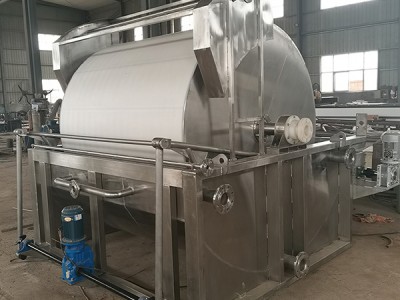
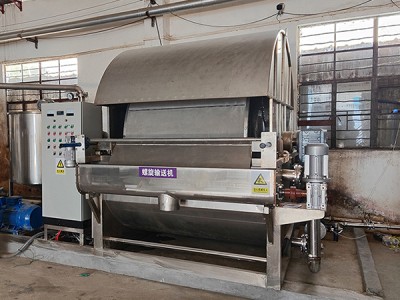
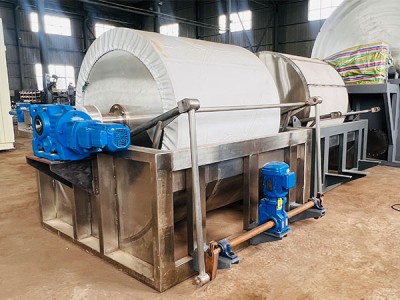
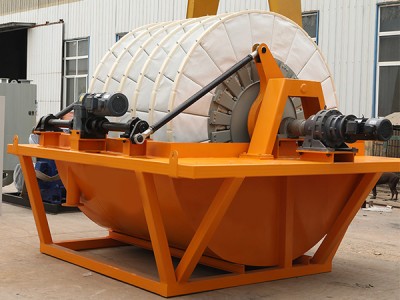
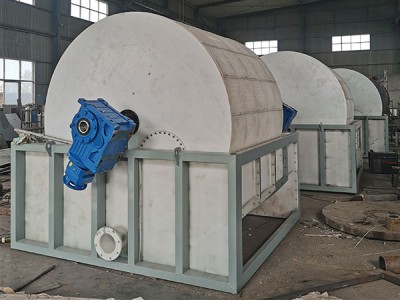
The Rotating disc filters is a highly efficient solid-liquid separation device used in industrial processes, capable of rapidly separating minute particles suspended in liquids. It finds extensive application in chemical, pharmaceutical, food, and other industries. This article will provide a comprehensive overview of Rotating disc filters by examining their advantages, structure, application fields, and routine maintenance.
Working Principle of Rotary Disc Filter
The disc vacuum filter achieves solid-liquid separation through the combined action of vacuum adsorption and mechanical equipment. Its main components include the filter cake disc, vacuum system, filter cake washing system, filtrate collection system, and control system.

The working process of the rotary disc filter is as follows:
> The suspension to be processed is fed through the inlet pipe onto the rotating disc and evenly distributed across the filter cloth.
> When the disc begins rotating, the vacuum system activates, creating a negative pressure environment via the vacuum pump.
> Under this vacuum, the liquid phase permeates through the filter cloth to form a filter cake beneath the disc, while solid particles are retained on the cloth.
> When the filter cake reaches a certain thickness, the cake washing system is triggered to clean it, ensuring stable and continuous filtration performance.
> The filtrate collection system gathers the liquid beneath the disc and discharges it through pipelines.
> Through this operating principle, the disc vacuum filter efficiently achieves solid-liquid separation and enables continuous, long-term operation.
Structural Features
The rotary vacuum filter possesses the following structural features:
> Rotary Disc Structure: The rotary disc comprises a filter cloth, filter cake partition, and support system. The filter cloth delivers excellent filtration performance and can be replaced according to varying filtration requirements.
> Vacuum System: The vacuum pump generates a negative pressure environment, ensuring proper filter cake formation and filtrate flow.
> Filter Cake Cleaning System: Comprised of a spray device and a recovery device, the spray device cleans the filter cake while the recovery device collects the wash liquid.
> Filtrate Collection System: Filtrate is discharged through pipelines and collectors for subsequent processing and utilization.
> Control System: Enables automated control and monitoring of the entire process, enhancing operational stability and efficiency.
These structural features allow the rotary disc vacuum filter to adapt to diverse filtration requirements while delivering high filtration efficiency and reliability.
Application Areas
Rotary vacuum filters are widely used across numerous industrial sectors, primarily including the following
Chemical Industry
Employed for solid-liquid separation, solution concentration, and dehydration. Capable of processing chemical wastewater, granular materials, and organic substances.
Pharmaceutical Sector
Utilized for drug separation and concentration, particularly suited for producing high-value pharmaceuticals such as traditional Chinese medicine extracts, antibiotics, and vitamins.
Food Industry
Employed in clarification and dehydration processes for juices, alcoholic beverages, edible oils, and food additives, ensuring product quality and hygiene safety.
Environmental Applications
Treats suspended particles and sediments in sewage, wastewater, and industrial effluents. Assists in water purification to meet discharge standards.
The application of disc vacuum filters in these sectors not only meets process requirements but also enhances product quality and output.
After understanding the working principle and structure of the vacuum disc filter, it is also essential to grasp its daily maintenance and precautions to ensure optimal operation and efficient performance.
Daily Maintenance Tasks for Rotating disc filter:
1. Operators must remain at their posts and continuously monitor signals on the control panel and simulation screen. Take immediate action upon detecting any abnormalities.
2. Regularly inspect the tightness of all components; prevent any loosening.
3. Regularly inspect vacuum lines for air leaks and verify vacuum gauge readings are normal.
4. Periodically check motor and bearing temperatures for normalcy.
5. Regularly inspect whether filter discs rotate smoothly, filter cloths remain intact, and discharge plates function properly.
6. Observe the slurry level in the tank to assess agitation effectiveness. Periodically inspect packing gland seals to ensure water seal supply is normal. Tighten packing glands immediately if severe leakage occurs.
7. Regularly check the slurry level in the tank; normal operation requires high liquid level.
8. Observe whether feeding and discharging are normal, and check for abnormalities in filter cake thickness and moisture content.
9. The four springs on the distribution plate must be uniformly compressed, and the openings of the two air inlet adjustment valves should be appropriately set.
10. Regularly inspect lubrication at all lubrication points and promptly replenish grease in the grease reservoir. Manual lubrication is required for specific areas.
As a highly efficient solid-liquid separation device, the Rotating disc filter plays a vital role in industrial processes. Its unique operating principle and structural features enable widespread application across diverse fields. For enterprises requiring efficient solid-liquid separation, selecting an appropriate disc vacuum filter is a critical step toward enhancing production efficiency and optimizing product quality.