 English
 日本
 한국인
 Français
 Deutsch
 español
 Italiano
 Portugal
 Việt Nam
 türkiye
 عرب
 Русский
 čeština
 แบบไทย
 Eesti
 Gaeilge
 Hmoob
 íslenskur
 Cymraeg
 български
 اردو
 Polski
 Hrvatski
 українська
 bosanski
 فارسی
 lietuvių
 latviski
 עִברִית
 Română
 Ελληνικά
 dansk
 Magyar
 norsk
 Suomalainen
 Nederlands
 svenska
 slovenský
 Slovenščina
 हिंदी
 Indonesia
 Melayu
 Malti
 Kreyòl ayisyen
 català
 বাংলা
 Српски
 o'zbek


During equipment selection, we often receive inquiries that provide only the name of a material and ask, "Can it be processed using a Rotating drum filters?" This question cannot be answered directly. Even when two materials are both described as "mineral slurry," their filtration behavior can be very different. Some form a filter cake within seconds and produce clear filtrate, while others leave only a layer of thin sludge on the filter cloth even after an entire drum rotation. The difference lies not in the equipment itself, but in whether the material can form a permeable filter cake that can also be discharged effectively. Establishing this principle first is essential before evaluating suitable materials across different industries.
1. Evaluation Criteria: What Drives the Filtration Process?
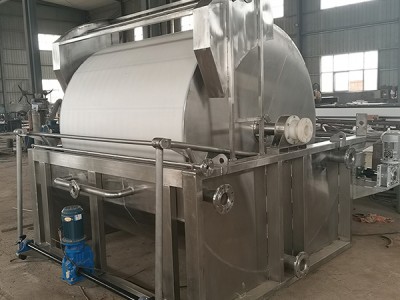
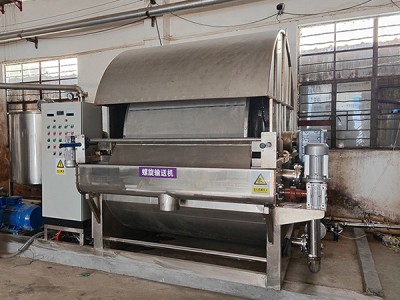
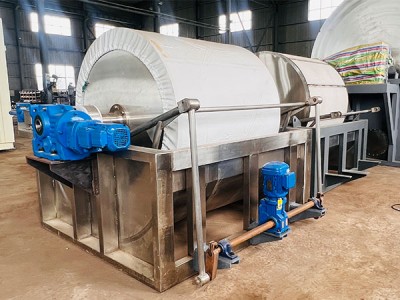
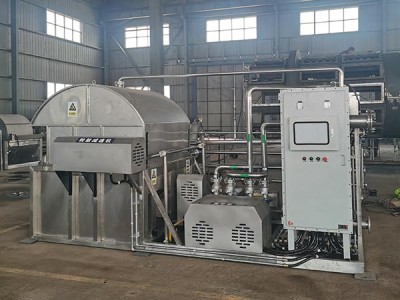
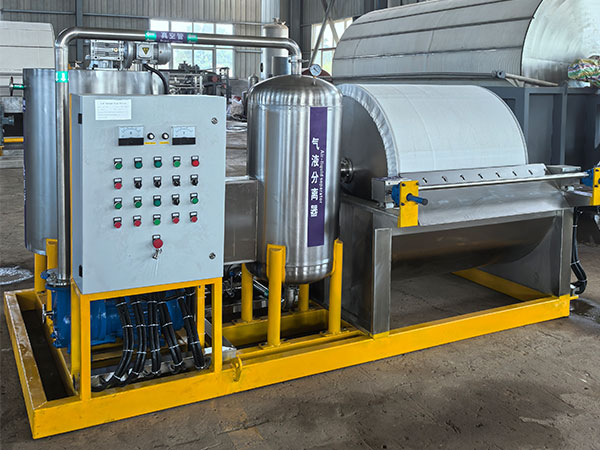
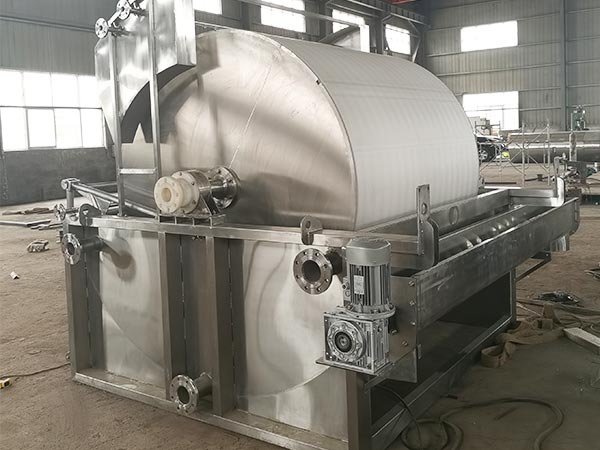
The operating principle of a Rotating drum filter is relatively straightforward. Part of the drum is immersed in a slurry tank, while a vacuum is maintained inside the drum. Liquid is drawn through the filter cloth and into the filtrate pipes, while solids are retained on the cloth surface to form a filter cake. As the drum continues to rotate, the cake passes sequentially through the cake formation zone, washing zone, drying zone, and finally the discharge zone, where it is removed by a scraper. Before the filter cloth returns to the slurry, it passes through a short non-vacuum zone to maintain vacuum separation between the different operating zones.
The key factor is the driving force: filtration relies on the pressure difference between atmospheric pressure and the vacuum inside the drum, with a theoretical maximum differential pressure of approximately 1 bar. A filter press can increase this pressure several times through pump pressure, but a rotary drum filter cannot. Therefore, vacuum filtration has a fundamental requirement for the material: the filter cake must be permeable enough to allow liquid to pass through it. With such a limited pressure differential, a dense filter cake will restrict liquid flow. Even a more powerful vacuum pump will only compress the cake further rather than significantly improve filtration.
The key factor is the driving force: filtration relies on the pressure difference between atmospheric pressure and the vacuum inside the drum, with a theoretical maximum differential pressure of approximately 1 bar. A filter press can increase this pressure several times through pump pressure, but a rotary drum filter cannot. Therefore, vacuum filtration has a fundamental requirement for the material: the filter cake must be permeable enough to allow liquid to pass through it. With such a limited pressure differential, a dense filter cake will restrict liquid flow. Even a more powerful vacuum pump will only compress the cake further rather than significantly improve filtration.
2. Classifying Materials by Filtration Difficulty: Three Main Categories
Rather than classifying materials by industry one by one, it is more practical to group them according to their filtration characteristics. This approach more closely reflects the actual considerations involved in equipment selection.
1) Materials That Form Porous Filter Cakes Easily: The Ideal Applications for Rotating Drum Filter
These materials typically have relatively coarse particles, good filter cake permeability, and clean cake discharge, making them among the easiest materials to process. Common examples include metallic and non-metallic mineral concentrates, gypsum slurry, calcium carbonate, phosphates, and food fermentation products such as starch and yeast.
For these materials, the main selection consideration is not whether they can be filtered, but how to achieve cost-effective operation while meeting process requirements. Several parameters need to be evaluated together.
Feed solids concentration directly affects the rate of filter cake formation. A typical starting range is 15–30%. If the slurry is too dilute, cake formation will be slow, limiting throughput per unit of filter area. If it is too concentrated, slurry flowability may deteriorate, increasing the agitation load in the tank. This range is for reference only, and the actual concentration should be determined based on the specific material.
A thicker filter cake is not necessarily better. Porous cakes formed by coarse particles can exceed 100 mm in thickness. However, as the cake becomes thicker, the resistance to airflow during dewatering also increases. Cake thickness and drum speed are closely interrelated. A higher drum speed means a shorter immersion time, resulting in a thinner cake and higher throughput, but less time for dewatering. A lower drum speed has the opposite effect. These two parameters must be adjusted together; evaluating either one in isolation is not meaningful.
If the downstream process involves a rotary dryer or direct transportation of the filter cake, the final cake moisture content becomes a mandatory performance requirement. The recommended approach is to establish the target moisture content first, then determine the required residence time in the dewatering zone and the operating vacuum level accordingly. The filtration area should also be calculated based on the required dry solids throughput. Two factors must be clearly distinguished: filtration area is primarily determined by processing capacity, while cake moisture content mainly affects drum speed and dewatering conditions. These factors should not be treated as interchangeable.
2) Fine Particles, Highly Corrosive Slurries, and Strict Hygiene Requirements: Configuration Is Key
Fine Particles and Pigments
Materials such as titanium dioxide, kaolin, magnesium hydroxide, and certain ultrafine mineral powders have fine particles, poor filter cake permeability, and, in some cases, sticky characteristics. Whether these materials can be filtered effectively often depends less on the vacuum level and more on whether the filter cloth pore size is properly matched to the cake discharge method. Precoat filtration, roller discharge, or string discharge is often required to ensure consistent filter cake removal.
Highly Corrosive Slurries
Certain sulfate slurries, acid leach slurries, and slurries containing hydrochloric acid or sulfuric acid may have pH values below 1. In such environments, rubber linings on conventional rubber-lined carbon steel structures can become brittle and crack, exposing structural components to corrosion. This can lead to unplanned shutdowns and significant maintenance costs.
For these operating conditions, plastic materials are generally used for wetted surfaces, combined with glass fiber-reinforced materials to provide structural strength. When dealing with such materials, my recommendation is to determine material selection before calculating the filtration area. There is little value in calculating the area accurately before confirming chemical compatibility with the process medium.
Food Processing, Pharmaceuticals, and Fermentation
Food-processing materials such as starch, yeast, microcrystalline cellulose, pectin, and concentrated fruit juice often contain fine particles, and some may also be compressible. Therefore, configurations designed for mineral processing cannot simply be applied to these materials.
Sanitary design is a fundamental requirement. Wetted materials, surface finishes, filter cloth cleaning methods, CIP coverage, product residues, and cross-contamination risks must all be evaluated individually.
In pharmaceutical fermentation, a typical application is the separation of antibiotic mycelium. The mycelium forms a mat-like filter cake that is difficult to remove completely using a conventional scraper. String discharge is therefore commonly used in the industry.
Other suitable materials include calcium carbonate, magnesium carbonate, vitamins, plant extracts, and certain pharmaceutical intermediates. These products have stringent requirements for residue control and sterilization. Whether filtrate and wash liquid can be collected separately, and whether all dead zones can be cleaned effectively, often deserve more attention than the filtration area itself.
3) Municipal and Industrial Sludge: Suitable for Use, but with Limited Dewatering Performance
One point needs to be clarified: desulfurization gypsum is actually a traditional strong application for vacuum filtration and can achieve relatively high solids content. It should not be grouped together with sludge that is difficult to dewater. The materials that require closer attention are municipal sludge and certain types of industrial sludge.
Based on typical industry performance, when processing sludge under comparable conditions, vacuum filtration generally achieves a solids content of only 12–22%, compared with approximately 20–32% for belt filter presses, 25–35% for centrifuges, and 35–45% for chamber filter presses. Vacuum filters were once the mainstream choice for sludge dewatering, but in many applications, they have now been replaced by belt filter presses and centrifuges. The main reason is reflected in these figures.
This does not mean vacuum filtration is unsuitable. Rather, it is important to understand its performance limitations. Sludge characteristics vary significantly depending on their source, including oil content, organic matter content, flocculation properties, and compressibility. Highly viscous sludge or sludge that cannot easily form a permeable filter cake often requires pretreatment or chemical conditioning through flocculation.
If a project requires a final solids content significantly higher than 20%, other dewatering technologies should be considered from the outset rather than treating vacuum filtration as the only option.
3. Cake Discharge Methods: The Key to Ensuring Reliable Filter Cake Removal
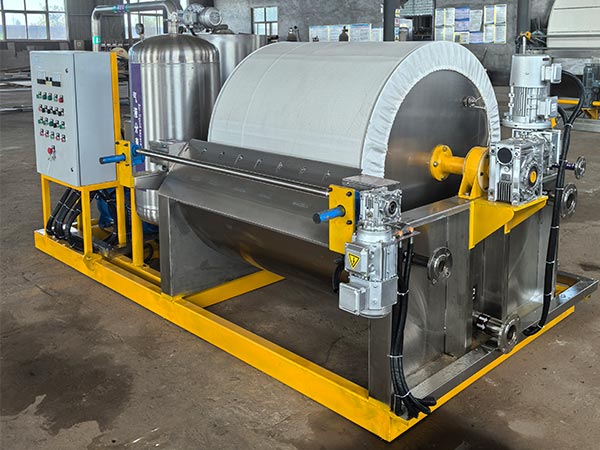
In many cases, the conclusion that a material is unsuitable for processing is actually the result of selecting the wrong cake discharge method, rather than a limitation of the equipment itself. The five common discharge methods each serve a specific purpose.
| Discharge Method | Suitable for what type of filter cake? | Reason |
| Scraper with back-blow | Easy to discharge; filter cloth requires only periodic cleaning | Low-pressure back-blowing lifts the filter cloth, allowing a scraper to remove the filter cake; this design is the simplest. |
| Belt discharge | Filter cloth is prone to clogging by fine particles | The filter cloth continuously passes through a washing tank, eliminating the need to stop the machine for cleaning. |
| Roller discharge | Thin and sticky filter cakes | Gentle back-blowing causes the cake to adhere to the roller, from which it is then scraped off; this avoids mechanical wear and extends the service life of the filter cloth. |
| Precoat discharge | Slimy, oily solids that tend to clog the filter cloth | A pre-coat layer—such as diatomaceous earth, perlite, cellulose, or carbon—is applied first; the scraper then removes both the filter cake and a thin portion of this pre-coat layer. |
Fine-particle materials present another practical challenge: a filter cake that is too thin results in insufficient throughput, while one that is too thick causes a sharp increase in filtration resistance. Even on the same drum filter, mismatching the filter cloth pore size and cake discharge method can lead to performance differences of several times. During equipment selection, evaluating the cake discharge method as a separate consideration is far more useful than repeatedly focusing on vacuum pump power.
4. Challenging Operating Conditions: Avoid Forcing Compatibility and Prioritize Process Adjustments
Highly compressible filter cakes. With a pressure differential of only approximately 1 bar, increasing the vacuum level often only compresses the cake further.
Requirements for extremely low final moisture content. Vacuum filtration is usually followed by pressure filtration or centrifugation, and then thermal drying.
Highly adhesive materials with strict restrictions on filter aids and stringent filtrate clarity requirements. This presents a dilemma: precoat filtration may solve the problem, but it cannot be used when precoat materials are prohibited.
Oily and emulsified sludge. Most applications require pretreatment or conditioning first, followed by a total cost comparison with centrifuges and chamber filter presses.
Hot filtrate temperatures approaching the boiling point. Under a low pressure differential, hot filtrate may undergo flash evaporation, requiring a sealed system or cooling design.
Small batches, multiple product types, and high-value materials. Continuous filters offer advantages in stable, long-term operation. However, when materials need to be changed frequently, batch filtration equipment may provide greater flexibility.
5.Matching Key Considerations and Configurations to Different Material Types
| Material Type | Typical Materials | Key Considerations | Common Configurations |
| Mineral Slurries | Concentrates, coal slime, gypsum, phosphates, red mud | Fineness, solids content, filter cake moisture content | Scraper or belt discharge; wear-resistant filter cloth |
| Inorganic Chemicals | Sulfates, carbonates, aluminum hydroxide | Corrosivity and wetted materials | Stainless steel, PP, or FRP (material selected based on pH level) |
| Highly Corrosive Materials | Titanium dioxide, hydrochloric acid slurries, acid-leached slurries, rare earths | Low pH, lining lifespan | Plastic wetted surfaces with fiberglass-reinforced structural components |
| Fine Raw Material Powders | Titanium white (pigment), kaolin, magnesium hydroxide | Low cake permeability, tendency to clog | Pre-coat, string, or roller discharge |
| Food-Grade Starch | Starch, yeast, microcrystalline cellulose, pectin, concentrated fruit juice | Hygiene, CIP (Clean-in-Place), product loss | Sanitary-grade construction with washable enclosures |
| Pharmaceutical Fermentation | Antibiotic mycelia, vitamins, plant extracts | Felt-like filter cake, sterilization, residues | String discharge; separate collection of filtrate and wash liquor |
| Environmental Sludge | Desulfurization gypsum, chemically precipitated sludge | Compressibility, conditioning, solids concentration | Filtration following flocculation conditioning |
6. Experimental Testing: Overcoming the Limitations of Standard Specification Sheets
Even when processing the same type of mineral slurry, differences in material composition can lead to significantly different filtration performance. Some materials form highly permeable filter cakes quickly, while fine-particle slurries tend to produce dense filter layers, with filtration resistance differing by several times. Key variables such as crystal morphology, particle agglomeration characteristics, and flocculation history cannot be adequately represented in conventional specification sheets.
Experimental evaluation should not rely on a single performance indicator. Instead, a complete set of operating data should be collected simultaneously, including cake formation rate, solids throughput per unit of filter area, filtrate clarity, filter cake moisture content, washing efficiency, filter cloth blinding cycle, cake discharge completeness, and operational stability over multiple consecutive cycles.
Compared with the equipment's rated maximum capacity, these test results provide much more valuable information for engineering selection. For new materials, fine-particle materials, sticky materials, and high-value product streams, sample testing should generally not be omitted.
FAQ
1. How Fine a Particle Size Can a Rotating drum filter Handle?
The typical particle size range specified for standard models is approximately 1–300 µm. Finer materials are not necessarily unsuitable for vacuum drum filtration, but they usually require process optimization, such as flocculation, filter aids, or precoat filtration, to improve filter cake structure. Sample testing should be conducted first to verify feasibility.
2. What Filter Cake Moisture Content Can Be Achieved?
There is no universal answer. The final moisture content depends on particle characteristics, filter cake thickness, and vacuum level. In sludge dewatering applications, the solids content of filter cakes produced by rotating drum filter typically ranges from 12% to 22%, which is generally lower than that achieved by belt filter presses and centrifuges.
3. Can a Rotating drum filter Replace a Chamber Filter Press?
The two types of equipment serve different purposes. Rotating drum filter offer continuous operation, high processing capacity per unit, and controllable filtration and cake-washing zones. Chamber filter presses, on the other hand, offer better dewatering performance and are more suitable for batch processes. The feasibility of replacing one with the other depends primarily on whether the production process is continuous or batch-based.
4. Is a rotary drum filter Suitable for Materials That Require Filter Cake Washing?
Yes. Filter cake washing is one of the key advantages of vacuum drum filtration. During each drum rotation, the process can be divided into successive filtration, washing, and dewatering zones, allowing the separate recovery of mother liquor and wash liquid. The engineering design must determine the wash liquid dosage, number of washing stages, and zone arrangement.
5. Can a Rotating drum filter Handle Oily Sludge?
Oily sludge generally requires pretreatment or conditioning. During equipment selection, the overall operating costs should also be compared with those of centrifuges and chamber filter presses. Oily slurries are often highly viscous and prone to causing filter cloth blinding, making them generally less suitable for vacuum drum filtration.
6. How Is Processing Capacity Calculated?
Equipment sizing should primarily be based on dry solids throughput. The slurry volumetric flow rate is then calculated from the solids concentration, and the required filtration area is determined based on the specific throughput per unit of filter area, which must ultimately be verified through testing. Selecting equipment solely on the basis of the maximum capacity stated in the manufacturer's specifications carries a significant risk.