 English
 日本
 한국인
 Français
 Deutsch
 español
 Italiano
 Portugal
 Việt Nam
 türkiye
 عرب
 Русский
 čeština
 แบบไทย
 Eesti
 Gaeilge
 Hmoob
 íslenskur
 Cymraeg
 български
 اردو
 Polski
 Hrvatski
 українська
 bosanski
 فارسی
 lietuvių
 latviski
 עִברִית
 Română
 Ελληνικά
 dansk
 Magyar
 norsk
 Suomalainen
 Nederlands
 svenska
 slovenský
 Slovenščina
 हिंदी
 Indonesia
 Melayu
 Malti
 Kreyòl ayisyen
 català
 বাংলা
 Српски
 o'zbek


Multi-stage counter-current washing works by properly arranging the flow direction of the wash liquid and the collection and recycling of filtrate at each stage, allowing the wash liquid to flow counter-currently to the filter cake. This improves wash liquid utilization while meeting product quality requirements and facilitating the separate recovery of mother liquor.
How does multi-stage counter-current washing work in a vacuum belt filter? What factors need to be considered during equipment design? This article explains the process from three perspectives: operating principles, process configuration, and key design considerations.
During continuous vacuum filtration, solid particles in the slurry gradually accumulate on the surface of the filter cloth to form a filter cake. The liquid passes through the filter cloth under vacuum and enters the vacuum filtration system below.
However, the completion of filtration does not mean that all liquid has been removed from the filter cake. Due to the pores within the cake structure, some mother liquor remains trapped between solid particles. This residual liquid may contain soluble salts, acids, alkalis, or other components that need to be recovered or removed.
Relying solely on vacuum filtration to reduce the moisture content of the filter cake is generally insufficient to remove these dissolved substances. Therefore, for processes with specific product purity requirements or mother liquor recovery needs, an additional cake washing stage is necessary.
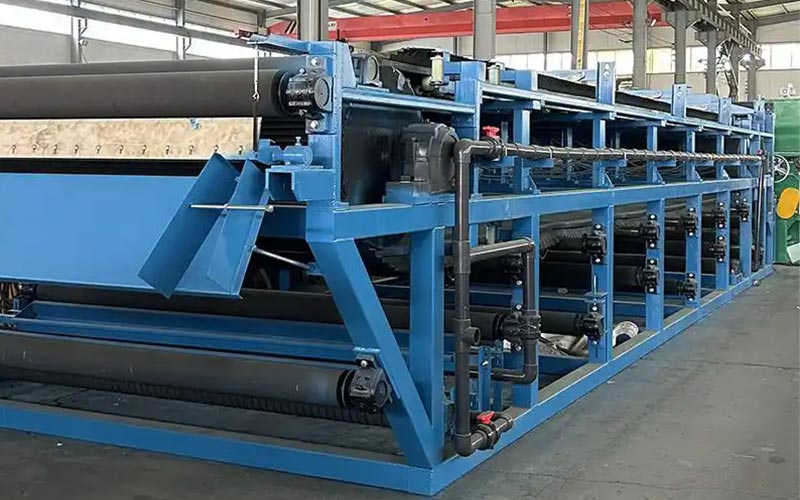
Cake washing serves three main purposes:
Reducing Residual Soluble Impurities in the Filter Cake
By evenly distributing wash liquid over the surface of the filter cake, the liquid penetrates downward and displaces part of the mother liquor trapped in the cake pores, thereby reducing the residual soluble impurities. This is particularly important for the downstream processing of phosphogypsum, salt products, and certain chemical intermediates.
Improving the Recovery of Valuable Components
In lithium, nickel, cobalt, phosphorus, and other resource recovery processes, the pore liquid within the filter cake may contain certain concentrations of target components. By properly designing the washing and filtrate collection systems, losses of valuable components discharged with the filter cake can be reduced. Filtrates with different concentrations can also be collected separately for subsequent recovery and treatment.
Reducing Downstream Processing Load
Insufficient washing may allow residual mother liquor to affect downstream product quality and increase the burden on subsequent water washing, dissolution, concentration, or wastewater treatment processes. Optimizing the filtration and washing processes can improve solid-liquid separation performance and increase resource utilization efficiency throughout the production process.
Therefore, for production processes requiring continuous dewatering and cake washing, the washing system of a vacuum belt filter is a key consideration in equipment selection and process design.
What Is the Difference Between Single-Stage Washing and Multi-Stage Counter-Current Washing?
The basic principle of filter cake washing is to use the concentration difference between the wash liquid and the pore liquid within the filter cake to transfer soluble components from the residual mother liquor into the wash liquid. Depending on the washing configuration, different washing methods can be used.
Single-Stage Washing
After the filter cake is formed, the wash liquid is evenly distributed over its surface and drawn through the cake by vacuum filtration. It then passes through the filter cloth and is collected.
Advantages: Simple structure, relatively low requirements for piping layout and process control. Suitable for applications with moderate washing requirements, smaller processing capacities, or sufficient wash liquid supply.
Limitations: Washing performance is significantly affected by the wash liquid volume, cake thickness, permeability, and liquid distribution uniformity. Uneven cake resistance can cause channeling, resulting in insufficient washing in certain areas.
Multi-Stage Counter-Current Washing
The filter cake moves in the opposite direction to the wash liquid flow and passes through multiple washing stages. Fresh wash liquid is introduced at the final stage, where the washed filter cake is discharged. The filtrate from this stage is then transferred to the preceding stage for further washing, allowing the filtrate to be reused in stages.
Key Features: Fresh wash liquid comes into contact with filter cake that has already undergone washing, while recycled wash liquid is used to wash cake with a higher mother liquor concentration. This counter-current arrangement improves wash liquid utilization.
Single-Stage Washing vs. Multi-Stage Counter-Current Washing
| Comparison Criteria | Single-stage washing | Multi-stage countercurrent washing |
| Number of Washing Stages | 1 stage | 2 stages or more |
| Use of Wash Liquid | Uses fresh washing liquid throughout | Fresh wash liquid used, with filtrates from each stage recycled |
| Collection of Filtrate | Simple collection | Fractionated collection and transport |
| Wash Liquid Utilization Efficiency | Relatively low | Relatively high |
| Equipment Configuration | Simple | Requires more zones, pipelines, and pump sets; system is complex |
| Applicable Scenarios | Low washing requirements | High washing standards; mother liquor recovery required |
It is important to note that adding more washing stages does not necessarily improve washing performance. Actual results depend on several factors, including filter cake properties, wash liquid distribution uniformity, cake thickness, vacuum capacity, and the effectiveness of sealing and isolation between washing stages.
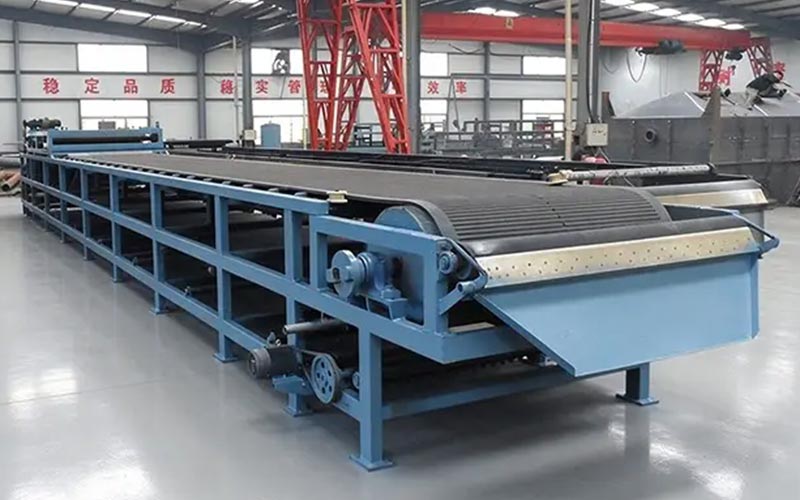
Operating Principles of Multi-Stage Counter-Current Washing in Vacuum Belt Filters
Stage 1: Cake Formation and Mother Liquor Separation
The slurry is evenly distributed onto the filter cloth through a feed distributor. Under vacuum suction, the liquid passes through the filter cloth and enters the vacuum chamber below, while solid particles gradually accumulate to form a filter cake of a certain thickness.
The initial filtrate generated at this stage typically contains a relatively high concentration of mother liquor components. It should be collected separately according to process requirements for subsequent recovery or treatment.
Stage 2: First Washing Stage at the Feed End
The initially dewatered filter cake enters the first washing zone, where recycled filtrate from the subsequent washing stage is sprayed onto the cake. The liquid passes through the filter cake under vacuum.
At this stage, the concentration of residual mother liquor within the cake is highest. The recycled wash liquid passes through the cake, displacing soluble components trapped in its pores. The filtrate from this stage can be collected separately or directed to the mother liquor recovery system, depending on process requirements.
Stage 3: Final Washing Stage with Fresh Wash Liquid
The filter cake continues moving forward into the subsequent washing zone. By this stage, soluble impurities in the cake have been progressively reduced through the preceding washing stages.
Fresh wash liquid is introduced into the final washing zone, located closest to the discharge end, to displace the remaining mother liquor and further reduce the soluble impurity content of the filter cake. The filtrate generated at this stage is transferred to the preceding washing zone for reuse as wash liquid.
Stage 4: Secondary Dewatering and Cake Discharge
After washing, the filter cake enters the dewatering zone, where vacuum suction continues to remove free liquid from the cake. The filter cake is then separated from the filter cloth by the discharge device.
The filter cloth is subsequently rinsed to clear any blocked pores before entering the next filtration cycle.
This entire process enables fresh wash liquid to flow counter-currently to the filter cake, while filtrates from different stages are collected and reused according to their concentrations. This improves washing efficiency and reduces wash liquid consumption.
Note: The vacuum chambers in each washing zone must be isolated from one another to prevent cross-flow between wash liquids and maintain a stable concentration gradient throughout the washing stages.
What Key Parameters Should Be Considered When Designing a Multi-Stage Counter-Current Washing System?
The overall performance of multi-stage counter-current washing depends not only on the number of washing stages but also on filter cake properties, wash liquid distribution, vacuum system performance, and equipment operating parameters.
Number of Washing Stages
The number of washing stages directly affects washing performance and the overall equipment configuration. Common configurations include two-stage, three-stage, and four-stage washing systems.
Increasing the number of stages provides more opportunities for displacement washing of the filter cake. However, it also increases the overall equipment length, associated piping, filtrate collection requirements, and automation complexity, resulting in higher investment costs and a larger footprint.
The number of stages should not be increased arbitrarily. It should be determined based on the soluble impurity content of the material, finished product purity requirements, wash liquid consumption targets, and overall project investment.
Filter Cake Thickness, Uniformity, and Feed Distribution
Filter cake thickness determines the resistance to wash liquid flow and the time required for the liquid to penetrate the cake. If the cake is too thick, the wash liquid may not pass through it completely within the specified washing time. Uneven cake thickness can cause the wash liquid to preferentially flow through areas of lower resistance, resulting in channeling and insufficient washing in certain areas.
The system should be equipped with a reliable slurry distribution device to ensure uniform distribution across the full width of the filter belt. The appropriate cake thickness should then be determined according to the filtration characteristics of the material.
Wash Liquid Consumption and Flow Distribution Between Stages
The total wash liquid requirement depends on the amount of mother liquor retained in the filter cake, soluble component concentration, target washing performance, and material solubility.
In multi-stage counter-current washing, both total wash liquid consumption and recycled filtrate distribution between stages must be controlled. Insufficient fresh wash liquid at the final stage may affect product purity, while improper filtrate distribution can disrupt the concentration gradient and reduce washing efficiency.
Preliminary tests should be conducted to determine the basic wash liquid requirement, followed by on-site commissioning to optimize the flow rate at each stage.
Vacuum System Matching and Sealing Isolation
The vacuum pressure differential drives filter cake formation, wash liquid penetration, and post-washing dewatering.
The required vacuum level depends on filter cake permeability, liquid viscosity, filter cloth resistance, and equipment sealing. Insufficient vacuum reduces liquid drainage and washing efficiency, while excessive vacuum may cause cake cracks, allowing wash liquid to bypass the cake and create channeling.
The vacuum pump, chambers, pipelines, and gas-liquid separators must be properly matched. Each washing stage must also be effectively isolated and sealed to prevent cross-flow between chambers, which could disrupt the concentration gradient and reduce counter-current washing efficiency.
Filter Belt Speed and Length Allocation for Each Process Zone
The filter belt speed determines the residence time of the filter cake in the filtration, washing, and dewatering zones.
If the belt speed is too high, there may be insufficient time for cake formation, washing, and dewatering, making it difficult to achieve the required performance targets. If the speed is too low, equipment throughput decreases, while energy consumption and processing costs per unit of product increase.
During system design, the lengths of the filtration, washing, and dewatering zones should be properly allocated based on slurry solids content, filtration rate, filter cake thickness, and target processing capacity.
Wash Liquid Temperature, Material Properties, and Wetted Materials
Wash liquid temperature affects liquid viscosity and the dissolution rate of soluble components. Under certain operating conditions, moderately increasing the temperature can promote the dissolution and removal of impurities during washing. However, material thermal stability, equipment temperature resistance, and heating energy consumption must also be taken into account.
If the wash liquid is corrosive, suitable corrosion-resistant materials must be selected for the filter cloth, pipelines, seals, and all equipment components in contact with the liquid.
How to Determine Whether Multi-Stage Counter-Current Washing Meets the Expected Performance Targets?
The washing performance of a vacuum belt filter should not be evaluated solely based on wash liquid consumption or filter cake appearance. It requires a comprehensive assessment of residual components in the filter cake, filtrate concentrations at each stage, and material recovery performance.
| Test Parameters | Key Evaluation Criteria |
| Residual soluble components in the filter cake | Determine the residual amount of mother liquor and soluble impurities remaining in the filter cake after washing. |
| Concentration of filtrate at various stages | Observe concentration gradients across various washing stages and assess whether the filtrate holds any recovery value. |
| Wash liquid consumption | Calculate the consumption of wash liquid per unit of dry solid product to evaluate the efficiency of wash liquid utilization. |
| Moisture content of the filter cake | Measure the dewatering performance during the vacuum dewatering stage following the washing process. |
| Recovery rate of target components | Verify whether any valuable components are being lost via the filtrate or the filter cake. |
| Equipment processing capacity | Confirm whether the washing stage hinders the continuous feed and discharge rhythm of the entire production line. |
The residual soluble component content in the filter cake is the primary performance indicator. Different materials require corresponding sampling, testing, and calculation methods. For example, with salt-based materials, the soluble salt content of the filter cake is generally measured before and after washing to evaluate impurity removal performance.
If the process requires the recovery of valuable components from the filtrate, the concentration and flow rate of the filtrate at each stage should also be monitored. Focusing solely on filter cake purity can easily result in the loss of valuable materials and reduce overall process profitability.
How to Retrofit an Existing Vacuum Belt Filter with a Multi-Stage Counter-Current Washing System?
For vacuum belt filters already in operation, if the existing washing performance no longer meets new process requirements, the feasibility of installing a multi-stage counter-current washing system can be evaluated based on the equipment structure and actual site operating conditions.A retrofit is not simply a matter of adding several spray assemblies and filtrate pumps. The entire system, including the filtration section, vacuum zones, filtrate collection, and recirculation pipelines, must be reviewed and upgraded accordingly. The main retrofit considerations fall into three areas:
Washing Zone and Vacuum Zone Modifications
The washing sections should be reconfigured according to the target number of washing stages. It is also necessary to check whether the vacuum chambers below can be divided into independent zones with separate filtrate collection.
Filtrate from each washing zone must be collected separately to prevent mixing of streams with different concentrations, which could disrupt the counter-current concentration gradient and compromise washing performance and mother liquor recovery.
Installation of Filtrate Collection and Recirculation Units
Collection tanks, transfer pumps, pipelines, valves, and flow control components should be selected based on the filtrate flow rate and fluid properties at each stage. The system should direct filtrate from subsequent stages to preceding stages for reuse, following the required process flow.
Since filtrate may contain fine particles and crystals that can clog pumps and pipelines, appropriate pre-filtration and pipeline cleaning measures should be included in the retrofit to ensure stable, continuous operation.
Parameter Adjustment and Commissioning Optimization
After mechanical and piping modifications are completed, the system should undergo trial operation to adjust key parameters, including wash liquid flow rates at each stage, filter belt speed, vacuum level, and filter cake thickness.
Samples should be collected under different operating conditions to test residual components in the filter cake and filtrate concentrations at each stage. The process parameters can then be gradually optimized based on the test results and target specifications.
The feasibility of a retrofit also depends on the existing filter belt width, effective filtration length, available vacuum system capacity, drive load, and available installation space. If the existing equipment cannot meet the requirements, modifications to the filtration zone structure or replacement of the relevant equipment modules may be necessary.
Which Industries Are Suitable for Multi-Stage Counter-Current Washing in Vacuum Belt Filters?
Multi-stage counter-current washing is suitable for continuous filtration applications that require reducing residual soluble impurities in the filter cake or recovering valuable components from the mother liquor retained in the cake pores. Washing requirements vary considerably across different industries:
| Application Industries | Primary Washing Requirements |
| Phosphate Fertilizers and Phosphorus Chemicals | Remove residual soluble phosphates and other impurities from the filter cake to meet the requirements of downstream processes. |
| Potash and Salt Chemicals | Wash away the mother liquor and soluble salts entrained within the filter cake to improve the quality of the final product. |
| Lithium-ion Battery Materials | Eliminate residual salts and soluble impurities from the filter cake in accordance with process specifications. |
| Non-ferrous Metal Smelting | Wash concentrates and metallurgical intermediate materials to minimize the loss of valuable components into the mother liquor. |
| Chemicals and Fine Chemicals | Reduce the amount of mother liquor entrained in solid products to ensure compliance with requirements for subsequent processing or final product specifications. |
How to Select a Washing Scheme for a Vacuum Belt Filter Based on Material Properties?
Although multi-stage counter-current washing can improve wash liquid utilization, actual washing performance ultimately depends on how well the equipment configuration, material properties, and process requirements are matched. During equipment selection, processing capacity and filtration area alone are not sufficient. Complete material and process data should also be provided, mainly including the following:
Material Properties: Slurry composition, solids content, particle size distribution, liquid-phase viscosity, and the inherent properties of the solid material.
Filtration Requirements: Processing capacity, target filter cake thickness, filtration rate, and target filter cake moisture content.
Washing Requirements: Soluble impurities to be removed, allowable residual content in the filter cake, type of wash liquid, and estimated wash liquid consumption.
Recovery Requirements: Whether mother liquor needs to be recovered separately and whether filtrates from different washing stages need to be collected independently.
Site Operating Conditions: Operating temperature, media corrosivity, required continuous operating time, and available installation space.
For projects with stringent process requirements, preliminary filtration and washing tests are recommended before equipment selection. Pilot-scale testing should also be conducted if conditions permit.
These tests help determine filter cake formation characteristics, wash liquid consumption, changes in filtrate concentration, and filter cake dewatering performance. The results can then be used to determine the required filtration area, washing zone length, vacuum system configuration, and filtrate recirculation pipeline arrangement.
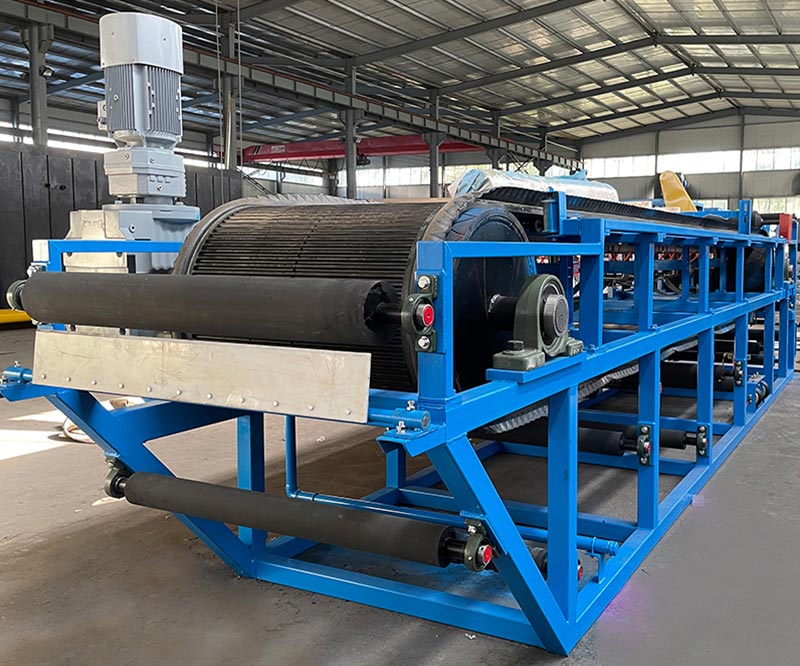
Conclusion:
A vacuum belt filter not only enables continuous solid-liquid separation but can also be configured with multi-stage washing systems to meet different process requirements, including impurity removal from the filter cake, mother liquor recovery, and further dewatering.
For production processes with high washing requirements, multi-stage counter-current washing can improve wash liquid utilization and reduce fresh wash liquid consumption through separate filtrate collection and stage-by-stage reuse.
In practical applications, washing performance is not determined by the number of washing stages alone. Filter cake properties, wash liquid distribution, vacuum system capacity, and equipment operating parameters must also be considered.
Therefore, when designing a vacuum belt filter, the filtration zone, washing zones, vacuum units, and filtrate recirculation pipelines should be properly configured according to material properties and actual process conditions to ensure continuous and stable equipment operation and achieve the required solid-liquid separation performance.