 English
 日本
 한국인
 Français
 Deutsch
 español
 Italiano
 Portugal
 Việt Nam
 türkiye
 عرب
 Русский
 čeština
 แบบไทย
 Eesti
 Gaeilge
 Hmoob
 íslenskur
 Cymraeg
 български
 اردو
 Polski
 Hrvatski
 українська
 bosanski
 فارسی
 lietuvių
 latviski
 עִברִית
 Română
 Ελληνικά
 dansk
 Magyar
 norsk
 Suomalainen
 Nederlands
 svenska
 slovenský
 Slovenščina
 हिंदी
 Indonesia
 Melayu
 Malti
 Kreyòl ayisyen
 català
 বাংলা
 Српски
 o'zbek


However, equipment selection should not be based solely on filtration area, installed power, and price. Slurries can vary significantly in particle size distribution, solids content, viscosity, and filter cake permeability. Even vacuum disc filters of the same specifications may deliver significantly different throughput and filter cake moisture levels under different material conditions. This article provides guidance for equipment procurement and project selection, covering material characteristics, effective filtration area, dewatering performance, filter media, auxiliary systems, operating costs, and supplier capabilities.
Identify the Material to Be Processed by the Vacuum Disc Filter
The following parameters should be carefully evaluated during equipment selection
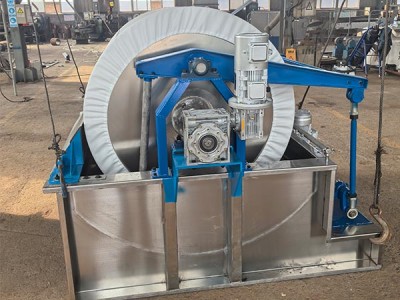
We offer a variety of transmission components
Material Type and Solid Composition
Identify the material type, main solid-phase components, and process application, such as concentrate dewatering, tailings treatment, or filtration of other industrial suspensions. Material composition directly affects particle settling behavior, filter cake pore structure, and filterability.
Feed Solids Content and Particle Size Distribution
We offer a variety of transmission components, including sprockets, roller chains, gears, couplings, racks, hubs, pulleys, taper sleeves, bearing seats, and more.
Slurry Viscosity, Temperature, and Chemical Properties
Slurry viscosity directly affects the rate of filtrate flow through the filter cake and filter media. Slurry temperature, pH, and chemical composition are key factors in selecting materials for wetted components, filter cloth, and seals.
Material Filtration Performance Testing
If no proven applications under comparable operating conditions are available, filtration tests are recommended before determining equipment specifications. These tests evaluate cake formation, filtration rate, filter cake discharge performance, and achievable moisture content, providing an experimental basis for equipment selection.
How to Determine the Required Filtration Area and Processing Capacity
Target throughput: The mass of dry solids to be processed per hour or per day.
Feed conditions: Slurry solids content, particle size distribution, viscosity, and solid-phase composition.
Filtration loading per unit area: The amount of dry solids that can be processed per unit of effective filtration area under specific operating conditions.
Filter disc rotation cycle: The total time required for one complete rotation of the filter disc, including cake formation by vacuum filtration, vacuum dewatering, cake discharge, and filter media regeneration.
Operating parameters: Filter disc speed, disc submergence depth (submergence angle), system vacuum level, and the operating condition of the filter media.
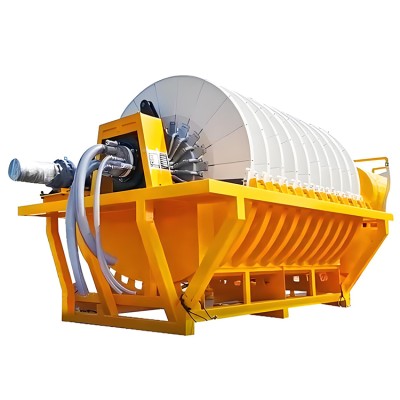
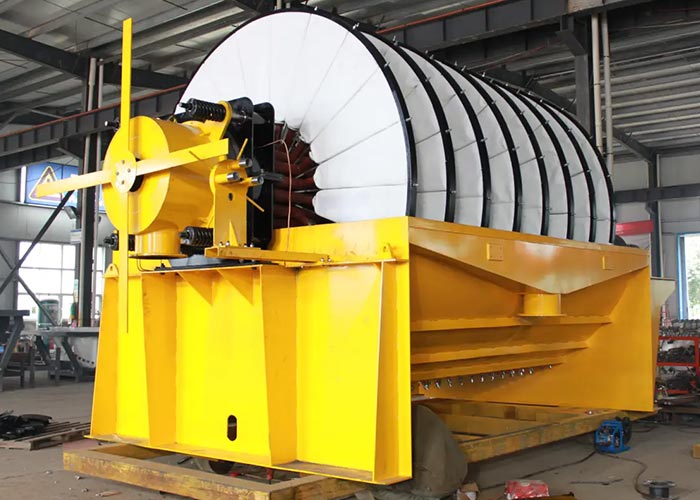
Vacuum disc filters typically feature multiple filter discs, each divided into several independent filter sectors. This design provides a large geometric filtration area within a relatively small footprint. However, actual throughput remains constrained by material filtration characteristics and operating parameters.
What Are the Requirements for Filter Cake Moisture Content and Filtrate Quality?
The performance of filtration equipment is reflected not only in throughput but also in whether the solid-liquid separation results meet downstream process requirements.
Define the Target Filter Cake Moisture Content
Filter cake moisture content directly affects material handling, storage, drying, and further processing. Before purchasing, the acceptable moisture content range should be determined based on actual production requirements. The dewatering performance of a vacuum disc filter is affected by factors such as particle size, slurry solids content, filter cake permeability, vacuum conditions, filtration time, and filter media performance. For fine particles or difficult-to-filter materials, increasing the filtration area alone may not achieve the target moisture content.
Define Filtrate Quality Requirements
If the filtrate needs to be returned to the production process or fed into a process water recycling system, the suspended solids content and relevant reuse requirements must be clearly specified. Filtrate clarity depends on particle size, the retention efficiency of the filter media, filter cloth condition, and operating conditions. For fine particles that cannot be effectively retained by the filter media, the need for additional downstream treatment should also be evaluated.
Confirm Filter Cake Discharge Performance
The ability of the filter cake to detach smoothly from the filter media also affects continuous equipment operation. Cake adhesion, thickness, moisture content, and the configuration of the discharge mechanism can all influence discharge performance. During procurement, the discharge method should be selected according to material characteristics. Throughput, filter cake moisture content, and any required filtrate quality parameters should be included in the technical agreement, with testing methods and acceptance criteria clearly defined.
How Should Filter Media and Cleaning Systems Be Selected?
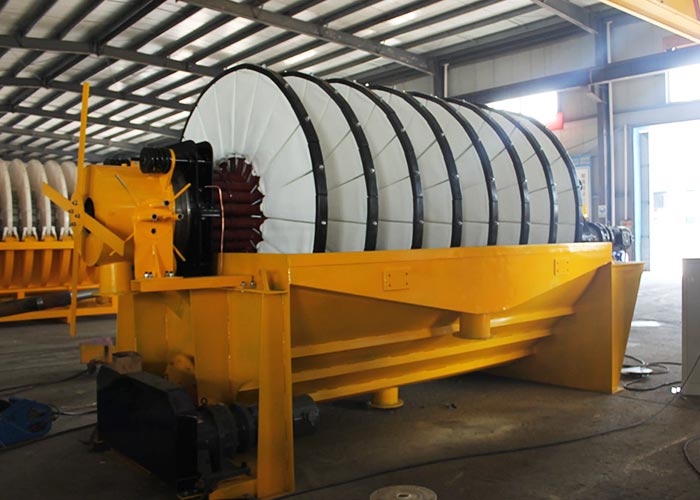
Filter media directly affect solid retention, filtrate discharge, and filter cake removal, making them an important consideration when selecting a conventional vacuum disc filter.
Select Filter Media Suitable for the Material
The filter cloth material, pore characteristics, permeability, and chemical resistance must be matched to the material properties and operating conditions. If the filter cloth pore size is incompatible with the particle size, problems such as fine particle breakthrough, cloudy filtrate, or filter media clogging may occur. For abrasive materials or those with specific chemical properties, the wear resistance and chemical resistance of the filter cloth must also be considered.
Evaluate the Online Filter Cloth Cleaning System
During long-term operation, fine particles or residues may accumulate on the filter cloth and impair filtration performance. The cleaning method should be selected according to material properties, clogging conditions, and equipment design. Some equipment can use spray cleaning or other suitable cleaning methods. Cleaning pressure, flow rate, and frequency should be adjusted to the filter cloth material and actual operating conditions to avoid inadequate cleaning or damage caused by improper operation.
Confirm the Filter Cake Discharge Mechanism
Filter cakes formed by different materials may vary in adhesion, thickness, and mechanical strength. Depending on the equipment design, suitable discharge mechanisms may include scraping, blowback, or other methods. During procurement, confirm that the discharge mechanism is suitable for the target material and that filter cloth replacement, inspection, and maintenance can be performed conveniently.
Do the Auxiliary Equipment and Site Installation Conditions Meet the Requirements?
A vacuum disc filter relies on the coordinated operation of several units, including the vacuum system, feed system, filtrate collection system, and filter cake conveying system. Focusing only on the filtration system during procurement may lead to overlooking the impact of auxiliary systems on overall performance.
Vacuum System
The vacuum system must meet the process requirements for filtration and filter cake dewatering. The capacity of the vacuum pump or other vacuum equipment, piping configuration, and operating conditions should be verified. Potential leaks or flow resistance that could affect the vacuum level should also be checked.
01
Slurry Feeding System
For slurries prone to settling or uneven solids distribution, the mixing and feeding arrangements should be evaluated based on material characteristics. Stable feed conditions should be maintained as far as possible to prevent uneven filter cake formation across different areas of the filter discs.
02
Filtrate Collection and Discharge System
The filtrate piping, collection equipment, and drainage arrangements must support continuous equipment operation. If the filtrate is to be reused, downstream conveying requirements and water treatment needs should also be considered.
03
Filter Cake Conveying System
The transfer route from the filter cake discharge point to downstream conveying equipment, storage facilities, or other processing stages should be planned in advance to prevent filter cake accumulation from disrupting equipment operation.
04
Electrical Controls and Site Conditions
Before procurement, verify the equipment power requirements, control system, installation space, foundation conditions, water supply and drainage facilities, and necessary maintenance access.
05
For retrofit projects involving existing production lines, it is advisable to verify in advance the interfaces between the new equipment and existing piping, conveying equipment, and control systems to minimize adjustments after installation.
How to Evaluate the Long-Term Operating Costs of a Vacuum Disc Filter
The purchase price represents only part of the total equipment cost. For companies requiring continuous production, long-term operating costs and ease of maintenance are equally important considerations.
Energy Consumption
The vacuum pump, filter disc drive, and other auxiliary equipment all consume energy. When evaluating energy consumption, consider the installed power of the entire system, actual operating power, and operating hours rather than comparing motor rated power alone.
Filter Media and Wear Parts Costs
The service life of filter cloth, seals, scraping components, and other wear parts is affected by factors such as material abrasiveness, operating conditions, and maintenance practices. During procurement, ask suppliers to provide a recommended spare parts list, maintenance requirements, and spare parts availability to facilitate maintenance budget planning.
Cleaning and Maintenance Costs
Cleaning frequency, filter cloth replacement, equipment inspections, and downtime for maintenance all affect overall operating costs. Appropriate cleaning procedures and routine inspections help identify issues such as declining filtration performance in a timely manner.
Calculate the Cost per Unit of Throughput
When comparing different equipment options, include energy consumption, cleaning media, filter consumables, labor, and maintenance expenses in a consistent cost analysis, and evaluate them against the actual quantity of dry solids processed.
For proposals from different suppliers, also confirm that the throughput, operating hours, and material conditions used for cost calculations are consistent. Only by comparing options under equivalent conditions can the long-term economic performance of the equipment be assessed more accurately.
How to Choose a Reliable Vacuum Disc Filter Manufacturer
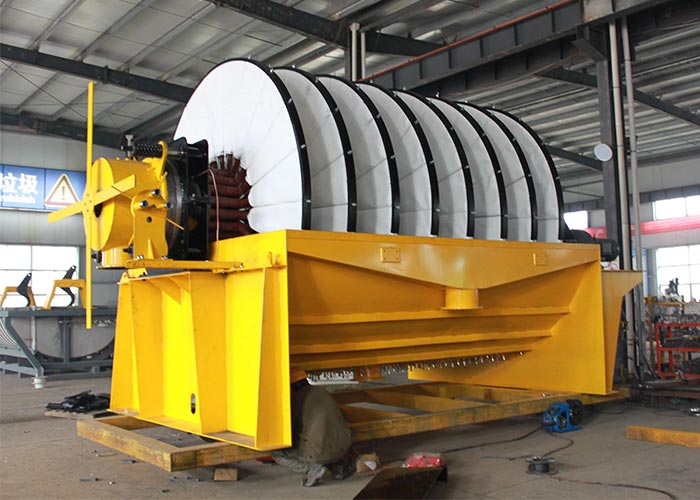
A manufacturer's technical capabilities affect not only equipment manufacturing quality but also the accuracy of equipment selection, installation and commissioning, and subsequent maintenance. Buyers should focus on whether the supplier can develop a suitable equipment solution based on actual process conditions.