 English
 日本
日本 한국인
한국인 Français
 Deutsch
 español
 Italiano
 Portugal
 Việt Nam
 türkiye
 عرب
عرب Русский
 čeština
 แบบไทย
 Eesti
Eesti Gaeilge
 Hmoob
Hmoob íslenskur
 Cymraeg
 български
 اردو
اردو Polski
 Hrvatski
 українська
 bosanski
 فارسی
فارسی lietuvių
 latviski
 עִברִית
 Română
 Ελληνικά
 dansk
dansk Magyar
 norsk
norsk Suomalainen
 Nederlands
 svenska
 slovenský
 Slovenščina
 हिंदी
हिंदी Indonesia
 Melayu
 Malti
Malti Kreyòl ayisyen
 català
 বাংলা
বাংলা Српски
 o'zbek

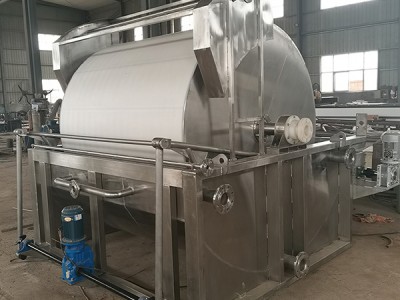
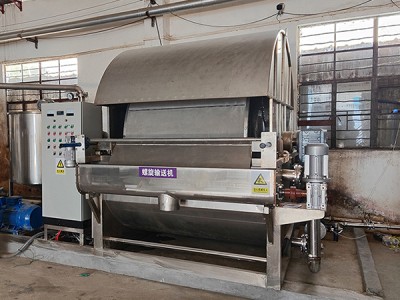
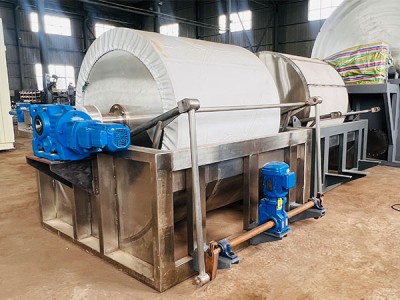
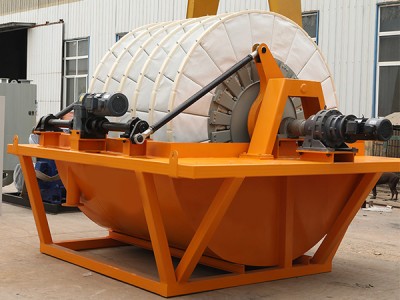
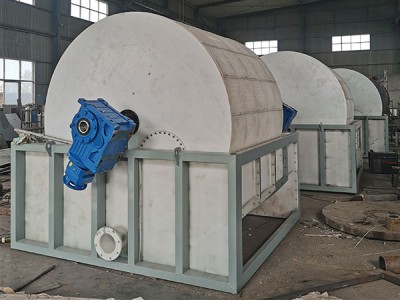
As a core piece of equipment in the field of solid-liquid separation, the vacuum drum filter is widely used in industries such as chemical engineering, mining, food processing, and environmental protection. Scientific maintenance not only extends the service life of the equipment and reduces failure rates, but also maintains stable filtration efficiency and separation performance.
Operation and Maintenance of Vacuum Drum Filters
Before startup, conduct a comprehensive inspection: transmission components should rotate flexibly, all fastening bolts must not be loose, all pipes should be unobstructed, and valves should be adjusted properly.
The vacuum system is a critical part of the filter. The vacuum degree must meet process requirements, and there shall be no leakage whatsoever.
The sector chambers inside the drum must not be interconnected. Commissioning inspection of their sealing performance is required prior to operation, and all other seals should fit tightly.
The depth to which the drum is immersed in the filter slurry is determined by filtration characteristics. For slurries prone to filter cake formation, the submersion rate can be lower—typically 20% to 40%.
The rotating disk and fixed disk of the distributor head feature a sliding fit. Due to the significant pressure difference caused by their connection to both the vacuum source and compressed air source, the mating surface must be smooth and flat. Pay attention to adjusting the spring pressure and providing proper lubrication.
After prolonged operation, the filter cloth’s capillary pores may become clogged with solid particles, hindering normal filtration. Therefore, regular cleaning is necessary.
The drum’s rotational speed depends on the slurry properties: a higher speed can be used for high-concentration slurries, and a lower speed for low-concentration ones.
The filter cake thickness should generally be controlled below 20mm. For difficult-to-filter colloidal slurries, the thickness should be less than 10mm.
An excessive distance between the scraper and filter cloth will affect slag discharge efficiency, while an overly small distance may damage the filter cloth. The optimal distance is typically 2 to 5mm.
After operation, clean the filter cloth, filter slurry tank, and other components for subsequent use.
Daily Maintenance of drum vacuum filters
1. Appearance and Operation Status Inspection:
Monitor the equipment's stable operation; check for abnormal noise, vibration, or bearing overheating of the drum. Shut down immediately if abnormalities are detected.
Inspect flanges, pipelines, and other connection points for filtrate/vacuum leakage. Tighten fasteners or replace seals promptly.
Clean dust and residues from the equipment surface and surrounding areas to prevent debris from entering the transmission/filtration zone.
2. Filter Cloth Maintenance:
Check the filter cloth for flatness, and signs of damage, clogging, or deviation.
Repair or replace damaged cloths; backwash or high-pressure rinse clogged cloths with clean water or specialized cleaning agents; adjust the deviation correction device for misaligned cloths.
Regulate the filter cloth tension via tension rollers to avoid slipping (from insufficient tension) or wear (from excessive tension).
3. Vacuum System Inspection:
Monitor the vacuum degree (0.04–0.08 MPa). If the pressure drops, inspect for pipeline blockages or air leaks, remove accumulated liquid and impurities, and tighten connections.
Check the vacuum pump for abnormal noise and overheating (temperature ≤ 80°C). For oil-type pumps, verify normal oil level and unaltered oil color; replace oil promptly if degraded.
4. Filtrate and Slag Discharge System:
Check the liquid level in the filtrate tank to ensure the drain pump operates normally. Regularly clean sediment at the tank bottom to prevent pipeline blockages.
Monitor the operation of the scraper and screw conveyor. Maintain a 0.5–1 mm gap between the scraper and the drum, and adjust as needed.
Manually clear clogged slag discharge outlets to ensure smooth slag removal.
Periodic Maintenance of Vacuum Drum Filters
Periodic maintenance involves in-depth inspection of the equipment’s internal components, as well as testing, maintenance, and replacement of key parts. It is recommended to establish a maintenance schedule based on the equipment’s operating intensity and material properties.
Maintenance Interval | Maintenance Items | Specific operations |
Weekly | Transmission system maintenance | 1. Check the lubrication condition of the motor, reducer, and bearing seat, and replenish lubricating oil; 2. Tighten the connecting bolts of the motor base and reducer to prevent loosening; 3. Check the tension and wear of the transmission belt/chain. If the belt cracks or ages, it should be replaced in a timely manner; The chain needs to be cleaned of oil stains and coated with chain oil to avoid rusting. |
Monthly | Deep maintenance of vacuum system | 1. Disassemble the vacuum pipeline filter and clean the impurities in the filter element; 2. Check whether the liquid level control device of the steam water separator is flexible and clean the sediment inside the separator; 3. For oil type vacuum pumps, check whether the oil quality has deteriorated, thoroughly replace the vacuum pump oil, and clean the internal filter screen of the pump body. |
Quarterly | Drum and seal inspection | 1. Check the surface of the drum for oil stains, corrosion, scratches, and wear. If it is a metal filter drum, rust removal and anti-corrosion coating should be applied; If it is a rubber lined drum, check whether the lining has fallen off or cracked, and repair or replace it in a timely manner; 2. Replace aging seals to ensure sealing performance and avoid vacuum leakage. |
Biannually | Calibration of Electrical and Control Systems | 1. Check the wiring terminals, contactors, relays, and loose connections inside the electrical control cabinet, and clean the dust inside the cabinet; 2. Calibrate pressure/vacuum sensors, level gauges, frequency converters and other instruments to ensure accurate signals and normal control logic; 3. Test the reliability of emergency stop buttons and overload protection devices to ensure effective safety interlock functions; |
Every year | Comprehensive disassembly and performance testing | 1. Dismantle core components such as drum, transmission system, vacuum pump, etc., check the wear of bearings, and replace damaged bearings in a timely manner; 2. Measure the roundness and coaxiality of the drum, and if the deviation exceeds the allowable range (usually ≤ 0.2mm), calibrate or repair it; 3. Test the overall performance of the equipment (filtration efficiency, vacuum stability, slag discharge qualification rate), compare initial parameters, optimize operating parameters or carry out targeted maintenance. |
Safety Precautions for rotary vacuum drum filters
1. Before performing any maintenance work, always cut off the main power supply, close the vacuum pipeline valves, relieve pressure, and hang a "No Switching On" sign at the power switch to prevent accidental startup.
2. When working at height, wear a safety belt and set up an operation platform to avoid falling; when touching high-temperature components, wait for the equipment to cool down before operating to prevent scalding.
3. When using chemical cleaning agents, wear protective gloves, masks, and goggles to prevent the cleaning agents from coming into contact with the skin and respiratory tract; the waste liquid after cleaning must be disposed of in accordance with environmental protection requirements, and random discharge is prohibited.
4. During maintenance, it is strictly forbidden to modify the equipment structure or parameters without authorization. If maintenance or modification is required, contact professional technicians.
5. Establish a maintenance record sheet, and record details such as maintenance date, items, model of replaced parts, and operators in detail, so as to facilitate tracing the equipment status and formulating subsequent maintenance plans.
Summary
Through the systematic maintenance plan outlined above, the operating costs of the vacuum drum filter can be effectively reduced, and the long-term stable and efficient operation of the equipment can be ensured. It is recommended to flexibly adjust the maintenance cycle and details based on the equipment operation manual and actual working conditions. When necessary, contact the manufacturer for professional technical support.