 English
 日本
日本 한국인
한국인 Français
 Deutsch
 español
 Italiano
 Portugal
 Việt Nam
 türkiye
 عرب
عرب Русский
 čeština
 แบบไทย
 Eesti
Eesti Gaeilge
 Hmoob
Hmoob íslenskur
 Cymraeg
 български
 اردو
اردو Polski
 Hrvatski
 українська
 bosanski
 فارسی
فارسی lietuvių
 latviski
 עִברִית
 Română
 Ελληνικά
 dansk
dansk Magyar
 norsk
norsk Suomalainen
 Nederlands
 svenska
 slovenský
 Slovenščina
 हिंदी
हिंदी Indonesia
 Melayu
 Malti
Malti Kreyòl ayisyen
 català
 বাংলা
বাংলা Српски
 o'zbek

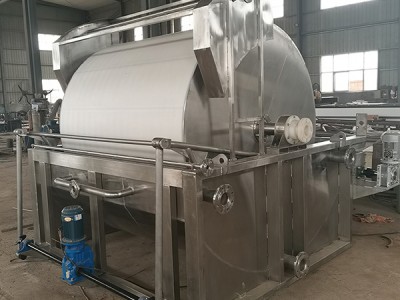
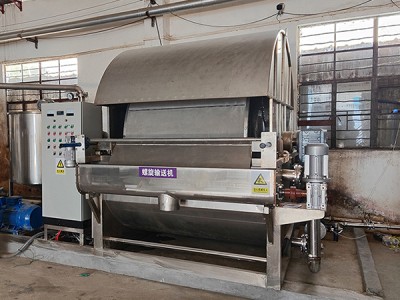
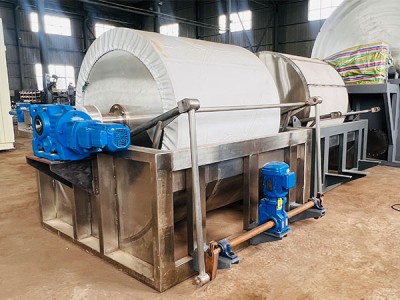
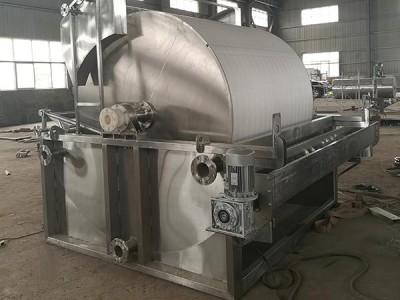
In industrial production, solid-liquid separation serves as a critical process linking raw material purification, waste residue treatment and compliant wastewater discharge. The operational efficiency of equipment directly dictates production capacity ceilings, raw material recovery rates and overall operating costs. Unlike batch filter units, vacuum disc filters deliver continuous solid-liquid separation via vacuum negative pressure, making them suitable for long-term production lines featuring high flow rates and heavy load conditions.
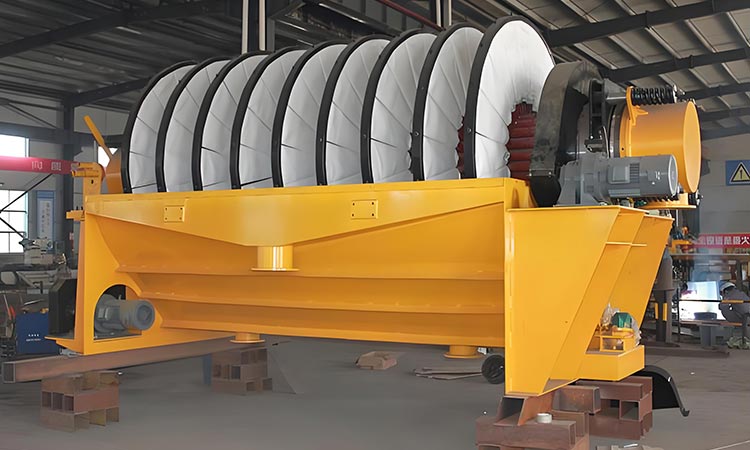
The complete vacuum disc filter system consists of six core assemblies: disc assembly, tank agitation mechanism, main shaft distribution head, vacuum negative pressure system, back-blow cake discharge unit, and intelligent control system. The full process operates in fully automatic cycles without manual segmented intervention.
During equipment operation, the motor drives the main shaft to rotate multiple groups of fan-shaped filter discs submerged in the slurry tank. The agitator inside the tank maintains continuous low-speed stirring to prevent sedimentation and accumulation of solid materials. A vacuum pump generates stable negative pressure inside the filter discs. Driven by pressure differential, liquid in the slurry permeates the filter cloth and flows into hollow filter sectors. The liquid then exits as filtrate through the main shaft and distribution head, while solid particles are trapped by the filter cloth and build up into filter cakes on disc surfaces.
During equipment operation, the motor drives the main shaft to rotate multiple groups of fan-shaped filter discs submerged in the slurry tank. The agitator inside the tank maintains continuous low-speed stirring to prevent sedimentation and accumulation of solid materials. A vacuum pump generates stable negative pressure inside the filter discs. Driven by pressure differential, liquid in the slurry permeates the filter cloth and flows into hollow filter sectors. The liquid then exits as filtrate through the main shaft and distribution head, while solid particles are trapped by the filter cloth and build up into filter cakes on disc surfaces.
All procedures run synchronously and continuously, enabling a single unit to perform non-stop dewatering operations 24 hours a day, which perfectly meets the continuous production requirements of large-scale manufacturing plants.
Technical Advantages of Vacuum Disc Filters
1. Energy Saving & Consumption Reduction
Optimized fluid flow structure cuts overall energy consumption by 15% compared with conventional models. It effectively improves air extraction efficiency and reduces idle power consumption of vacuum pumps.
2. Adaptive Regulation
Equipped with an integrated intelligent detection system, the unit monitors core parameters in real time, including vacuum level, disc rotation speed and filtrate flow rate.
3. Flexible Design
Standardized modular filter disc design allows flexible adjustment of filtration area on demand. For the same processing capacity, the equipment features a smaller footprint, fits diverse production scenarios and enables highly flexible capacity expansion.
4. Lower Operation & Maintenance Costs
Core filter sectors are integrally molded from engineering plastics. The structure delivers superior wear resistance and anti-deformation performance, with a service life 1 to 1.5 times longer than conventional spare parts.
1. Energy Saving & Consumption Reduction
Optimized fluid flow structure cuts overall energy consumption by 15% compared with conventional models. It effectively improves air extraction efficiency and reduces idle power consumption of vacuum pumps.
2. Adaptive Regulation
Equipped with an integrated intelligent detection system, the unit monitors core parameters in real time, including vacuum level, disc rotation speed and filtrate flow rate.
3. Flexible Design
Standardized modular filter disc design allows flexible adjustment of filtration area on demand. For the same processing capacity, the equipment features a smaller footprint, fits diverse production scenarios and enables highly flexible capacity expansion.
4. Lower Operation & Maintenance Costs
Core filter sectors are integrally molded from engineering plastics. The structure delivers superior wear resistance and anti-deformation performance, with a service life 1 to 1.5 times longer than conventional spare parts.
Application Scenarios
Thanks to outstanding material compatibility, vacuum disc filters are applicable to more than 20 segmented industrial sectors:
1. Mining Industry
Metallic Ores
For dewatering copper, iron, gold, lead and zinc concentrates, dry discharge and recovery of tailings, vacuum disc filters are the preferred solution for continuous high-flow slurry treatment. They deliver high processing efficiency and low overall O&M costs.
Non-metallic Ores
Suitable for dewatering slurries of quartz sand, kaolin, fluorite and graphite. The equipment can stably trap medium fine particles to minimize raw material loss.
2. Waste Residue Treatment for Chemical Industry
Ideal for filtering acid-base chemical residues, inorganic salt slurries and pigment intermediates. Fitted with special acid and alkali resistant filter cloths, it handles corrosive materials reliably. The complete set can be integrated into full chemical production lines to realize solid-liquid separation of waste residues and recycling of filtrate, complying with environmental recovery standards for chemical industrial parks.
3. Environmental Water Treatment
Used for dewatering sludge from industrial desulfurization and denitrification, general manufacturing wastewater and river sediment. When matched with a front-end flocculation pretreatment system, the equipment completes sludge volume reduction in one step. The moisture content of filter cakes is controllable, facilitating subsequent transportation, landfilling or resource recycling.
Thanks to outstanding material compatibility, vacuum disc filters are applicable to more than 20 segmented industrial sectors:
1. Mining Industry
Metallic Ores
For dewatering copper, iron, gold, lead and zinc concentrates, dry discharge and recovery of tailings, vacuum disc filters are the preferred solution for continuous high-flow slurry treatment. They deliver high processing efficiency and low overall O&M costs.
Non-metallic Ores
Suitable for dewatering slurries of quartz sand, kaolin, fluorite and graphite. The equipment can stably trap medium fine particles to minimize raw material loss.
2. Waste Residue Treatment for Chemical Industry
Ideal for filtering acid-base chemical residues, inorganic salt slurries and pigment intermediates. Fitted with special acid and alkali resistant filter cloths, it handles corrosive materials reliably. The complete set can be integrated into full chemical production lines to realize solid-liquid separation of waste residues and recycling of filtrate, complying with environmental recovery standards for chemical industrial parks.
3. Environmental Water Treatment
Used for dewatering sludge from industrial desulfurization and denitrification, general manufacturing wastewater and river sediment. When matched with a front-end flocculation pretreatment system, the equipment completes sludge volume reduction in one step. The moisture content of filter cakes is controllable, facilitating subsequent transportation, landfilling or resource recycling.
Core Equipment Selection Guide for Procurement
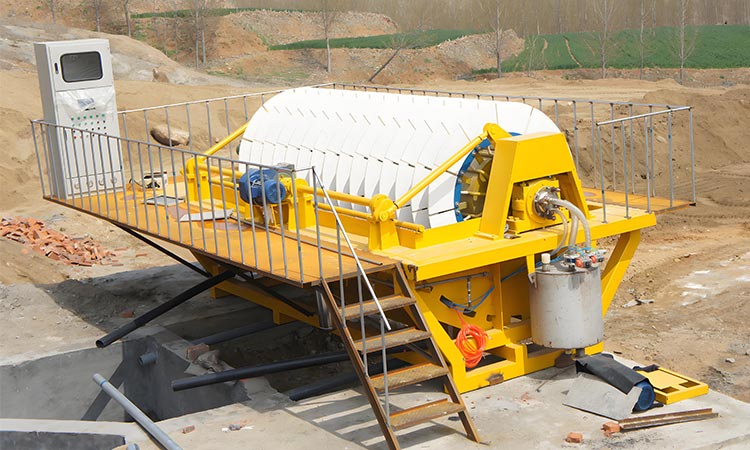
Many enterprises only focus on equipment quotations during selection while overlooking parameter matching and manufacturer supporting services, which often leads to substandard dewatering performance and frequent shutdowns after commissioning. Based on practical industry experience, three core evaluation criteria are sorted out as follows:
1. Process Compatibility
Filtration Area
It directly determines the hourly processing capacity. Calculate the required area according to your hourly output and annual total throughput, and reserve a 10%–20% capacity margin to accommodate production peak loads.
Vacuum Level
A stable vacuum level of ≥0.08 MPa is required for standard working conditions. For ultra-fine materials such as kaolin, a vacuum level above 0.085 MPa is recommended. Insufficient vacuum will result in excessive moisture content in filter cakes.
Filter Disc Speed Range
Higher rotational speeds can boost throughput for slurries with coarse particles, while low speeds are required for high-viscosity fine materials to extend dewatering duration. The equipment shall support stepless speed regulation over a wide range.
Practical Recommendation
Before procurement, request manufacturers to supply on-site operating data and dewatering test reports from projects handling identical materials in the same industry. If feasible, send your raw materials for pilot machine testing to intuitively verify actual dewatering performance.
Many enterprises only focus on equipment quotations during selection while overlooking parameter matching and manufacturer supporting services, which often leads to substandard dewatering performance and frequent shutdowns after commissioning. Based on practical industry experience, three core evaluation criteria are sorted out as follows:
1. Process Compatibility
Filtration Area
It directly determines the hourly processing capacity. Calculate the required area according to your hourly output and annual total throughput, and reserve a 10%–20% capacity margin to accommodate production peak loads.
Vacuum Level
A stable vacuum level of ≥0.08 MPa is required for standard working conditions. For ultra-fine materials such as kaolin, a vacuum level above 0.085 MPa is recommended. Insufficient vacuum will result in excessive moisture content in filter cakes.
Filter Disc Speed Range
Higher rotational speeds can boost throughput for slurries with coarse particles, while low speeds are required for high-viscosity fine materials to extend dewatering duration. The equipment shall support stepless speed regulation over a wide range.
Practical Recommendation
Before procurement, request manufacturers to supply on-site operating data and dewatering test reports from projects handling identical materials in the same industry. If feasible, send your raw materials for pilot machine testing to intuitively verify actual dewatering performance.
2. Comprehensive Manufacturer Strength Assessment
R&D Capabilities
Check whether the manufacturer independently develops full filtration systems and holds utility model patents and invention patents related to solid-liquid separation, alongside continuous iteration of energy-saving equipment technologies.
Industry Project Track Record
Review the manufacturer’s portfolio of large-scale, successfully delivered projects within your sector. Mature proven cases prove the equipment has undergone long-term real-condition validation.
Full Lifecycle Service System
Qualified suppliers shall provide plant layout and production line matching solutions pre-sale, full production tracking during manufacturing, and a rapid-response after-sales mechanism with sufficient inventory of standard spare parts to minimize downtime waiting periods.
3. Differentiated Equipment Selection Solutions for Various Application Scenarios
Large mines & high-capacity continuous production lines: Standard heavy-duty vacuum disc filters with modular expandability, suitable for heavy-duty nonstop operation.
Acid-base chemical & corrosive waste residue treatment: Custom anti-corrosion models equipped with acid & alkali resistant filter cloth, anti-corrosion tanks and pipelines.
Small & medium environmental wastewater stations, miniature mineral processing plants: Compact small-size disc filters featuring low capital investment and easy operation.
Ultra-fine concentrates & applications requiring high filtrate clarity: Combined process of vacuum disc filters and ceramic filters to balance throughput and separation precision.
Summary of Industry Development Trends
Against the backdrop of global industrial energy-saving retrofits, solid-liquid separation equipment is evolving toward intelligence, low energy consumption and integrated turnkey solutions. Vacuum disc filters boast core merits including large throughput, continuous operation, wide material adaptability and controllable operation & maintenance costs, leading to sustained growth in market demand.
Manufacturers should not base equipment selection solely on price. Comprehensive evaluation must be carried out by taking material particle size, slurry concentration, production capacity planning, plant site conditions and environmental compliance indicators into consideration. Conduct material testing and site inspections of similar production lines prior to procurement, while verifying manufacturers’ technical capabilities and after-sales support systems. Only in this way can enterprises select vacuum disc filters matched to their own production lines to truly cut costs, boost efficiency and maintain fully compliant production.
Against the backdrop of global industrial energy-saving retrofits, solid-liquid separation equipment is evolving toward intelligence, low energy consumption and integrated turnkey solutions. Vacuum disc filters boast core merits including large throughput, continuous operation, wide material adaptability and controllable operation & maintenance costs, leading to sustained growth in market demand.
Manufacturers should not base equipment selection solely on price. Comprehensive evaluation must be carried out by taking material particle size, slurry concentration, production capacity planning, plant site conditions and environmental compliance indicators into consideration. Conduct material testing and site inspections of similar production lines prior to procurement, while verifying manufacturers’ technical capabilities and after-sales support systems. Only in this way can enterprises select vacuum disc filters matched to their own production lines to truly cut costs, boost efficiency and maintain fully compliant production.