 English
 日本
日本 한국인
한국인 Français
 Deutsch
 español
 Italiano
 Portugal
 Việt Nam
 türkiye
 عرب
عرب Русский
 čeština
 แบบไทย
 Eesti
Eesti Gaeilge
 Hmoob
Hmoob íslenskur
 Cymraeg
 български
 اردو
اردو Polski
 Hrvatski
 українська
 bosanski
 فارسی
فارسی lietuvių
 latviski
 עִברִית
 Română
 Ελληνικά
 dansk
dansk Magyar
 norsk
norsk Suomalainen
 Nederlands
 svenska
 slovenský
 Slovenščina
 हिंदी
हिंदी Indonesia
 Melayu
 Malti
Malti Kreyòl ayisyen
 català
 বাংলা
বাংলা Српски
 o'zbek

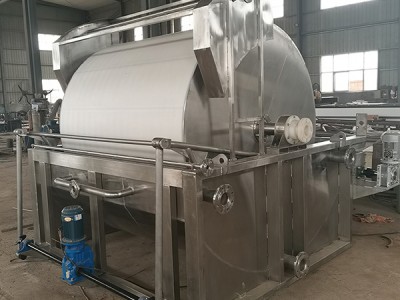
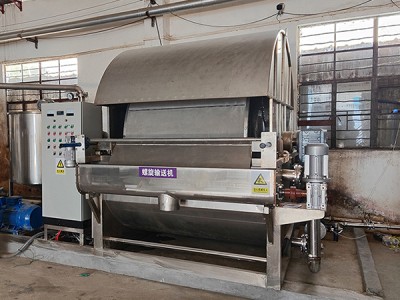
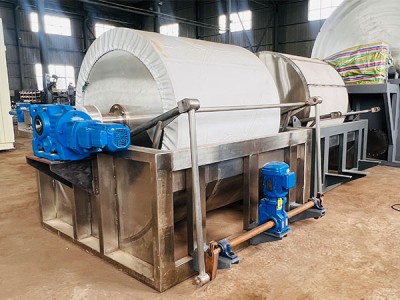
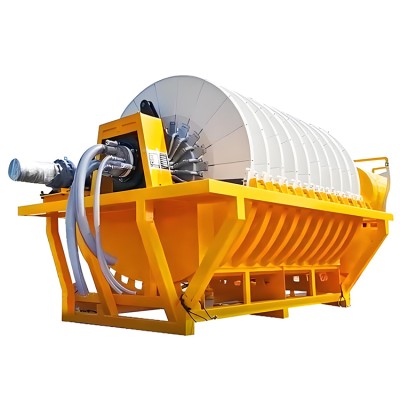
In the sugar industry, vacuum drum filters are primarily used for sugar juice clarification, sugar syrup separation, and filter mud treatment. Operating on the principle of negative pressure adsorption, they separate liquids from solid particles. These filters offer advantages such as continuous operation, high processing capacity, and low moisture content in the filter cake.
Application Steps of rotary vacuum filters in Sugar Production:
1. Preparation Phase:
Inspect equipment seals, filter cloths, vacuum systems, and agitation devices for proper functioning.
Apply a precoat of filter aid to the filter cloth to enhance filtration efficiency.
Activate the vacuum pump to establish stable negative pressure inside the drum.
2. Feeding and Adsorption Filtration:
Feed the material to be filtered into the filter slurry tank.
With the drum partially submerged in the filter slurry, under vacuum pressure:
- Liquid is drawn into the drum interior and discharged;
- Solid particles are adsorbed onto the filter cloth surface, forming a filter cake.
3. Filter Cake Washing (as required by process)
After the drum rotates above the liquid surface, spray nozzles wash the filter cake to recover residual sugar or enhance cake purity.
The wash liquid is also drawn into the drum under vacuum pressure.
4. Filter Cake Dewatering
The drum continues rotating, further dewatering the cake in the vacuum zone to reduce moisture content.
5. Filter Cake Discharge
When the drum reaches the discharge zone, the internal vacuum is broken. A scraper or discharge roller then removes the filter cake.
The filter cake can be treated as a byproduct (e.g., filter mud) for subsequent processing.
6. Filter Cloth Regeneration
After discharge, the filter cloth is spray-washed to remove residual particles, ensuring filtration efficiency for the next cycle.
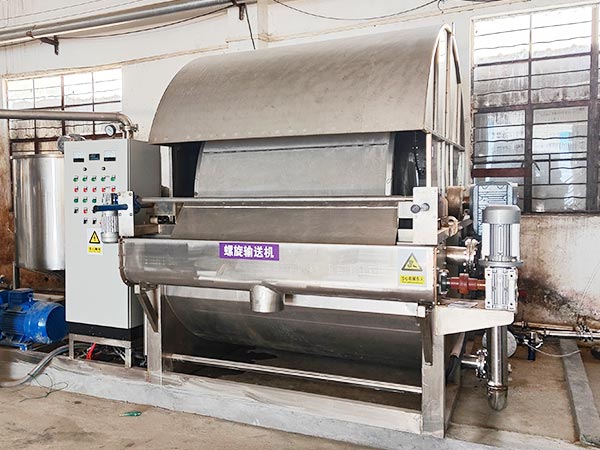
Applications of rotary vacuum filter in sugar industry:
Vacuum drum filters are widely used in the sugar industry as a key piece of equipment for enhancing juice clarification efficiency, reducing energy consumption, and improving finished sugar quality. Their primary applications include:
1. Sugarcane Juice Filtration:
Sugarcane juice contains substantial suspended impurities, colloidal substances, and fine fibers. Vacuum drum filters efficiently perform primary clarification, rapidly separating solid-liquid mixtures from the juice. This significantly reduces the load on subsequent heating and evaporation stages while improving juice transparency and purity.
2. Syrup Filtration:
Prior to evaporation and boiling, syrup retains trace fine particles and colorants. Precision filtration via vacuum drum filters further removes suspended solids, improving syrup color and fluidity. This provides more stable feedstock for crystallization, enhancing white sand sugar whiteness and crystallization efficiency.
3. Waste Molasses Filtration
Waste molasses generated during sugar production contains significant impurities and colloidal substances, directly affecting subsequent fermentation and deep processing applications. Vacuum drum filters effectively remove solid particles from waste molasses, enhancing its purity and fermentability. This provides high-quality feedstock for downstream products such as alcohol, yeast, and amino acids.
4. Wastewater Treatment
Sugar mill wastewater features complex composition and high suspended solids content. Vacuum drum filters serve as effective pretreatment equipment, rapidly separating solid suspensions to reduce COD and BOD loads. This enhances the efficiency and stability of subsequent biological treatment processes. Recovered filter cake can be utilized as animal feed or for biomass energy applications, achieving resource recycling.
Precautions for Using Rotary Vacuum Filters in the Sugar Industry:
1. Maintain stable vacuum levels to ensure filtration efficiency.
2. Regularly inspect filter cloth wear and replace promptly.
3. Control slurry concentration and temperature to prevent cake formation issues.
4. Prevent filter cloth clogging by adding precoat or increasing wash intensity when necessary.
5. Ensure equipment sealing to avoid vacuum loss due to air leaks.
In summary, rotary vacuum filters play an irreplaceable role in the sugar industry. Whether clarifying sugarcane juice, refining syrup, purifying waste molasses, or pre-treating wastewater, they deliver significant economic and environmental benefits to sugar producers through their efficient, stable, and energy-saving performance. As sugar production processes continue to evolve toward automation, continuous operation, and higher quality standards, vacuum drum filters will remain a key piece of equipment for enhancing product quality, optimizing production workflows, and driving green industry upgrades, leveraging their proven and reliable filtration capabilities.