 English
 日本
日本 한국인
한국인 Français
 Deutsch
 español
 Italiano
 Portugal
 Việt Nam
 türkiye
 عرب
عرب Русский
 čeština
 แบบไทย
 Eesti
Eesti Gaeilge
 Hmoob
Hmoob íslenskur
 Cymraeg
 български
 اردو
اردو Polski
 Hrvatski
 українська
 bosanski
 فارسی
فارسی lietuvių
 latviski
 עִברִית
 Română
 Ελληνικά
 dansk
dansk Magyar
 norsk
norsk Suomalainen
 Nederlands
 svenska
 slovenský
 Slovenščina
 हिंदी
हिंदी Indonesia
 Melayu
 Malti
Malti Kreyòl ayisyen
 català
 বাংলা
বাংলা Српски
 o'zbek

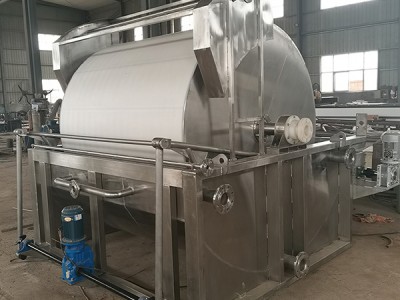
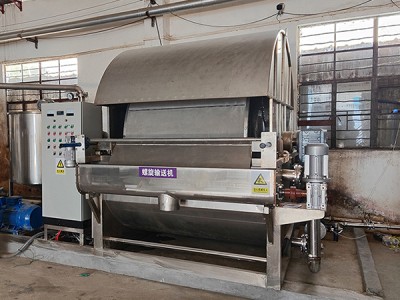
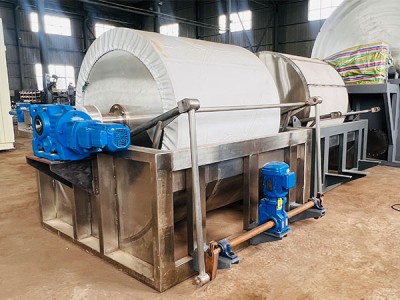
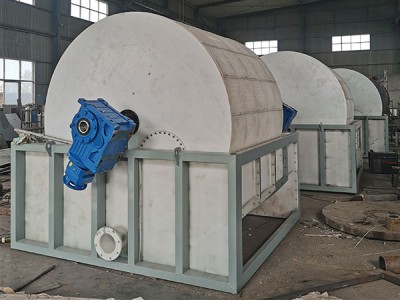
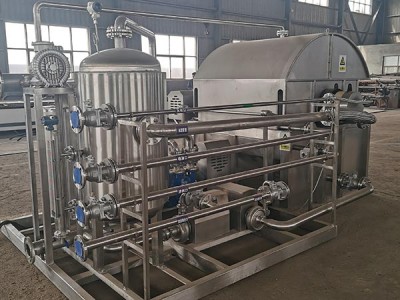
As an external filtration continuous vacuum filtration equipment, the Scraper Type Rotary Vacuum Drum Filter has become a mainstream solid-liquid separation solution in the industry due to its advantages of continuous automated operation, high filtration accuracy, and stable performance. This article provides a comprehensive overview of the working principle, structure, advantages, application scenarios, and key selection factors of this equipment.
What Is a Scraper Type Rotary Vacuum Drum Filter?
Featuring scraper discharge as its core design, the equipment combines micro-negative-pressure back-blowing assistance for efficient cake removal. It ensures clean filter cake separation, low failure rates, high filtration efficiency, and stable operation, offering excellent versatility across various industrial applications.
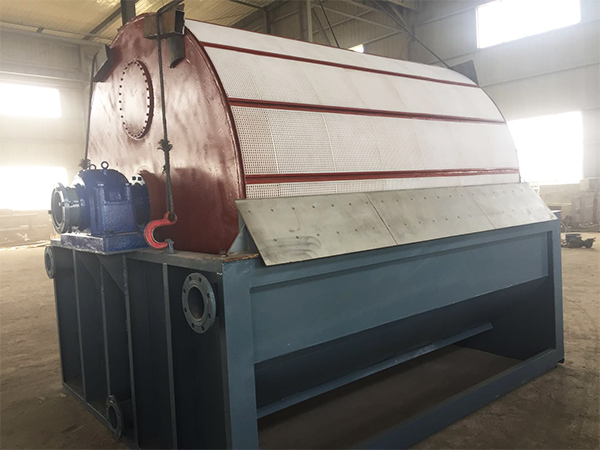
Key Unique Features of Scraper Type Rotary Vacuum Drum Filters
Compared with conventional vacuum filtration equipment, scraper-type models offer multiple unique advantages, which are the key reasons why they are widely adopted in mining, chemical, environmental protection, and other industrial sectors.
Dual Discharge System with Scraper and Back-Blowing, Higher Material Recovery Rate
This is the most distinctive core feature of the equipment. The discharge zone adopts an adjustable precision mechanical scraper to separate the filter cake, combined with a low-pressure micro back-blowing process that slightly expands the filter cloth, completely eliminating filter cake adhesion and residue. The clean discharge performance is significantly superior to conventional models, greatly improving solid material recovery rates and reducing material loss.
Fixed Filter Cloth Design, Low Wear and High Stability
The filter cloth of the scraper-type model is fixed directly onto the drum surface, with no folding, deviation, or stretching movements. This eliminates common issues of filter cloth tearing and misalignment found in belt-type filtration equipment. The filter cloth has a longer service life, significantly reducing consumable replacement costs and downtime for maintenance, while ensuring highly stable equipment operation.
Fully Automatic Continuous Operation, Suitable for Large-Scale Production
The equipment operates through a fully closed-loop continuous cycle without intermittent shutdowns, making it suitable for 24-hour continuous factory production. From vacuum filtration and cake formation to filter cloth regeneration, all processes are completed automatically without manual supervision. This effectively reduces labor costs and meets the requirements of modern automated production lines.
Wide Range of Application Conditions, Controllable Filtration Performance
By adjusting the drum rotation speed, vacuum level, and scraper clearance, the equipment can be flexibly adapted to slurries with different particle sizes, viscosities, and solid contents. It also supports precise filter cake washing to effectively remove impurities, while maintaining stable control of filter cake moisture content. This enables the equipment to meet various production requirements, from coarse filtration to fine filtration.
Key Differences Between Scraper-Type and Conventional Rotary Drum Vacuum Filters
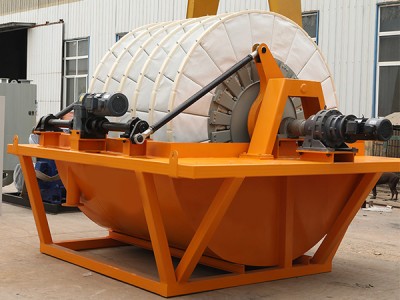
Many users may confuse different types of rotary drum vacuum filters during equipment selection, making it difficult to match the right equipment to their operating conditions. The following concise comparison table clearly highlights the key differences between scraper-type, conventional belt-type, and precoat-type models, helping users make faster and more accurate equipment selections.
| Comparison dimensions | Standard Rotary Drum Vacuum Filter (Belt-discharge/Pre-coat Type) | Scraper-discharge vacuum rotary drum filter |
| Discharge method | Uses a folding-belt turnover discharge mechanism without mechanical scrapers; fine-grained or slightly sticky materials tend to leave residue, resulting in a relatively low material recovery rate. | Dual-mode discharge combining mechanical scraper peeling and low-pressure micro-reverse blowing ensures thorough material removal and high recovery rates. |
| Filter cloth service life | The filter cloth undergoes reciprocating movement, resulting in significant wear from friction and stretching; this necessitates frequent replacement and leads to high consumable costs. | The filter cloth is securely fixed, preventing misalignment and wear; this results in minimal material loss and an extended service life. |
| Applicable operating conditions | It has significant operational limitations, being suitable only for materials that are coarse-grained, prone to detachment, and low in viscosity. | It offers strong operational compatibility and can stably process various industrial slurries characterized by fine particles, moderate viscosity, and a tendency to settle. |
| Operational complexity and failure rate | Complex structure, numerous components, multiple potential failure points, cumbersome routine operation and maintenance, and frequent downtime for repairs. | Simple structure with no complex transmission mechanisms, resulting in an extremely low failure rate and hassle-free operation and maintenance. |
Applications of Scraper Type Rotary Vacuum Drum Filters
With the advantages of strong versatility, stable operation, and low maintenance costs, this equipment is widely used in various industrial fields and is an ideal choice for continuous solid-liquid separation applications.
Mining and Metallurgical Industry
Tailings slurry dewatering, mineral slurry filtration, and metallurgical powder material separation, effectively reducing tailings moisture content for easier storage and transportation.
Fine Chemical Industry
Filtration and washing of materials such as pigments, resins, salts, and catalysts, effectively improving material purity and removing impurities from the mother liquor.
Environmental Wastewater Treatment
Dewatering of chemical sludge, municipal sludge, and wastewater slurries, achieving sludge volume reduction, compliant discharge, and resource recovery.
Light Industry and Pharmaceutical Industry
Fine filtration and dewatering of materials such as food intermediates, pharmaceutical slurries, and papermaking white water sludge.
Overall, for slurry applications requiring continuous processing, high material recovery rates, and low filter cake moisture content, scraper-type rotary drum vacuum filters are the preferred choice.
Key Selection Considerations
To ensure the equipment matches the operating conditions and achieves optimal performance, avoid selecting oversized models blindly. Focus on the following key factors during equipment selection.
Confirm Material Parameters
First, determine the material characteristics, including slurry solid content, particle size, material viscosity, and whether the material is prone to sedimentation.
Define Production Requirements
Clarify the production requirements, including hourly processing capacity, target filter cake moisture content, and whether a filter cake washing process is required.
Match Equipment Parameters
Select suitable equipment parameters according to the operating conditions, including filtration area, adjustable drum speed range, and vacuum configuration, to avoid equipment overload or unnecessary capacity waste.
Recommendation:
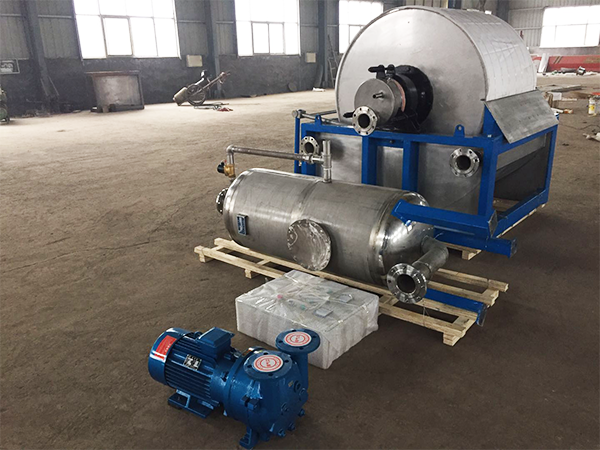
Specific equipment selection should also consider the manufacturer’s customized configuration requirements. For fine particle materials, high-precision filter cloth can be equipped; for high-viscosity materials, the scraper and back-blowing system can be optimized to better adapt to special operating conditions.
Daily Maintenance
Conclusion
With the core advantages of continuous automated operation, stable filtration performance, easy maintenance, and strong versatility, the scraper-type rotary drum vacuum filters effectively solves the limitations of traditional filtration equipment, including low efficiency, poor filtration performance, and high labor costs. It has become a classic and essential equipment for industrial solid-liquid separation.
Proper equipment selection and standardized maintenance can maximize filtration efficiency, reduce energy consumption and production costs, and meet the requirements of large-scale and continuous production across various industries.