 English
 日本
日本 한국인
한국인 Français
 Deutsch
 español
 Italiano
 Portugal
 Việt Nam
 türkiye
 عرب
عرب Русский
 čeština
 แบบไทย
 Eesti
Eesti Gaeilge
 Hmoob
Hmoob íslenskur
 Cymraeg
 български
 اردو
اردو Polski
 Hrvatski
 українська
 bosanski
 فارسی
فارسی lietuvių
 latviski
 עִברִית
 Română
 Ελληνικά
 dansk
dansk Magyar
 norsk
norsk Suomalainen
 Nederlands
 svenska
 slovenský
 Slovenščina
 हिंदी
हिंदी Indonesia
 Melayu
 Malti
Malti Kreyòl ayisyen
 català
 বাংলা
বাংলা Српски
 o'zbek

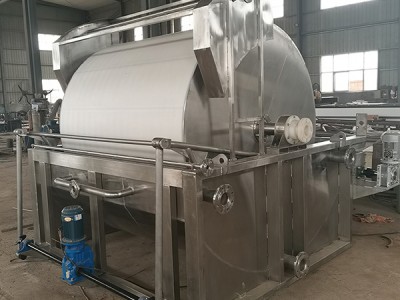
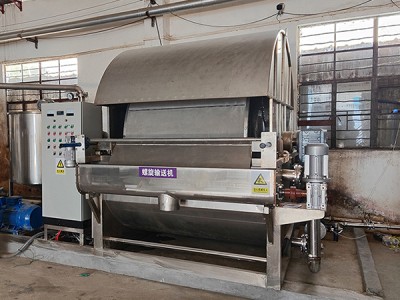
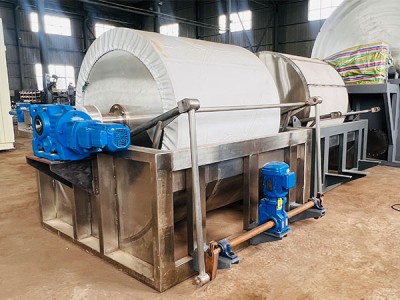
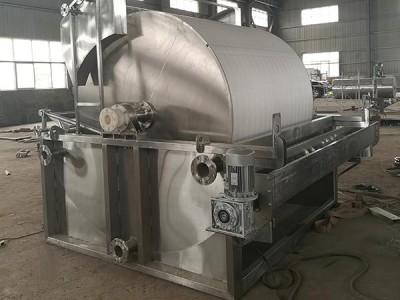
What is a Plastic vacuum drum filter?
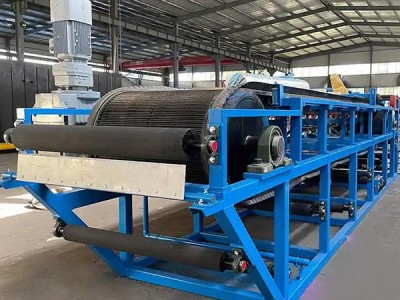
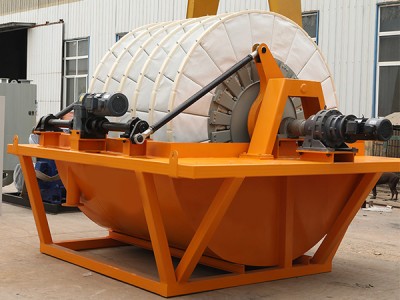
Plastic vacuum drum filter is a continuous solid-liquid separation equipment driven by vacuum force. It adopts corrosion-resistant plastics such as polypropylene and PVC as core contact materials.It is mainly composed of plastic rotary drum, slurry tank, vacuum system, cleaning device and automatic discharging mechanism. Its core working principle realizes cyclic operation in five stages through drum rotation.
Filtration Stage: Part of the rotary drum is submerged in slurry. Vacuum suction draws liquid through filter cloth into the drum, and solid particles form filter cake.
Dewatering Stage: After the filter cake leaves the slurry tank, continuous vacuum suction reduces its moisture content.
Washing Stage: Cleaning agent is sprayed to remove soluble impurities from filter cake, and washing liquid is collected separately.
Blow-off Stage: Compressed air blows reversely against the filter cake to facilitate separation and further dewatering.
Discharging Stage: The filter cake is automatically stripped off by scraper or belt, and the filter cloth is cleaned simultaneously for reuse.
Filtration Stage: Part of the rotary drum is submerged in slurry. Vacuum suction draws liquid through filter cloth into the drum, and solid particles form filter cake.
Dewatering Stage: After the filter cake leaves the slurry tank, continuous vacuum suction reduces its moisture content.
Washing Stage: Cleaning agent is sprayed to remove soluble impurities from filter cake, and washing liquid is collected separately.
Blow-off Stage: Compressed air blows reversely against the filter cake to facilitate separation and further dewatering.
Discharging Stage: The filter cake is automatically stripped off by scraper or belt, and the filter cloth is cleaned simultaneously for reuse.
Why choose vacuum rotary drum filters made of plastic material?
Compared with metal units such as stainless steel filters and traditional filtering equipment, plastic vacuum drum filters feature core advantages in six aspects, effectively solving practical pain points in industrial production.
1. Superior Corrosion Resistance
Plastic construction resists strong acids, alkalis, salt solutions and other corrosive media. It is perfectly applicable to chemical acid-base slurry, mine acidic wastewater, heavy metal-containing sludge and similar working conditions. It prevents corrosion and liquid leakage of metal equipment, and extends service life by over 30%.
2. High Degree of Automation
Uninterrupted continuous drum operation realizes fully automatic cyclic working without shutdown. The hourly processing capacity ranges from several tons to dozens of tons, boosting working efficiency by 50% compared with plate and frame filters. Equipped with PLC control system, it can automatically adjust rotating speed and vacuum degree to support unattended operation, cutting labor costs by 60%.
3. Stable Solid-Liquid Separation Performance
The filtration precision reaches 1-10μm. Both filter cake thickness and moisture content are precisely controllable to avoid quality deviation caused by manual operation. The automatic filter cloth cleaning system prevents clogging and ensures long-term stable filtration, ideal for fine-particle and high-viscosity materials.
4. Wide Application Range
It operates with low noise and slight vibration, and supports flexible speed regulation. Operating parameters can be adjusted according to slurry concentration and particle size. It can process fine particle slurry, sludge, chemical crystal slurry, tailing slurry and various other materials with strong universal compatibility.
5. Light Weight & Easy Maintenance
It is much lighter than stainless steel filters of the same specification, requiring no heavy foundation for installation and enabling easy relocation. Featuring simple structure and few vulnerable parts, the filter cloth is easy to assemble, disassemble and clean with simple daily maintenance. Its procurement cost, later maintenance and anti-corrosion expenditure are far lower than metal filters, delivering outstanding overall cost performance.
6. Excellent Durability
Anti-aging and wear-resistant engineering plastic materials enjoy far longer service life than carbon steel and ordinary stainless steel equipment in corrosive environments. It maintains low failure rate during long-term continuous operation, reducing equipment replacement frequency and lowering long-term production costs for enterprises.
Compared with metal units such as stainless steel filters and traditional filtering equipment, plastic vacuum drum filters feature core advantages in six aspects, effectively solving practical pain points in industrial production.
1. Superior Corrosion Resistance
Plastic construction resists strong acids, alkalis, salt solutions and other corrosive media. It is perfectly applicable to chemical acid-base slurry, mine acidic wastewater, heavy metal-containing sludge and similar working conditions. It prevents corrosion and liquid leakage of metal equipment, and extends service life by over 30%.
2. High Degree of Automation
Uninterrupted continuous drum operation realizes fully automatic cyclic working without shutdown. The hourly processing capacity ranges from several tons to dozens of tons, boosting working efficiency by 50% compared with plate and frame filters. Equipped with PLC control system, it can automatically adjust rotating speed and vacuum degree to support unattended operation, cutting labor costs by 60%.
3. Stable Solid-Liquid Separation Performance
The filtration precision reaches 1-10μm. Both filter cake thickness and moisture content are precisely controllable to avoid quality deviation caused by manual operation. The automatic filter cloth cleaning system prevents clogging and ensures long-term stable filtration, ideal for fine-particle and high-viscosity materials.
4. Wide Application Range
It operates with low noise and slight vibration, and supports flexible speed regulation. Operating parameters can be adjusted according to slurry concentration and particle size. It can process fine particle slurry, sludge, chemical crystal slurry, tailing slurry and various other materials with strong universal compatibility.
5. Light Weight & Easy Maintenance
It is much lighter than stainless steel filters of the same specification, requiring no heavy foundation for installation and enabling easy relocation. Featuring simple structure and few vulnerable parts, the filter cloth is easy to assemble, disassemble and clean with simple daily maintenance. Its procurement cost, later maintenance and anti-corrosion expenditure are far lower than metal filters, delivering outstanding overall cost performance.
6. Excellent Durability
Anti-aging and wear-resistant engineering plastic materials enjoy far longer service life than carbon steel and ordinary stainless steel equipment in corrosive environments. It maintains low failure rate during long-term continuous operation, reducing equipment replacement frequency and lowering long-term production costs for enterprises.
Application Scenarios
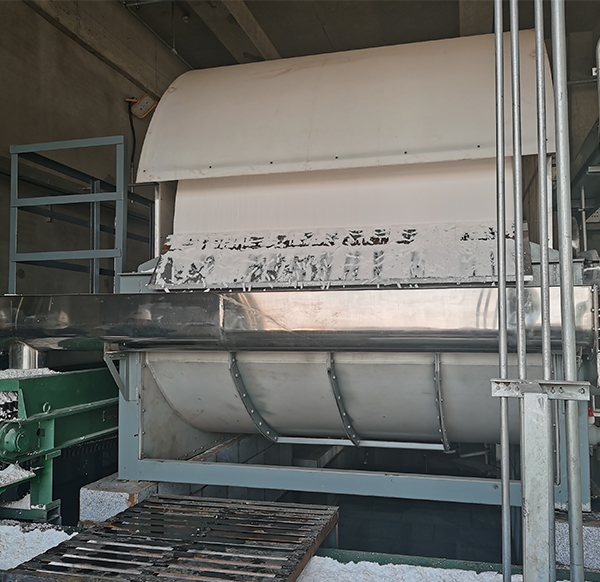
Featuring strong adaptability, the Plastic vacuum drum filter is designed for acid & alkali resistance, anti-corrosion performance and continuous automatic filtration & dewatering. It handles various corrosive slurries, heavily contaminated sludge and industrial mineral slurries, widely used for solid-liquid separation across diverse industries.
Featuring strong adaptability, the Plastic vacuum drum filter is designed for acid & alkali resistance, anti-corrosion performance and continuous automatic filtration & dewatering. It handles various corrosive slurries, heavily contaminated sludge and industrial mineral slurries, widely used for solid-liquid separation across diverse industries.
1. Chemical Industry
Purify fine chemical products such as soda ash, caustic soda and ammonium sulfate. It processes acid-base slurries and recovers mother liquor, improving product purity and cutting raw material waste.
Purify fine chemical products such as soda ash, caustic soda and ammonium sulfate. It processes acid-base slurries and recovers mother liquor, improving product purity and cutting raw material waste.
2. Mining Industry
Dewater sludge from mine acidic wastewater, and process concentrates and tailings of copper, iron and gold ores. It lowers the moisture content of concentrates below 20% and reduces tailings volume by one fifth, meeting environmental discharge standards.
Dewater sludge from mine acidic wastewater, and process concentrates and tailings of copper, iron and gold ores. It lowers the moisture content of concentrates below 20% and reduces tailings volume by one fifth, meeting environmental discharge standards.
3. Environmental Protection Industry
Carry out dewatering treatment on municipal sewage sludge and industrial heavy metal-containing sludge. The moisture content of sludge can be reduced from 95% to under 30%. The dried sludge can be used for power generation via incineration or building material production, realizing resource recycling.
Carry out dewatering treatment on municipal sewage sludge and industrial heavy metal-containing sludge. The moisture content of sludge can be reduced from 95% to under 30%. The dried sludge can be used for power generation via incineration or building material production, realizing resource recycling.
Key Selection Guidelines
As industrial-grade equipment, proper model selection directly determines operational performance and overall costs. Buyers shall focus on the following three core points to avoid blind purchases.
As industrial-grade equipment, proper model selection directly determines operational performance and overall costs. Buyers shall focus on the following three core points to avoid blind purchases.
1. Confirm Material Properties
Slurry concentration and particle size: Use large-aperture filter cloth with high rotating speed for high-concentration and coarse-grain materials; adopt high-precision filter cloth with low rotating speed for low-concentration and fine-grain materials.
Corrosiveness: PVDF material is preferred for highly corrosive media, while PP material is suitable for general corrosive working conditions.
Moisture content requirements: Models equipped with secondary dewatering devices are recommended for materials intended for smelting or incineration; basic types are sufficient for primary solid-liquid separation.
Slurry concentration and particle size: Use large-aperture filter cloth with high rotating speed for high-concentration and coarse-grain materials; adopt high-precision filter cloth with low rotating speed for low-concentration and fine-grain materials.
Corrosiveness: PVDF material is preferred for highly corrosive media, while PP material is suitable for general corrosive working conditions.
Moisture content requirements: Models equipped with secondary dewatering devices are recommended for materials intended for smelting or incineration; basic types are sufficient for primary solid-liquid separation.
2. Confirm Processing Capacity and Process Compatibility
Select drum specifications based on hourly and daily throughput. For instance, a rotary drum sized 1.5m in diameter and 3m in length can process 5-10 cubic meters of slurry per hour.
Process linkage: Choose PLC control systems with signal interfaces if connection with upstream and downstream equipment is required. Explosion-proof design shall be adopted for flammable and explosive materials.
Select drum specifications based on hourly and daily throughput. For instance, a rotary drum sized 1.5m in diameter and 3m in length can process 5-10 cubic meters of slurry per hour.
Process linkage: Choose PLC control systems with signal interfaces if connection with upstream and downstream equipment is required. Explosion-proof design shall be adopted for flammable and explosive materials.
3. Priority Ranking of Core Configurations
Vacuum system: Water ring vacuum pump is the top choice, which maintains stable vacuum degree ranging from -0.06MPa to -0.09MPa with low energy consumption and low noise.
Filter cloth and discharging mode: Rope discharging suits viscous materials, and scraper discharging fits hard filter cakes. Acid and alkali resistant polyester or PTFE filter cloth with easy assembly and disassembly is highly recommended.
Vacuum system: Water ring vacuum pump is the top choice, which maintains stable vacuum degree ranging from -0.06MPa to -0.09MPa with low energy consumption and low noise.
Filter cloth and discharging mode: Rope discharging suits viscous materials, and scraper discharging fits hard filter cakes. Acid and alkali resistant polyester or PTFE filter cloth with easy assembly and disassembly is highly recommended.
Maintenance & After-sales Service
1. Daily Maintenance Tips
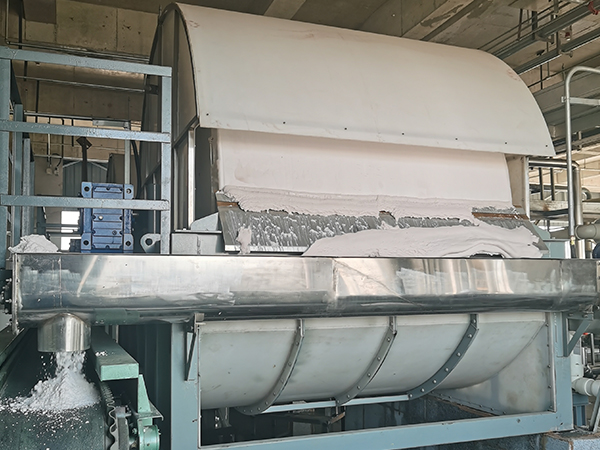
Check vacuum degree and filter cloth cleanliness daily; clean nozzles and slurry tanks every week; replenish bearing grease quarterly; inspect drum concentricity and sealing parts condition annually.
1. Daily Maintenance Tips
Check vacuum degree and filter cloth cleanliness daily; clean nozzles and slurry tanks every week; replenish bearing grease quarterly; inspect drum concentricity and sealing parts condition annually.
2. Troubleshooting for Common Faults
Poor filter cake discharge: adjust blow-off pressure or scraper gap.
Insufficient vacuum: check vacuum pump and pipeline tightness.
Turbid filtrate: replace filter cloth or adjust drum rotating speed.
Poor filter cake discharge: adjust blow-off pressure or scraper gap.
Insufficient vacuum: check vacuum pump and pipeline tightness.
Turbid filtrate: replace filter cloth or adjust drum rotating speed.
3. After-sales Support
Require suppliers to provide installation & commissioning guidance and operational training, as well as online technical support. Choose manufacturers that offer one-year warranty for core components and sufficient spare parts supply.
Require suppliers to provide installation & commissioning guidance and operational training, as well as online technical support. Choose manufacturers that offer one-year warranty for core components and sufficient spare parts supply.
Featured with outstanding corrosion resistance, long service life, high automatic efficiency, stable separation effect and controllable operating cost, Plastic vacuum drum filters have become the preferred solid-liquid separation equipment for chemical, mining, environmental protection and other industries.
From material matching and configuration selection in the model selection stage, to simple routine maintenance and stable operation in later use, it delivers high cost performance throughout the whole service life, and effectively meets enterprises’ core demands including corrosive working condition adaptation, continuous production and environmental compliance.
Whether for improving product purity, optimizing production efficiency or cutting overall operating costs, this equipment can provide reliable practical solutions.
Selecting a suitable Plastic vacuum drum filter is not only a wise procurement decision, but also a long-term investment to help enterprises realize green production and efficient development.
From material matching and configuration selection in the model selection stage, to simple routine maintenance and stable operation in later use, it delivers high cost performance throughout the whole service life, and effectively meets enterprises’ core demands including corrosive working condition adaptation, continuous production and environmental compliance.
Whether for improving product purity, optimizing production efficiency or cutting overall operating costs, this equipment can provide reliable practical solutions.
Selecting a suitable Plastic vacuum drum filter is not only a wise procurement decision, but also a long-term investment to help enterprises realize green production and efficient development.