 English
 日本
日本 한국인
한국인 Français
 Deutsch
 español
 Italiano
 Portugal
 Việt Nam
 türkiye
 عرب
عرب Русский
 čeština
 แบบไทย
 Eesti
Eesti Gaeilge
 Hmoob
Hmoob íslenskur
 Cymraeg
 български
 اردو
اردو Polski
 Hrvatski
 українська
 bosanski
 فارسی
فارسی lietuvių
 latviski
 עִברִית
 Română
 Ελληνικά
 dansk
dansk Magyar
 norsk
norsk Suomalainen
 Nederlands
 svenska
 slovenský
 Slovenščina
 हिंदी
हिंदी Indonesia
 Melayu
 Malti
Malti Kreyòl ayisyen
 català
 বাংলা
বাংলা Српски
 o'zbek

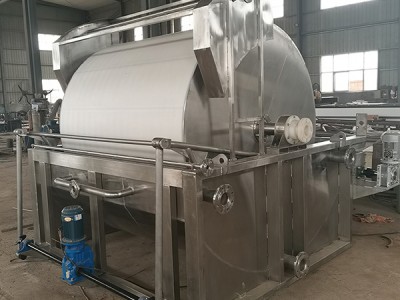
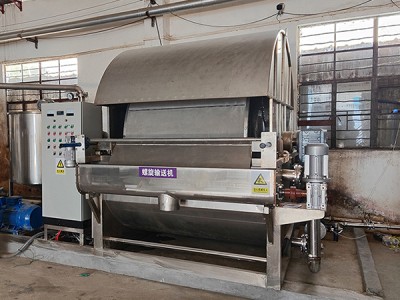
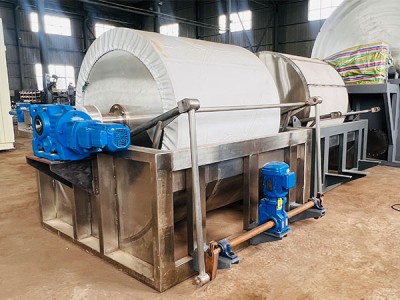
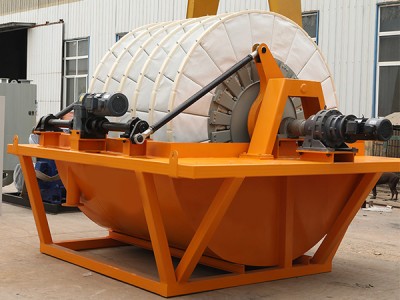
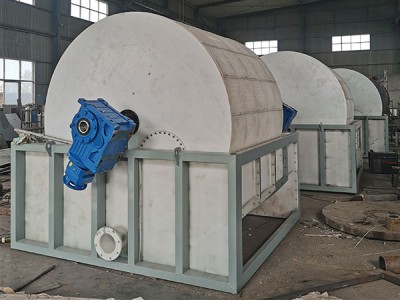
The filter cake thickness of the vacuum rotary filter is uneven. The core solution approach covers four key dimensions: feed distribution, equipment precision, vacuum system and filter cloth condition. Troubleshooting shall be carried out in the sequence of checking materials first, calibrating equipment second, optimizing the vacuum system third, and maintaining the filter cloth last, so as to eliminate problems such as material segregation, drum misalignment, uneven vacuum pressure and filter medium failure.
I. Optimization of the Feeding System
1.Stabilize the concentration and uniformity of slurry
Activate the standard paddle agitator to prevent sedimentation and stratification of fine particles. For high-viscosity or easily settleable materials such as metallurgical concentrates and starch, install additional auxiliary stirring devices to maintain the slurry solid content steadily within 40%-55%.
Equip a buffer tank and flow stabilizer plates to eliminate feeding pulsation. Avoid direct high-flow impact on the rotary drum, so as to prevent local over-concentration or under-concentration of the slurry.
Activate the standard paddle agitator to prevent sedimentation and stratification of fine particles. For high-viscosity or easily settleable materials such as metallurgical concentrates and starch, install additional auxiliary stirring devices to maintain the slurry solid content steadily within 40%-55%.
Equip a buffer tank and flow stabilizer plates to eliminate feeding pulsation. Avoid direct high-flow impact on the rotary drum, so as to prevent local over-concentration or under-concentration of the slurry.
2. Optimize the material distribution method
Adjust the height and angle of the overflow feed port to enable the slurry to flow evenly across the full axial width of the drum. If one-sided material deviation occurs, install adjustable flow distribution baffles or a perforated distributor to ensure full material coverage without dead zones.
Adjust the height and angle of the overflow feed port to enable the slurry to flow evenly across the full axial width of the drum. If one-sided material deviation occurs, install adjustable flow distribution baffles or a perforated distributor to ensure full material coverage without dead zones.
Match the feed rate with the drum rotating speed: increase the feed rate at a higher drum speed and reduce the feed rate at a lower speed, so as to avoid local material overlap or excessively thin filter cake layers.
II. Calibration of Equipment Operation Precision
1. Calibrate the levelness and concentricity of the rotary drum
Check the axial and radial levelness of the drum with a level gauge, with the deviation controlled within ≤0.1 mm/m. Adjust the support rollers and bearing base gaskets to rectify inclination and prevent uneven contact with the filter cloth caused by drum oscillation.
Inspect the tension of drive gears, chains and belts to eliminate slipping and tooth jumping, and ensure a constant rotating speed.
Check the axial and radial levelness of the drum with a level gauge, with the deviation controlled within ≤0.1 mm/m. Adjust the support rollers and bearing base gaskets to rectify inclination and prevent uneven contact with the filter cloth caused by drum oscillation.
Inspect the tension of drive gears, chains and belts to eliminate slipping and tooth jumping, and ensure a constant rotating speed.
2. Precise adjustment of the scraper
Keep the full length of the scraper parallel and closely fitted to the rotary drum, with a clearance of 0.5–1.5 mm. Adjust the spring pressure and mounting angle to ensure uniform filter cake discharge, without local residue, scraping marks or filter cloth damage.
Keep the full length of the scraper parallel and closely fitted to the rotary drum, with a clearance of 0.5–1.5 mm. Adjust the spring pressure and mounting angle to ensure uniform filter cake discharge, without local residue, scraping marks or filter cloth damage.
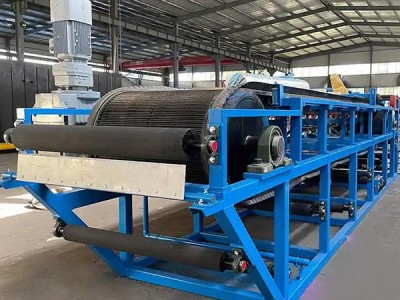
For belt discharge models, inspect the filter cloth deviation correction rollers and tension rollers to keep the filter cloth centered with even tension, and prevent uneven filter cake thickness caused by cloth deviation.
3. Rotation Speed Matching Optimization
For fine-grained and easily filterable materials: set the rotation speed at 0.9–1.5 r/min to form a thin and uniform filter cake.
For coarse-grained and difficult-to-filter materials: set the rotation speed at 0.3–0.8 r/min to extend the adsorption time and prevent excessive local filter cake thickness and shedding.
For fine-grained and easily filterable materials: set the rotation speed at 0.9–1.5 r/min to form a thin and uniform filter cake.
For coarse-grained and difficult-to-filter materials: set the rotation speed at 0.3–0.8 r/min to extend the adsorption time and prevent excessive local filter cake thickness and shedding.
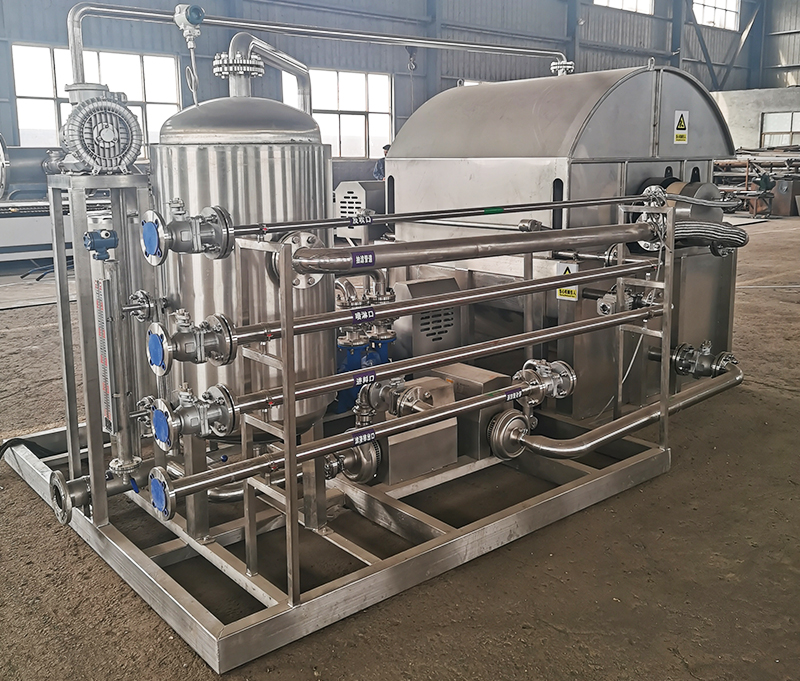
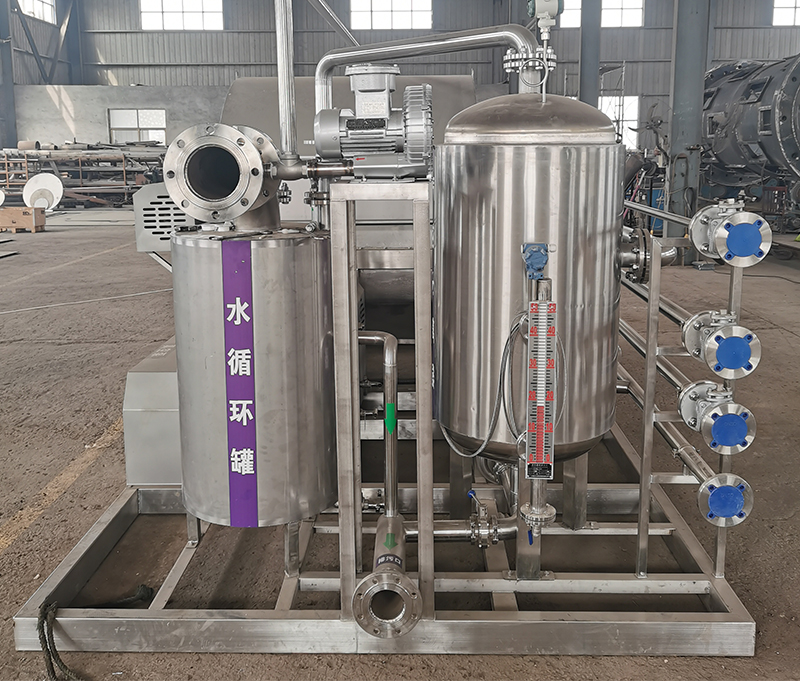
III. Vacuum System Optimization
1. Vacuum Degree Stabilization
Perform comprehensive leak detection: inspect the distribution head, pipeline flanges, shaft end seals and filter chamber sealing strips with soapy water or a vacuum tester. Tighten loose connections and replace aged sealing rings.
Perform comprehensive leak detection: inspect the distribution head, pipeline flanges, shaft end seals and filter chamber sealing strips with soapy water or a vacuum tester. Tighten loose connections and replace aged sealing rings.
Clean the gas-water separator, vacuum pipelines and clogged filter holes to ensure the vacuum pressure difference in all areas is no more than 0.01 MPa.
2. Vacuum Degree Matching with Material Characteristics
Easily filterable materials (coarse particles, low viscosity): maintain vacuum at -0.04 ~ -0.06 MPa to avoid dense and uneven filter cake.
Easily filterable materials (coarse particles, low viscosity): maintain vacuum at -0.04 ~ -0.06 MPa to avoid dense and uneven filter cake.
Difficult-to-filter materials (fine particles, high viscosity): maintain vacuum at -0.06 ~ -0.08 MPa to ensure stable cake formation and uniform thickness.
3. Distribution Head Maintenance
Inspect the friction surface of the distribution head. Repair or replace components with wear and scratches. Ensure precise switching among the vacuum zone, drying zone and back-blow zone, preventing air leakage and local pressure loss.
Inspect the friction surface of the distribution head. Repair or replace components with wear and scratches. Ensure precise switching among the vacuum zone, drying zone and back-blow zone, preventing air leakage and local pressure loss.
IV. Filter Cloth Maintenance and Selection
1. Filter Cloth Flatness and Tension Control
During installation, keep the filter cloth free of wrinkles and deviation with straight seams. Adjust the tensioning device to ensure uniform axial tension of the cloth.
Activate the automatic deviation correction system to prevent material leakage and missing filter layers caused by filter cloth wandering.
1. Filter Cloth Flatness and Tension Control
During installation, keep the filter cloth free of wrinkles and deviation with straight seams. Adjust the tensioning device to ensure uniform axial tension of the cloth.
Activate the automatic deviation correction system to prevent material leakage and missing filter layers caused by filter cloth wandering.
2. Cleaning and Regeneration
Backwash the filter cloth with high-pressure clean water every shift. For severe clogging, soak and clean the cloth with 5%–10% dilute hydrochloric acid or special detergent to restore pore permeability.
Replace the filter cloth immediately after 3–6 months of service, or when damage, hardening occurs, or filtration efficiency drops by 30%.
Backwash the filter cloth with high-pressure clean water every shift. For severe clogging, soak and clean the cloth with 5%–10% dilute hydrochloric acid or special detergent to restore pore permeability.
Replace the filter cloth immediately after 3–6 months of service, or when damage, hardening occurs, or filtration efficiency drops by 30%.
3. Model Selection and Matching
For fine-grained and viscous materials: adopt high-density polypropylene or nylon filter cloth.
For corrosive materials: choose 316L filter cloth or PTFE membrane-covered filter cloth.
Avoid inferior filter cloth with excessively large or small pore sizes or uneven weaving, so as to prevent local filtration leakage or blockage.
For fine-grained and viscous materials: adopt high-density polypropylene or nylon filter cloth.
For corrosive materials: choose 316L filter cloth or PTFE membrane-covered filter cloth.
Avoid inferior filter cloth with excessively large or small pore sizes or uneven weaving, so as to prevent local filtration leakage or blockage.
V. On-site Quick Troubleshooting Procedure
1. Filter Cake Inspection
When inspecting the filter cake, focus on "thickness uniformity, forming integrity and surface flatness".
When inspecting the filter cake, focus on "thickness uniformity, forming integrity and surface flatness".
If the filter cake is thicker or thinner on one side: prioritize checking whether the feed distributor is clogged, whether the distribution angle is offset, or if local throttling exists in the feeding pipeline.
If there is no filter cake in partial areas: besides checking for scraper wear and uneven clearance between the blade and rotary drum, confirm whether the filter cloth pores in the corresponding area are clogged and whether stubborn residue adheres to the filter cloth surface. Meanwhile, check if the slurry liquid level remains stable to avoid insufficient local material distribution caused by excessively low liquid level.
1. Pressure Measurement
When measuring the vacuum degree, record the "instantaneous fluctuation value, regional differential pressure range and duration".
When measuring the vacuum degree, record the "instantaneous fluctuation value, regional differential pressure range and duration".
Frequent vacuum fluctuations are mostly caused by aging vacuum seals, loose joints or worn sealing surfaces of the distribution head; meanwhile, check whether the pressure inside the vacuum tank remains stable.
A large regional differential pressure may result not only from pipeline blockage, but also from local filter cloth clogging or misaligned air passages in the distribution head. It is recommended to make a comprehensive judgment combined with filter cake inspection results. If the corresponding area of the filter cake appears overly dry, it is most likely caused by blocked pipelines or clogged filter cloth.
A large regional differential pressure may result not only from pipeline blockage, but also from local filter cloth clogging or misaligned air passages in the distribution head. It is recommended to make a comprehensive judgment combined with filter cake inspection results. If the corresponding area of the filter cake appears overly dry, it is most likely caused by blocked pipelines or clogged filter cloth.
2. Filter Cloth Inspection
When inspecting the filter cloth, focus on "tension consistency, running track and surface integrity".
When inspecting the filter cloth, focus on "tension consistency, running track and surface integrity".
Wrinkled filter cloth is usually caused by uneven tension or insufficient sensitivity of the deviation correction device. It is necessary to check whether the tension roller is deformed and whether the deviation correction sensor is offset.
For filter cloth deviation, observe the wandering direction. Unilateral deviation may result from level deviation at both ends of the rotary drum, while bilateral deviation requires checking whether the filter cloth joint is flat and smooth.
In case of filter cloth damage, distinguish between "edge wear and central holes". Edge wear is mostly related to an excessively small scraper clearance, while central holes are likely caused by hard impurities in the slurry. The feeding pretreatment process should also be inspected accordingly.
3. Precision Calibration
Mechanical precision calibration shall cover three major components: "rotary drum, scraper and frame".
Mechanical precision calibration shall cover three major components: "rotary drum, scraper and frame".
When the runout of the rotary drum exceeds 0.5 mm, inspect bearing wear and loose fixing bolts at both drum ends, and calibrate the drum levelness at the same time.
For an uneven scraper, measure the straightness of the blade with a level ruler and check whether the scraper bracket is deformed, to ensure even fitting between the blade and the drum surface.
In addition, check the frame for looseness and vibration, so as to prevent overall mechanical precision deviation caused by unstable frame structure.
4. Parameter Adjustment
Parameter adjustment shall follow the principles of "linked matching and material adaptability".
Parameter adjustment shall follow the principles of "linked matching and material adaptability".
Adjust the rotating speed according to the filter cake thickness, and optimize the vacuum degree based on slurry viscosity. The feed flow shall be interlocked and matched with rotating speed and vacuum level. It is recommended to record the optimal parameter combinations for different materials and establish a parameter database, so as to reduce fluctuations caused by manual adjustment.
VI. Preventive Maintenance Measures
1. Weekly Routine Inspection
Agitator Device
Check the agitator blades for deformation and wear, ensure no leakage at the shaft seal and stable stirring speed, so as to avoid feed unevenness caused by slurry sedimentation.
Agitator Device
Check the agitator blades for deformation and wear, ensure no leakage at the shaft seal and stable stirring speed, so as to avoid feed unevenness caused by slurry sedimentation.
Distributor
Clean residual materials at the feed outlet to ensure uniform distribution, and verify the flexibility of the distributor adjustment mechanism.
Clean residual materials at the feed outlet to ensure uniform distribution, and verify the flexibility of the distributor adjustment mechanism.
Scraper
Remove filter cake residue adhered to the blade, inspect blade wear, and grind or repair the blade when necessary.
Remove filter cake residue adhered to the blade, inspect blade wear, and grind or repair the blade when necessary.
Vacuum Sealing System
Focus on inspecting vacuum pipe joints, distribution head sealing surfaces and drum end face seals. Conduct a soap water leak test to maintain stable vacuum performance.
Focus on inspecting vacuum pipe joints, distribution head sealing surfaces and drum end face seals. Conduct a soap water leak test to maintain stable vacuum performance.
2. Monthly In-depth Maintenance
Calibrate drum level
Recheck the rotary drum level with a level gauge and adjust the leveling bolts in a timely manner to prevent level deviation caused by long-term operation.
Calibrate drum level
Recheck the rotary drum level with a level gauge and adjust the leveling bolts in a timely manner to prevent level deviation caused by long-term operation.
Clean vacuum pipelines
Perform high-pressure cleaning to remove residual filter residue and deposits inside the pipelines, ensure unobstructed flow, and reduce regional differential pressure.
Perform high-pressure cleaning to remove residual filter residue and deposits inside the pipelines, ensure unobstructed flow, and reduce regional differential pressure.
Verify filter cloth tension
Measure filter cloth tension with a tensiometer and adjust tension rollers to maintain uniform tension. Meanwhile, inspect the surface cleanliness of the filter cloth and clean it if necessary.
Measure filter cloth tension with a tensiometer and adjust tension rollers to maintain uniform tension. Meanwhile, inspect the surface cleanliness of the filter cloth and clean it if necessary.
Inspect the deviation correction system
Test the sensitivity of the deviation correction sensors, clean dust and dirt on the sensor surface, and ensure a stable running track of the filter cloth.
Test the sensitivity of the deviation correction sensors, clean dust and dirt on the sensor surface, and ensure a stable running track of the filter cloth.
3. Quarterly Special Maintenance
Replace sealing components
Regularly replace wearing parts such as vacuum seals, rotary drum end face seals and agitator shaft seals to prevent leakage caused by seal aging.
Replace sealing components
Regularly replace wearing parts such as vacuum seals, rotary drum end face seals and agitator shaft seals to prevent leakage caused by seal aging.
Inspect the distribution head
Disassemble and inspect the internal air passages and sealing ring wear of the distribution head, clean residual internal materials, and ensure unobstructed air flow and reliable sealing performance.
Disassemble and inspect the internal air passages and sealing ring wear of the distribution head, clean residual internal materials, and ensure unobstructed air flow and reliable sealing performance.
Optimize operating parameters
Fine‑tune and optimize operating parameters based on quarterly production data, and update the parameter database accordingly.
Fine‑tune and optimize operating parameters based on quarterly production data, and update the parameter database accordingly.
Check bearing lubrication
Add lubricating oil to key bearings such as rotary drum bearings and tension roller bearings to ensure sufficient lubrication and reduce mechanical wear.
Add lubricating oil to key bearings such as rotary drum bearings and tension roller bearings to ensure sufficient lubrication and reduce mechanical wear.
4. Parameter Solidification Based on Material Characteristics
Establish material classification records: classify and record the optimal combination of rotating speed, vacuum degree and feed rate according to material characteristics such as viscosity, particle size and solid content.
Establish material classification records: classify and record the optimal combination of rotating speed, vacuum degree and feed rate according to material characteristics such as viscosity, particle size and solid content.
Solidify the parameter adjustment procedure: define the trigger conditions, adjustment steps and verification criteria for parameter modification to avoid arbitrary adjustments.
Review parameters regularly: review and calibrate the solidified parameters every six months according to actual production conditions to maintain good parameter adaptability.
Strengthen operator training: ensure operators are familiar with the parameter requirements for different materials and follow standardized operating procedures strictly to reduce manual misoperation.
Through the targeted troubleshooting, parameter optimization and regular maintenance mentioned above, the problem of uneven filter cake thickness of the vacuum rotary filter can be effectively resolved, ensuring stable equipment operation and good filtration performance.
If abnormalities still exist after inspection, it is recommended to contact the technical after-sales team of Yinuo Machinery for professional inspection and customized solutions, so as to extend equipment service life and maintain continuous production.
If abnormalities still exist after inspection, it is recommended to contact the technical after-sales team of Yinuo Machinery for professional inspection and customized solutions, so as to extend equipment service life and maintain continuous production.