 English
 日本
日本 한국인
한국인 Français
 Deutsch
 español
 Italiano
 Portugal
 Việt Nam
 türkiye
 عرب
عرب Русский
 čeština
 แบบไทย
 Eesti
Eesti Gaeilge
 Hmoob
Hmoob íslenskur
 Cymraeg
 български
 اردو
اردو Polski
 Hrvatski
 українська
 bosanski
 فارسی
فارسی lietuvių
 latviski
 עִברִית
 Română
 Ελληνικά
 dansk
dansk Magyar
 norsk
norsk Suomalainen
 Nederlands
 svenska
 slovenský
 Slovenščina
 हिंदी
हिंदी Indonesia
 Melayu
 Malti
Malti Kreyòl ayisyen
 català
 বাংলা
বাংলা Српски
 o'zbek

As a key automated continuous solid-liquid separation unit, the rotary drum vacuum filter features round-the-clock operation, high filtration accuracy, low moisture content of filter cakes and reduced labor costs. It has become the preferred solution for high-flow and routine slurry filtration applications. This article offers comprehensive selection guidance covering working principles, core advantages, selection parameters, working condition adaptation, troubleshooting, maintenance practices, selection pitfalls and equipment comparison. It helps enterprises pick cost-effective, long-term stable rotary drum vacuum filters that perfectly match their production lines.
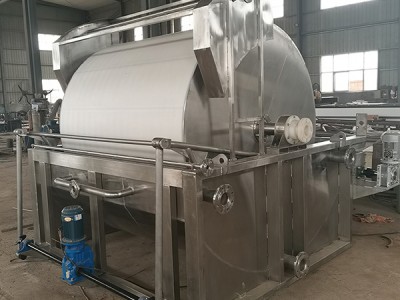
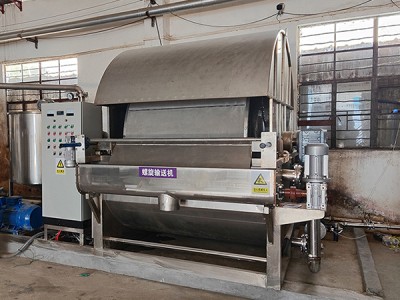
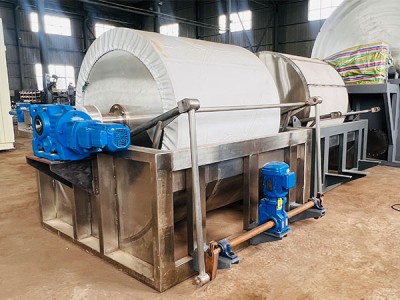
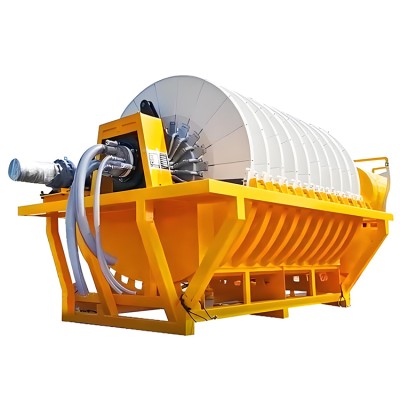
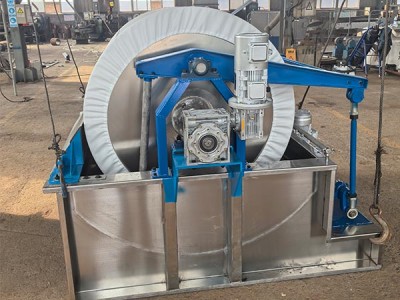
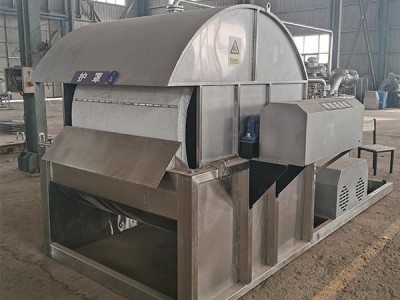
A rotary drum vacuum filter is a proven fully automatic continuous solid-liquid separation equipment widely used in industries. Driven by vacuum negative pressure for filtration, it features a rotating drum fitted with filter cloth, combined with vacuum, cake discharge and cloth regeneration systems. It enables uninterrupted integrated operations including slurry filtration, dewatering, washing, cake discharging and filter cloth cleaning.
During operation, the drum rotates at a constant speed and dips into the slurry tank. The internal vacuum system generates negative pressure, drawing liquid from the slurry through the filter cloth to produce filtrate for discharge. Solid particles are trapped on the cloth and form filter cakes. As the drum keeps rotating, the cakes go through dewatering, washing and air drying in sequence. They are finally removed by the discharge unit, while the filter cloth is automatically cleaned and regenerated to sustain continuous cyclic operation.
Application Scenarios & Key Advantages
Designed for high-capacity, continuous and automated filtration, this unit is ideal for processing large volumes of slurry with fine particles and high solid concentration. It is widely applied in mineral processing, metallurgical desulfurization, chemical filtration, industrial wastewater and sludge dewatering, food starch production, pharmaceutical intermediate separation and other fields.
Compared with plate-and-frame filters and belt filters, it requires no intermittent shutdowns and minimal manual operation, along with excellent material compatibility. It effectively addresses the low throughput and discontinuous operation of conventional filters, making it well-suited for modern assembly line production.
Core Advantages of Rotary Drum Vacuum Filters
When sourcing filtration equipment, enterprises primarily focus on five key aspects: production capacity, labor costs, filtration performance, operational stability and consumable wear. Rotary drum vacuum filters perfectly meet the core demands of industrial production and boast remarkable advantages over conventional filtration equipment.
Fully Automatic Continuous Operation to Greatly Cut Labor Costs
The equipment automatically completes the entire process of filtration, dewatering, cake discharge and filter cloth regeneration. It requires no on-site attendance, intermittent shutdowns or manual cake removal. Only regular inspection and maintenance are needed. It eliminates the heavy reliance on manual labor typical of traditional filters and substantially reduces long-term labor expenses for enterprises.
01
High Filtration Precision and Excellent Material Recovery
Supported by a stable vacuum negative pressure system, the unit effectively captures fine solid particles, delivering clean and impurity-free filtrate while minimizing material loss. It ensures uniform dewatering of filter cakes with controllable and low overall moisture content. This improves the quality of finished materials and facilitates subsequent storage, transportation and further processing.
02
Reliable Operation for 24/7 Non-Stop Production
Featuring a robust build and stable transmission system, the equipment suffers minimal wear from frequent start-stop cycles. It supports round-the-clock continuous operation without production interruptions, delivering consistent and sustained throughput to fully meet the high-capacity requirements of large-scale industrial production.
03
Low Consumable Wear and Reduced Long-Term Operating Costs
Equipped with a dedicated high-pressure cleaning and regeneration system, the unit effectively clears micro-pores on the filter cloth to prevent clogging and deterioration, greatly extending its service life. Its sealing and transmission components are highly durable with low failure rates, cutting extra expenses on frequent part replacement and repairs.
04
High Production Capacity for High-Flow Working Conditions
Different drum sizes can be selected according to slurry concentration and processing volume. It maintains stable filtration efficiency even when handling high-concentration, high-flow slurries with fine particles, delivering far greater throughput than intermittent filters of equivalent size.
05
Proper parameter matching is the core of equipment selection. Oversized models lead to resource waste, while undersized units fail to meet production capacity demands. Mismatched materials and parameters will also cause rapid corrosion and frequent breakdowns. Below are the essential parameters to verify during procurement and selection.
1. Effective Filtration Area
As a core capacity indicator, it directly determines hourly and daily material throughput. It shall be selected strictly according to the total slurry volume and solid content of the production line, serving as the primary reference for model selection.
The vacuum degree of standard units is stably maintained between 0.04 MPa and 0.08 MPa. Higher vacuum delivers better dewatering performance and lower filter cake moisture content. For fine-grained and high-viscosity materials, a high-vacuum configuration is recommended to ensure optimal filtration results.
304 or 316 stainless steel is adopted for standard models, which is suitable for processing clean materials in food, pharmaceutical and general chemical industries.
The cake thickness is adjustable under normal operating conditions, and the moisture content can be kept within a proper range. These are critical metrics for evaluating dewatering performance and material quality, as well as core acceptance criteria for production.
This covers the power of the main drive motor, vacuum pump and cleaning pump. Qualified equipment features a well-matched power configuration, helping enterprises cut electricity costs during long-term operation.
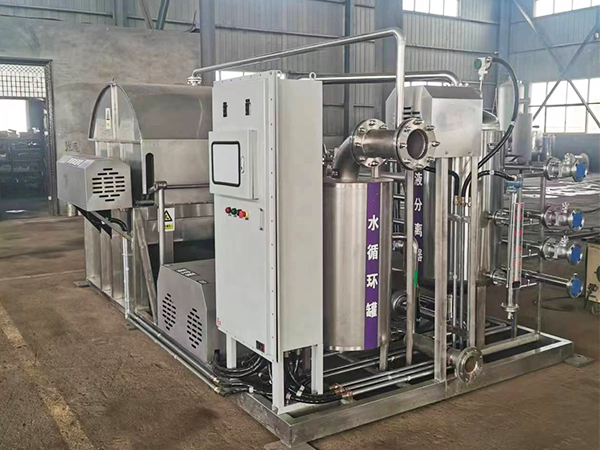
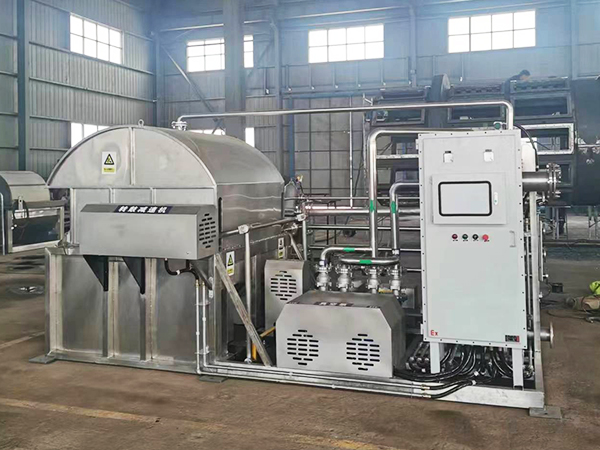
Materials vary greatly in characteristics across different industries, and general-purpose equipment often fails to deliver satisfactory filtration results. Tailored solutions for specific working conditions are essential to ensure efficient equipment operation.
For corrosive media such as acid-base chemical slurries and desulfurization slurry, the entire unit is treated with anti-corrosion measures. Corrosion-resistant materials are used for pipelines and sealing components to prevent corrosion and leakage, and extend the service life of the equipment.
Equip the unit with a high-vacuum pump and dense high-precision filter cloth. Optimize drum rotating speed and adopt an enhanced filter cloth regeneration system to resolve issues including cloth clogging by fine particles, low filtration rate and incomplete cake discharge.
Increase the effective filtration area of the drum and adopt a dual vacuum pump system alongside an optimized transmission structure. This enables 24-hour full-load operation, perfectly suited for large-scale and high-flow slurry filtration.
For light materials like industrial wastewater and municipal sludge, the discharge structure and cleaning system are optimized to improve dewatering efficiency and reduce sludge moisture content, complying with environmental discharge standards and sludge reduction requirements.
For high-temperature slurries, high-temperature resistant seals and specialized filter cloth are applied, together with heat-dissipating pipelines. This prevents component deterioration and vacuum fluctuation caused by high temperatures, and maintains stable operation under thermal working conditions.
Unplanned shutdowns due to equipment faults lead to major production losses, cutting throughput and raising maintenance costs. Below is a summary of frequent malfunctions, their causes and solutions for quick on-site diagnosis and resolution.
Main causes include air leakage in pipelines, worn seals, vacuum pump malfunction and clogged filter cloth.
Solutions: Inspect pipeline connections regularly and replace degraded seals; service the impeller and motor of the vacuum pump; clean or replace clogged filter cloth promptly to restore normal vacuum pressure.
This is generally caused by ultra-fine material particles, insufficient water pressure of the cleaning system and incomplete cleaning.
Solutions: Raise the pressure of the cleaning pump and adjust the spray angle; select filter cloth matched to material properties; perform periodic deep cleaning during scheduled downtime.
The main triggers are improper drum speed, worn discharge scrapers and aged or deformed filter cloth.
Solutions: Fine-tune the drum rotation speed; grind or replace worn scrapers; renew loose and aged filter cloth to ensure thorough cake removal.
Typical causes are insufficient bearing lubrication, loose chains, worn drive gears and trapped foreign debris.
Solutions: Apply lubricant on a regular basis, retighten drive chains and gears, clear foreign objects inside the unit, and replace worn components in a timely manner.
Issues stem from damaged filter cloth, filter cloth with excessively large pore size and fluctuating vacuum levels.
Solutions: Inspect and repair torn filter cloth; replace it with high-precision cloth of appropriate pore size; stabilize the pressure of the vacuum system.
Equipment service life and operational reliability depend 30% on build quality and 70% on maintenance. Proper daily upkeep can greatly reduce failure risks, extend equipment lifespan and cut long-term maintenance costs.
Before startup, check pipeline tightness, filter cloth integrity and tension of transmission parts, as well as the oil level of the vacuum pump. During operation, monitor vacuum degree, drum speed and abnormal noises. After shutdown, thoroughly clean the filter cloth and slurry tank to prevent material caking and blockage.
Replace vacuum pump lubricant regularly and clear internal contaminants. Routinely inspect wearable parts including seals, scrapers and filter cloth, and replace them once worn out. Apply lubricating grease to bearings, chains and gears on a regular schedule to prevent abrasion and rust.
Carry out full cleaning of pipelines and filter chambers and inspect minor faults on a monthly basis. Conduct quarterly checks on the anti-corrosion coating, electrical system and pump operating status. Perform annual complete disassembly and overhaul, replace aging components and recalibrate operational parameters.
For prolonged shutdown, drain all residual materials, rinse the unit thoroughly with clean water, and apply anti-rust and dustproof protection. Intensify cleaning after processing corrosive materials to avoid residual media causing corrosion. Never operate the equipment under overload or excessive rotating speed.
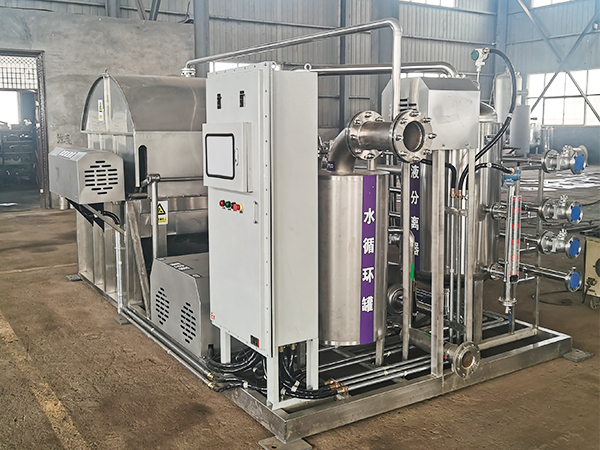
Production conditions, material properties and site layouts vary from enterprise to enterprise, so standard equipment can hardly satisfy all requirements. Professional customization and after-sales support are critical for smooth deployment and stable operation.
We offer non-standard dimension customization, full-unit anti-corrosion treatment, explosion-proof electrical configuration, high-temperature adaptation and dedicated setups for high-precision filtration. All solutions are tailored to meet diverse special working conditions.
We deliver one-stop services including pre-sales consultation, solution design, equipment installation, commissioning and free operator training, enabling quick commissioning and steady operation of the equipment.
Long-term warranty is provided for the complete unit. Genuine original spare parts are available for key components. Our after-sales team offers rapid response to resolve issues regarding operation, maintenance and troubleshooting, eliminating operational concerns for clients.
As a core unit for continuous solid-liquid separation, the rotary drum vacuum filter stands out with high automation, stable throughput, superior filtration performance and low maintenance costs, making it the ideal choice for large-scale industrial filtration.