 English
 日本
日本 한국인
한국인 Français
 Deutsch
 español
 Italiano
 Portugal
 Việt Nam
 türkiye
 عرب
عرب Русский
 čeština
 แบบไทย
 Eesti
Eesti Gaeilge
 Hmoob
Hmoob íslenskur
 Cymraeg
 български
 اردو
اردو Polski
 Hrvatski
 українська
 bosanski
 فارسی
فارسی lietuvių
 latviski
 עִברִית
 Română
 Ελληνικά
 dansk
dansk Magyar
 norsk
norsk Suomalainen
 Nederlands
 svenska
 slovenský
 Slovenščina
 हिंदी
हिंदी Indonesia
 Melayu
 Malti
Malti Kreyòl ayisyen
 català
 বাংলা
বাংলা Српски
 o'zbek

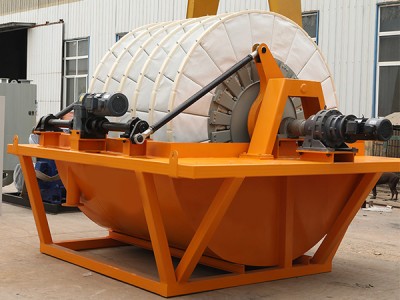
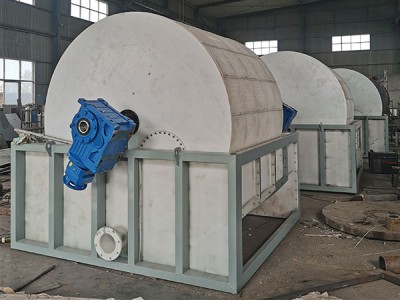
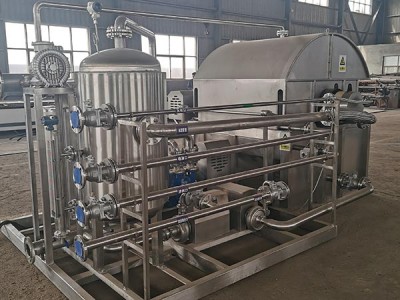
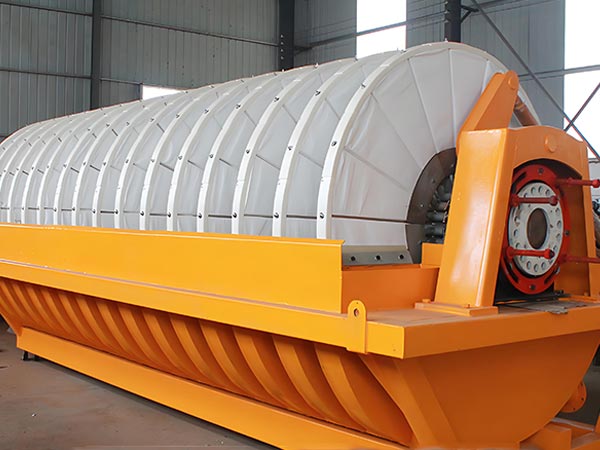
In mineral processing, metallurgy, and chemical production, concentrated slurry typically requires further solid-liquid separation. For production lines that need to continuously process large volumes of slurry, vacuum disc filters offer a large filtration area and continuous operation, making them widely used for concentrate dewatering.
However, in actual projects, a high filtration rate and low filter cake moisture content cannot always be achieved simultaneously. This is especially true when processing high-concentration slurry. If equipment throughput is prioritized while filter cake structure, particle size, and vacuum conditions are overlooked, the equipment may experience shortened filtration cycles with higher filter cake moisture content, or the filter cake may form too quickly, affecting subsequent cake discharge.
Therefore, the proper configuration of a vacuum disc filter should focus on filter cake quality and continuous production requirements.
However, in actual projects, a high filtration rate and low filter cake moisture content cannot always be achieved simultaneously. This is especially true when processing high-concentration slurry. If equipment throughput is prioritized while filter cake structure, particle size, and vacuum conditions are overlooked, the equipment may experience shortened filtration cycles with higher filter cake moisture content, or the filter cake may form too quickly, affecting subsequent cake discharge.
Therefore, the proper configuration of a vacuum disc filter should focus on filter cake quality and continuous production requirements.
1. Why Does High-Concentration Slurry Put Greater Demands on Filtration Equipment?
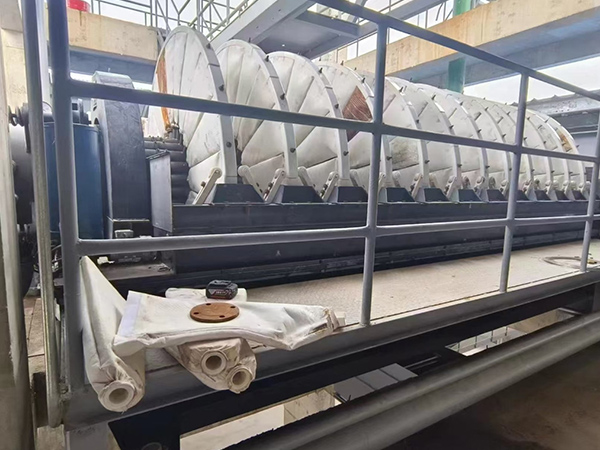
As slurry concentration increases, the number of solid particles per unit volume of slurry increases, allowing filter cake to form more quickly on the surface of the filter discs. From the perspective of production efficiency, this may appear to be an advantage.
However, as the filter cake rapidly becomes thicker, the resistance to liquid flow through the cake also increases. If the mineral particles are fine, the resulting filter cake structure will be denser, which may further affect the dewatering process. Therefore, a higher slurry concentration does not necessarily result in lower filter cake moisture content.
The vacuum disc filter needs to be properly adjusted according to the actual slurry properties, including the filtration area, number of discs, operating speed, and vacuum conditions, so that the filter cake can complete formation and dewatering within the available cycle time.
As slurry concentration increases, the number of solid particles per unit volume of slurry increases, allowing filter cake to form more quickly on the surface of the filter discs. From the perspective of production efficiency, this may appear to be an advantage.
However, as the filter cake rapidly becomes thicker, the resistance to liquid flow through the cake also increases. If the mineral particles are fine, the resulting filter cake structure will be denser, which may further affect the dewatering process. Therefore, a higher slurry concentration does not necessarily result in lower filter cake moisture content.
The vacuum disc filter needs to be properly adjusted according to the actual slurry properties, including the filtration area, number of discs, operating speed, and vacuum conditions, so that the filter cake can complete formation and dewatering within the available cycle time.
2. Why Does Filter Cake Thickness Affect the Final Dewatering Performance?
Vacuum filtration is a dynamic process. Solid particles in the slurry first accumulate on the surface of the filter medium and gradually form a filter cake. Once formed, the filter cake itself acts as a filtration layer. If the filter cake is too thin, the solids handling capacity is limited; if it is too thick, the liquid must pass through a thicker layer of solids, increasing filtration resistance.
Therefore, during the operation of a vacuum disc filter, the appropriate filter cake thickness needs to be determined based on the properties of the material being processed. For coarse-particle concentrates, the filter cake generally has good permeability, while fine-particle minerals may form a denser cake and require more sufficient dewatering time. This is also why operating parameters cannot be directly copied from other projects.
Vacuum filtration is a dynamic process. Solid particles in the slurry first accumulate on the surface of the filter medium and gradually form a filter cake. Once formed, the filter cake itself acts as a filtration layer. If the filter cake is too thin, the solids handling capacity is limited; if it is too thick, the liquid must pass through a thicker layer of solids, increasing filtration resistance.
Therefore, during the operation of a vacuum disc filter, the appropriate filter cake thickness needs to be determined based on the properties of the material being processed. For coarse-particle concentrates, the filter cake generally has good permeability, while fine-particle minerals may form a denser cake and require more sufficient dewatering time. This is also why operating parameters cannot be directly copied from other projects.
3. The Number of Filter Discs Does Not Equal the Final Capacity
When evaluating a vacuum disc filter, many buyers typically focus first on the number of filter discs or the total filtration area. Filtration area is a very important parameter, but it cannot independently determine the actual capacity of the equipment. With the same filtration area, the solids handling capacity per unit area can vary significantly when processing different slurries.
When evaluating a vacuum disc filter, many buyers typically focus first on the number of filter discs or the total filtration area. Filtration area is a very important parameter, but it cannot independently determine the actual capacity of the equipment. With the same filtration area, the solids handling capacity per unit area can vary significantly when processing different slurries.
Factors include:
Slurry solids concentration;
Solid particle size;
Particle shape;
Mineral density;
Filter cake permeability;
Filter cloth performance;
Vacuum conditions;
Required final filter cake moisture content.
Therefore, when determining the equipment specifications, the filtration area should be considered together with the specific material data.
Solid particle size;
Particle shape;
Mineral density;
Filter cake permeability;
Filter cloth performance;
Vacuum conditions;
Required final filter cake moisture content.
Therefore, when determining the equipment specifications, the filtration area should be considered together with the specific material data.
4. Vacuum Level Should Serve the Dewatering Objective
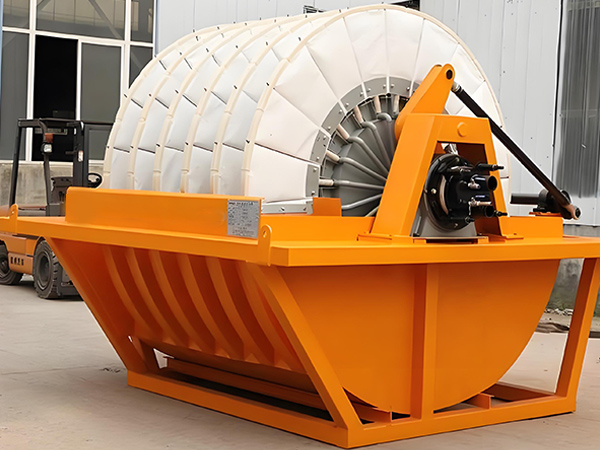
The vacuum system provides negative pressure for the filtration process, allowing liquid to be separated from the slurry. For buyers, a common misconception is that increasing the vacuum level will directly result in faster filtration and lower filter cake moisture content. In practice, the situation is not that simple.
If the filter cake has already formed a dense structure, the benefits of applying additional negative pressure may be limited. At the same time, the piping, seals, and distribution components of the vacuum system must remain in good condition; otherwise, the negative pressure cannot be effectively applied to all filtration zones.
Therefore, the key to vacuum disc filter design is not to pursue a single vacuum parameter, but to ensure proper matching between the vacuum system, filter discs, filter cloth, and material being processed.
The vacuum system provides negative pressure for the filtration process, allowing liquid to be separated from the slurry. For buyers, a common misconception is that increasing the vacuum level will directly result in faster filtration and lower filter cake moisture content. In practice, the situation is not that simple.
If the filter cake has already formed a dense structure, the benefits of applying additional negative pressure may be limited. At the same time, the piping, seals, and distribution components of the vacuum system must remain in good condition; otherwise, the negative pressure cannot be effectively applied to all filtration zones.
Therefore, the key to vacuum disc filter design is not to pursue a single vacuum parameter, but to ensure proper matching between the vacuum system, filter discs, filter cloth, and material being processed.
5. Filter Cloth Selection Should Consider Both Particle Retention and Permeability
The filter medium performs two functions: retaining solids and allowing liquid to pass through. If the filter cloth has insufficient filtration precision, fine particles may enter the filtrate and affect filtrate quality. If the filter cloth is too dense, it may increase filtration resistance.
Especially in concentrate dewatering applications, buyers are usually concerned about two outcomes:
The concentrate should not be lost in significant quantities;
The filtrate should meet the requirements for subsequent reuse or treatment.
Therefore, filter cloth selection should be based on the actual slurry particle size and filtrate requirements, rather than simply choosing a filter cloth with the smallest possible pore size.
For different types of minerals, the filter cloth material, structure, and air permeability may all need to be adjusted.
The filter medium performs two functions: retaining solids and allowing liquid to pass through. If the filter cloth has insufficient filtration precision, fine particles may enter the filtrate and affect filtrate quality. If the filter cloth is too dense, it may increase filtration resistance.
Especially in concentrate dewatering applications, buyers are usually concerned about two outcomes:
The concentrate should not be lost in significant quantities;
The filtrate should meet the requirements for subsequent reuse or treatment.
Therefore, filter cloth selection should be based on the actual slurry particle size and filtrate requirements, rather than simply choosing a filter cloth with the smallest possible pore size.
For different types of minerals, the filter cloth material, structure, and air permeability may all need to be adjusted.
6. Cake Discharge Performance Is Also an Important Indicator of Equipment Compatibility
The end of filtration does not mean that the solid-liquid separation process is complete. For a vacuum disc filter, the filter cake formed must ultimately be discharged from the filter discs reliably. If the filter cake adheres too strongly to the filter medium, incomplete discharge or residual cake may occur.
Long-term cake residue not only reduces the effective filtration area but may also affect the filtration conditions in the next cycle.
The end of filtration does not mean that the solid-liquid separation process is complete. For a vacuum disc filter, the filter cake formed must ultimately be discharged from the filter discs reliably. If the filter cake adheres too strongly to the filter medium, incomplete discharge or residual cake may occur.
Long-term cake residue not only reduces the effective filtration area but may also affect the filtration conditions in the next cycle.
Therefore, equipment performance should not be evaluated based solely on filtration capacity. The following factors should also be considered:
Whether the filter cake forms continuously;
Whether the filter cake thickness is uniform;
Whether cake discharge is complete;
Whether the filter cloth surface is easy to clean;
Whether filtration capacity remains stable after continuous operation.
These factors together determine whether the equipment can maintain stable production over the long term.
Whether the filter cake forms continuously;
Whether the filter cake thickness is uniform;
Whether cake discharge is complete;
Whether the filter cloth surface is easy to clean;
Whether filtration capacity remains stable after continuous operation.
These factors together determine whether the equipment can maintain stable production over the long term.
7. Why Should Concentrate Dewatering Projects Pay Attention to the Upstream Thickening Process?
The vacuum disc filter processes slurry that has already entered the filtration system, while the operating conditions of upstream thickening equipment directly affect the filter. If the concentration of the thickened slurry fluctuates significantly, the feed conditions of the filter will change accordingly.
For example, when the slurry concentration suddenly decreases, the filter cake formation rate may decrease. When the concentration suddenly increases, the filter cake may form rapidly, increasing filtration resistance. Therefore, in actual projects, the feed system of the filter should be kept as stable as possible. If significant fluctuations exist in the process itself, a certain level of adaptability to varying operating conditions should be considered during equipment selection rather than determining equipment specifications based on a single set of test data.
The vacuum disc filter processes slurry that has already entered the filtration system, while the operating conditions of upstream thickening equipment directly affect the filter. If the concentration of the thickened slurry fluctuates significantly, the feed conditions of the filter will change accordingly.
For example, when the slurry concentration suddenly decreases, the filter cake formation rate may decrease. When the concentration suddenly increases, the filter cake may form rapidly, increasing filtration resistance. Therefore, in actual projects, the feed system of the filter should be kept as stable as possible. If significant fluctuations exist in the process itself, a certain level of adaptability to varying operating conditions should be considered during equipment selection rather than determining equipment specifications based on a single set of test data.
8. When Purchasing a Vacuum Disc Filter, Do Not Focus Only on “How Much Does It Cost?”
Equipment price is certainly important, but for continuous-production equipment, the purchase cost is only part of the overall project cost. More importantly, the equipment should be able to operate reliably over the long term.
When requesting a quotation, it is recommended to provide the supplier with the following information:
Material name + solids concentration + throughput + particle size + density + required filter cake moisture content + filtrate requirements + operating temperature.
If laboratory filtration test data are available, it is also recommended to provide them.
These parameters can help the manufacturer determine the required filtration area, number of filter discs, filter cloth configuration, and auxiliary system requirements.
Equipment price is certainly important, but for continuous-production equipment, the purchase cost is only part of the overall project cost. More importantly, the equipment should be able to operate reliably over the long term.
When requesting a quotation, it is recommended to provide the supplier with the following information:
Material name + solids concentration + throughput + particle size + density + required filter cake moisture content + filtrate requirements + operating temperature.
If laboratory filtration test data are available, it is also recommended to provide them.
These parameters can help the manufacturer determine the required filtration area, number of filter discs, filter cloth configuration, and auxiliary system requirements.
9. A More Rational Equipment Selection Approach
Vacuum disc filter selection can follow the logic below:
Step 1: Identify the material.
Determine the mineral type and slurry properties.
Step 2: Determine the throughput.
Distinguish between normal and peak throughput.
Step 3: Determine the final filter cake requirements.
For example, moisture requirements may vary depending on whether the filter cake will subsequently undergo transportation, roasting, drying, or other processes.
Step 4: Determine the filtrate requirements.
If the filtrate needs to be recycled, the required cleanliness level should be clarified in advance.
Step 5: Match the equipment.
Calculate the required filtration area and equipment specifications based on test data and operating conditions.
Step 6: Confirm continuous operating conditions.
Consider filter cloth service life, cake discharge method, cleaning conditions, and ease of maintenance.
This selection process is more reliable than simply selecting equipment based on “throughput ÷ equipment model.”
Vacuum disc filter selection can follow the logic below:
Step 1: Identify the material.
Determine the mineral type and slurry properties.
Step 2: Determine the throughput.
Distinguish between normal and peak throughput.
Step 3: Determine the final filter cake requirements.
For example, moisture requirements may vary depending on whether the filter cake will subsequently undergo transportation, roasting, drying, or other processes.
Step 4: Determine the filtrate requirements.
If the filtrate needs to be recycled, the required cleanliness level should be clarified in advance.
Step 5: Match the equipment.
Calculate the required filtration area and equipment specifications based on test data and operating conditions.
Step 6: Confirm continuous operating conditions.
Consider filter cloth service life, cake discharge method, cleaning conditions, and ease of maintenance.
This selection process is more reliable than simply selecting equipment based on “throughput ÷ equipment model.”
Conclusion
When a vacuum disc filter is used for dewatering high-concentration slurry, the key is not simply to increase the filtration rate, but to achieve a balance between throughput, filter cake moisture content, filtrate quality, and continuous operating stability.
For concentrate dewatering projects, equipment specifications should be determined based on actual material data and final process requirements. Only when the filtration area, filter cloth, vacuum system, operating speed, and cake discharge method are properly matched can the equipment maintain stable filtration performance during long-term operation.
When a vacuum disc filter is used for dewatering high-concentration slurry, the key is not simply to increase the filtration rate, but to achieve a balance between throughput, filter cake moisture content, filtrate quality, and continuous operating stability.
For concentrate dewatering projects, equipment specifications should be determined based on actual material data and final process requirements. Only when the filtration area, filter cloth, vacuum system, operating speed, and cake discharge method are properly matched can the equipment maintain stable filtration performance during long-term operation.