 English
 日本
日本 한국인
한국인 Français
 Deutsch
 español
 Italiano
 Portugal
 Việt Nam
 türkiye
 عرب
عرب Русский
 čeština
 แบบไทย
 Eesti
Eesti Gaeilge
 Hmoob
Hmoob íslenskur
 Cymraeg
 български
 اردو
اردو Polski
 Hrvatski
 українська
 bosanski
 فارسی
فارسی lietuvių
 latviski
 עִברִית
 Română
 Ελληνικά
 dansk
dansk Magyar
 norsk
norsk Suomalainen
 Nederlands
 svenska
 slovenský
 Slovenščina
 हिंदी
हिंदी Indonesia
 Melayu
 Malti
Malti Kreyòl ayisyen
 català
 বাংলা
বাংলা Српски
 o'zbek

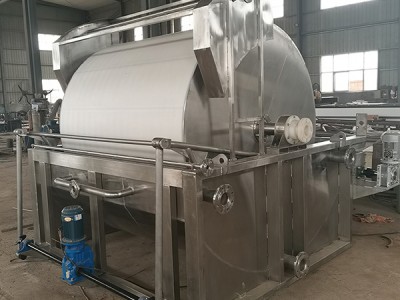
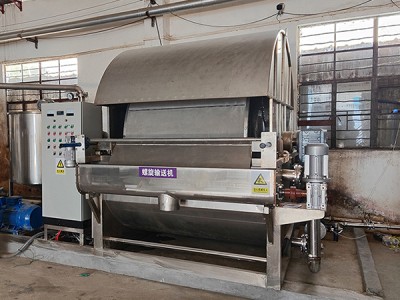
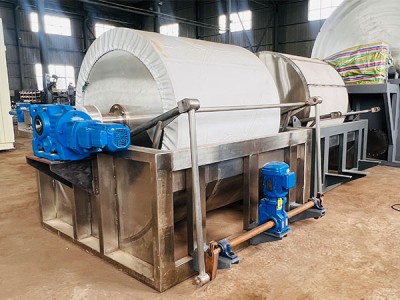
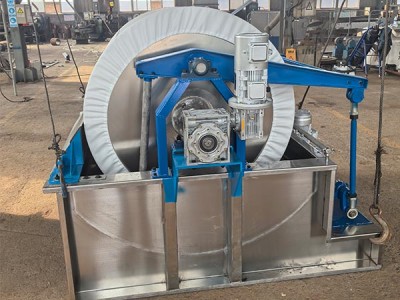
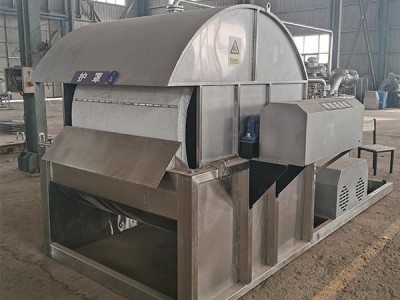
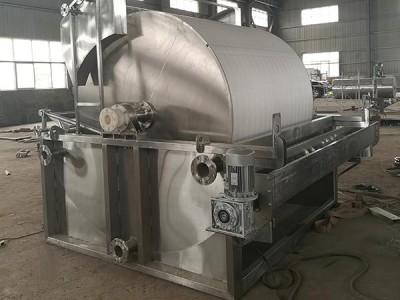
On continuous solid-liquid separation lines, vacuum drum filters are typically used for continuous filtration, dewatering, and cake discharge. Although the equipment is designed for continuous operation, its actual processing capacity does not necessarily remain constant throughout production. Many projects operate normally during the initial commissioning stage, but changes in slurry concentration, particle size distribution, or upstream process conditions can lead to reduced throughput, thinner filter cakes, higher residual moisture, and poor cake discharge.
Therefore, when evaluating a vacuum drum filter, it is not enough to consider only the theoretical filtration area or rated processing capacity. For equipment selection and process design, the compatibility between slurry characteristics, cake formation, vacuum conditions, filtration cycle, and cake discharge method also plays a critical role in determining the equipment's actual operating performance.
Therefore, when evaluating a vacuum drum filter, it is not enough to consider only the theoretical filtration area or rated processing capacity. For equipment selection and process design, the compatibility between slurry characteristics, cake formation, vacuum conditions, filtration cycle, and cake discharge method also plays a critical role in determining the equipment's actual operating performance.
Changes in Slurry Concentration Directly Affect Vacuum Drum Filter Performance
When slurry enters the filtration equipment, solid particles gradually accumulate on the filter medium to form a filter cake with a certain thickness and permeability. If the feed concentration changes significantly, the rate of filter cake formation will also change accordingly.
When the slurry concentration is too low, an insufficient amount of solids enters the filtration zone per unit of time, resulting in slower cake formation and preventing the equipment from fully utilizing its effective filtration capacity. Conversely, if the slurry concentration is too high, the filter cake may form rapidly. However, once the cake becomes too thick, resistance to liquid flow through the cake layer increases, which may affect subsequent dewatering.
Therefore, the capacity of a vacuum drum filter is not determined solely by equipment size. It is closely related to the actual feed slurry concentration.
For equipment procurement projects, it is recommended to provide representative slurry data before selection rather than only specifying an approximate throughput. Parameters such as solids concentration, particle size, viscosity, density, and temperature can help the equipment manufacturer determine the appropriate filtration area and operating conditions.
When the slurry concentration is too low, an insufficient amount of solids enters the filtration zone per unit of time, resulting in slower cake formation and preventing the equipment from fully utilizing its effective filtration capacity. Conversely, if the slurry concentration is too high, the filter cake may form rapidly. However, once the cake becomes too thick, resistance to liquid flow through the cake layer increases, which may affect subsequent dewatering.
Therefore, the capacity of a vacuum drum filter is not determined solely by equipment size. It is closely related to the actual feed slurry concentration.
For equipment procurement projects, it is recommended to provide representative slurry data before selection rather than only specifying an approximate throughput. Parameters such as solids concentration, particle size, viscosity, density, and temperature can help the equipment manufacturer determine the appropriate filtration area and operating conditions.
Particle Size Affects Filter Cake Permeability
The same filtration equipment can deliver significantly different filtration performance when processing different materials.
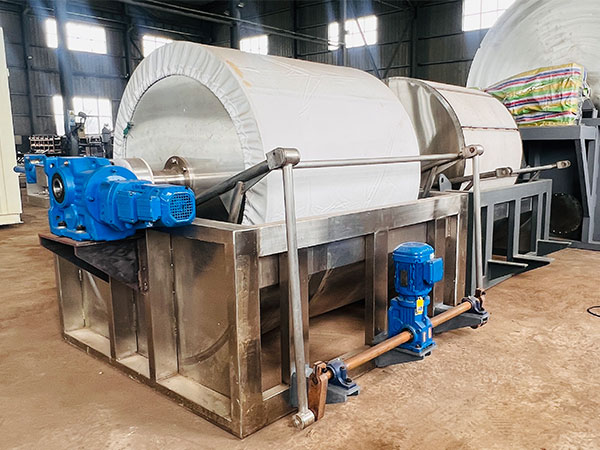
Coarse particles generally form a more open and permeable filter cake on the filter cloth, allowing liquid to pass through the cake layer more easily. In contrast, slurries containing a high proportion of fine particles tend to form a denser filter cake during filtration. As the cake thickness increases, resistance to liquid flow through the cake also increases.
This explains why some customers find that the processing capacity fluctuates with changes in feed particle size, even though the filtration area of the equipment remains unchanged.
For materials containing a high proportion of fine particles, particular attention should be paid to the combination of filter cloth filtration rating, cake thickness, and vacuum system performance. Simply increasing the vacuum level may not solve the problem, because the permeability of the filter cake itself can also limit the dewatering rate.
Coarse particles generally form a more open and permeable filter cake on the filter cloth, allowing liquid to pass through the cake layer more easily. In contrast, slurries containing a high proportion of fine particles tend to form a denser filter cake during filtration. As the cake thickness increases, resistance to liquid flow through the cake also increases.
This explains why some customers find that the processing capacity fluctuates with changes in feed particle size, even though the filtration area of the equipment remains unchanged.
For materials containing a high proportion of fine particles, particular attention should be paid to the combination of filter cloth filtration rating, cake thickness, and vacuum system performance. Simply increasing the vacuum level may not solve the problem, because the permeability of the filter cake itself can also limit the dewatering rate.
Filter Cloth Is Not Just a Consumable—It Is a Critical Component That Determines Filtration Performance
The filter medium of a vacuum drum filter comes into direct contact with the slurry. Its pore size, material, weave pattern, and air permeability can all affect the final filtration performance.
A filter cloth with a tighter weave can improve solids retention but may increase filtration resistance. In contrast, a more open filter cloth may allow fine particles to pass through, affecting filtrate clarity.
In addition, after extended operation, particles may accumulate on the cloth surface, causing pore blinding or localized wear. Even when the vacuum system is operating normally, these conditions can gradually reduce filtration capacity.
Therefore, filter cloth selection should be considered together with slurry characteristics during the equipment design stage, rather than being adjusted only after commissioning based on actual operating results.
A filter cloth with a tighter weave can improve solids retention but may increase filtration resistance. In contrast, a more open filter cloth may allow fine particles to pass through, affecting filtrate clarity.
In addition, after extended operation, particles may accumulate on the cloth surface, causing pore blinding or localized wear. Even when the vacuum system is operating normally, these conditions can gradually reduce filtration capacity.
Therefore, filter cloth selection should be considered together with slurry characteristics during the equipment design stage, rather than being adjusted only after commissioning based on actual operating results.
Stable Vacuum Conditions Are Essential for Consistent Continuous Filtration
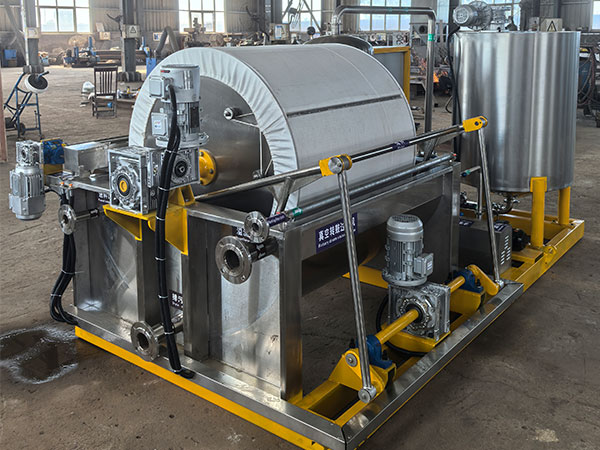
The vacuum system is a key component of a vacuum drum filter. During operation, significant fluctuations in vacuum level can affect the rate at which liquid passes through the filter cake and filtration medium.
However, in actual production, a higher vacuum level does not necessarily mean better filtration performance.
If the filter cake has poor permeability, increasing the vacuum level cannot continuously increase the filtration rate. Likewise, if there are issues with the filter cloth or sealing components, a high vacuum level may still fail to provide effective suction across the filtration zone.
Therefore, during operation, particular attention should be paid to vacuum system stability, pipeline sealing, vacuum distribution valve operation, and the switching of individual filter chambers.
A stable vacuum condition is more important than simply pursuing an extremely high vacuum level for short-term performance.
Filter Cake Thickness Must Match Material Characteristics and the Discharge Method
The filter cake is the primary solid product formed during solid-liquid separation. Its thickness affects not only dewatering performance but also the stability of cake discharge.
If the filter cake is too thin, the amount of solids processed per unit of filtration area will be insufficient. If it is too thick, filtration resistance may increase, making subsequent cake discharge more difficult.
This is particularly important when processing sticky materials. If the filter cake adheres strongly to the filter cloth, the discharge mechanism must be capable of handling the material effectively. Depending on the material characteristics, different types of vacuum drum filters can be equipped with suitable cake discharge systems, such as scraper discharge or precoat filtration.
For procurement projects, customers should specify more than just the required throughput in tons per hour. The target filter cake moisture content, cake discharge condition, and downstream conveying method should also be provided.
If the filter cake is too thin, the amount of solids processed per unit of filtration area will be insufficient. If it is too thick, filtration resistance may increase, making subsequent cake discharge more difficult.
This is particularly important when processing sticky materials. If the filter cake adheres strongly to the filter cloth, the discharge mechanism must be capable of handling the material effectively. Depending on the material characteristics, different types of vacuum drum filters can be equipped with suitable cake discharge systems, such as scraper discharge or precoat filtration.
For procurement projects, customers should specify more than just the required throughput in tons per hour. The target filter cake moisture content, cake discharge condition, and downstream conveying method should also be provided.
Why Can the Same Equipment Perform Differently at Different Plants?
Actual production conditions are often more complex than laboratory or initial test conditions.
For example:
Changes in upstream slurry concentration
Changes in feed particle size distribution
Variations in material temperature
Changes in slurry properties caused by additives or chemical reagents
Extended filter cloth operating time
Minor leaks in the vacuum piping
Improper filter cake thickness control
A mismatch between the cake discharge mechanism and material viscosity
Changes in feed particle size distribution
Variations in material temperature
Changes in slurry properties caused by additives or chemical reagents
Extended filter cloth operating time
Minor leaks in the vacuum piping
Improper filter cake thickness control
A mismatch between the cake discharge mechanism and material viscosity
All of these factors can cause the actual processing capacity of the equipment to differ from the results obtained during initial testing.
Therefore, vacuum drum filter selection should be based on actual process conditions and representative operating data, rather than simply replicating the equipment model used by another plant.
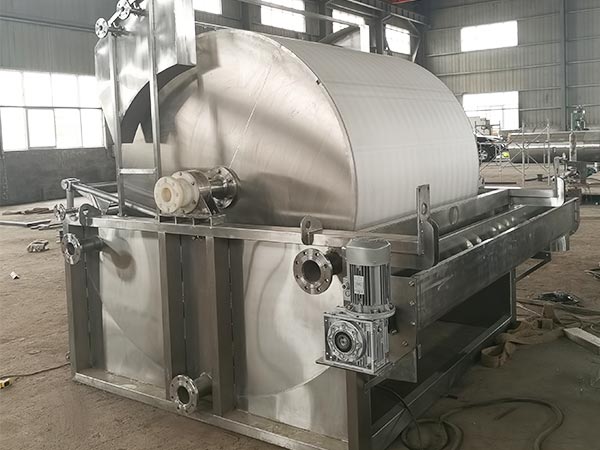
6 Key Data Points to Confirm When Purchasing a Vacuum Drum Filter
To help the equipment manufacturer develop a more accurate design, customers should prepare the following information when requesting a quotation:
1. Material Name
Specify whether the material is mineral slurry, chemical slurry, sludge, or another type of industrial suspension.
Specify whether the material is mineral slurry, chemical slurry, sludge, or another type of industrial suspension.
2. Required Throughput
Provide both the normal operating throughput and peak throughput, if applicable.
Provide both the normal operating throughput and peak throughput, if applicable.
3. Solids Concentration
Specify the solids content of the slurry and, where available, provide its normal operating range.
Specify the solids content of the slurry and, where available, provide its normal operating range.
4. Particle Characteristics
Include the average particle size, particle size distribution, and whether the slurry contains a significant proportion of ultrafine particles.
Include the average particle size, particle size distribution, and whether the slurry contains a significant proportion of ultrafine particles.
5. Filter Cake Requirements
Specify the required filter cake moisture content, cake thickness, and any downstream conveying or drying requirements.
Specify the required filter cake moisture content, cake thickness, and any downstream conveying or drying requirements.
6. Filtrate Requirements
If the filtrate will be recovered for use in a subsequent process, specify the required filtrate clarity and reuse requirements.
If the filtrate will be recovered for use in a subsequent process, specify the required filtrate clarity and reuse requirements.
The more complete the process data, the more precisely the vacuum drum filter can be designed and configured for the specific application.
The Overall Filtration Process Matters Most
A vacuum drum filter is not an independent piece of equipment operating in isolation. In actual applications, it typically operates as part of an integrated system that includes the feed system, vacuum system, filtrate collection system, filter cloth washing system, and cake discharge system.
Improving one parameter alone without considering the other process stages may not necessarily improve overall performance.
For example, increasing the feed rate may result in an excessively thick filter cake; increasing the vacuum level may increase system energy consumption; and switching to a finer filter cloth may improve filtrate clarity but also increase filtration resistance.
Therefore, when evaluating a vacuum drum filter, a more effective approach is to consider the entire solid-liquid separation process and determine the appropriate equipment parameters based on the material characteristics and final product requirements.
Conclusion
The actual capacity of a vacuum drum filter is not a fixed value. It is determined by the combined effects of slurry characteristics, filtration area, filter cloth performance, vacuum conditions, filter cake thickness, and cake discharge method.
For industrial applications requiring long-term continuous operation, stable performance is often more important than simply pursuing the theoretical peak capacity. Providing detailed process data before equipment procurement and confirming the equipment configuration through testing or process calculations can reduce the need for adjustments during operation and improve the overall compatibility between the vacuum drum filter and the production line.