 English
 日本
日本 한국인
한국인 Français
 Deutsch
 español
 Italiano
 Portugal
 Việt Nam
 türkiye
 عرب
عرب Русский
 čeština
 แบบไทย
 Eesti
Eesti Gaeilge
 Hmoob
Hmoob íslenskur
 Cymraeg
 български
 اردو
اردو Polski
 Hrvatski
 українська
 bosanski
 فارسی
فارسی lietuvių
 latviski
 עִברִית
 Română
 Ελληνικά
 dansk
dansk Magyar
 norsk
norsk Suomalainen
 Nederlands
 svenska
 slovenský
 Slovenščina
 हिंदी
हिंदी Indonesia
 Melayu
 Malti
Malti Kreyòl ayisyen
 català
 বাংলা
বাংলা Српски
 o'zbek

Comparison of Four Mainstream Discharge Mechanisms for Rotary Vacuum Drum Filters and Key Customization Considerations
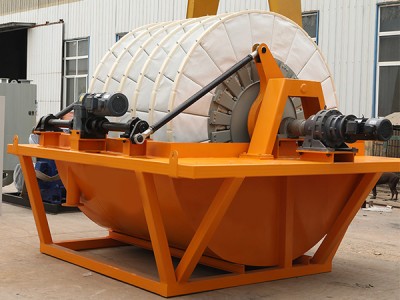
The discharge mechanism directly determines whether the filter cake can be completely removed and is also the component most prone to failure under complex operating conditions.
Scraper Discharge
The most common discharge configuration, suitable for filter cakes with sufficient rigidity that are easy to release. The key customization point is the adjustable scraper clearance mechanism. For ultrafine-particle slurries, the filter cake is thin and soft. If the scraper clearance is too large, the cake cannot be completely removed; if it is too small, continuous friction between the scraper and filter cloth will significantly accelerate cloth wear. For such materials, a fixed-clearance scraper should not be used. An electrically adjustable scraper assembly is recommended.
Rope Discharge
Designed for thin, soft, and highly adhesive filter cakes that cannot be effectively removed by a scraper. With rope discharge, the rope carries the thin filter cloth and filter cake away from the drum surface. The disadvantage is that the rope is a consumable component. Its service life is reduced when exposed to high-temperature or corrosive slurries, so the medium temperature and pH must be evaluated during selection.
Precoat + Scraper Discharge
Designed for ultrafine particles that can easily become embedded in the filter cloth pores and cause irreversible blinding. A layer of diatomaceous earth or perlite is applied to the filter cloth surface, and filtration takes place on the precoat layer. The scraper then removes the precoat together with the retained solids, protecting the underlying filter cloth. A common misconception is that precoat filtration means using diatomaceous earth only. In practice, the precoat material should be selected according to the slurry pH, temperature, and whether impurities are acceptable in the downstream product. Options may include perlite, cellulose, and other precoat materials.
Wire Discharge
Mainly used for high-temperature and highly corrosive operating conditions as an alternative to rope discharge. However, it has higher manufacturing costs and maintenance requirements, so it is rarely used for small- and medium-sized projects.
Note: There is no universal discharge mechanism. The first step in selecting a rotary vacuum drum filter should be to determine the discharge configuration based on filter cake thickness and adhesion, and then determine the drum specifications.
Customization Logic for Filter Media and Filter Cloth in Rotary Vacuum Drum Filters
Filter cloth selection is not simply a matter of choosing the appropriate mesh size. Filter cloth customization for rotary vacuum drum filters must simultaneously consider solids retention accuracy, cake release performance, temperature and chemical resistance, and resistance to blinding.
Material Selection
PP (polypropylene) filter cloth is resistant to weak acids and alkalis but has a limited maximum operating temperature. PE filter cloth offers better wear resistance. PTFE (polytetrafluoroethylene) filter cloth is suitable for highly corrosive, high-temperature slurries but has a higher procurement cost. To reduce costs, many projects use standard PP filter cloth. However, when exposed to high-temperature organic slurries, the filter cloth can age and fail rapidly.
Weave Structure
Plain weave provides high solids retention accuracy but is highly susceptible to pore blinding. Twill weave offers better resistance to blinding than plain weave, while satin weave has a smoother surface that facilitates filter cake release. For rotary vacuum drum filters handling ultrafine particles, satin and twill weaves should be evaluated first rather than simply pursuing a higher mesh count.
Filter Cloth Attachment
The filter cloth is typically secured to the drum surface using retaining bars. It is important to ensure that the cloth does not wrinkle or shift during operation. For rotary vacuum drum filters operating under complex conditions, a segmented clamping structure is recommended to prevent the filter cloth from shifting or wrinkling during operation, which could cause localized filtration failure.
Coordinated Customization of Drum Compartments, Rotation Speed, and Vacuum System
Adjustable Drum Rotation Speed: The drum rotation speed of a rotating drum filter directly determines filter cake thickness. For high-viscosity, ultrafine materials, excessive rotation speed produces a filter cake that is too thin to discharge effectively. If the rotation speed is too low, the filter cake becomes excessively thick, increasing resistance to vacuum dewatering and resulting in higher moisture content. The equipment should provide a wide variable-frequency speed control range rather than only a few fixed speed settings.
Vacuum System Matching: Do not simply adopt the vacuum pump specifications of a standard model. For high-gas-content slurries, a rotating drum filter carries a large amount of gas into the vacuum piping, requiring a higher air-handling capacity. For volatile materials, condensate recovery must be considered rather than simply configuring a water-ring vacuum pump.
Key Considerations for Rotary Vacuum Drum Filter Customization Under Special Operating Conditions
Highly Corrosive Operating Conditions: Corrosion-resistant materials should be used not only for wetted components but also for internal drum piping, distribution heads, and other internal parts. Many manufacturers apply corrosion protection only to the slurry trough, while internal metal components corrode and fail, resulting in premature equipment failure.
Low-Temperature Slurries Prone to Crystallization: The trough and drum body of the rotary vacuum drum filter should be equipped with heat tracing and insulation to prevent slurry crystallization, which can clog the filter cloth and flow passages in the distribution head.
High-Value Materials Where Precoat Contamination Is Unacceptable: The precoat process should be avoided. Instead, optimize the filter cloth structure and adjust the drum rotation speed and vacuum level to achieve direct solids retention through the filter cloth.
Conclusion
In many projects, the primary focus is placed on the filtration area of the rotating drum filter. However, the components that truly determine whether the equipment can operate reliably with complex slurries are the customized discharge mechanism, filter cloth, and drum compartment configuration. Rotary vacuum drum filters with the same filtration area can deliver dramatically different operating results depending on the customization方案. When preparing technical specifications, process engineers should clearly define the discharge method, filter cloth material and weave structure, drum compartment proportions, and speed control range rather than specifying filtration area alone.