 English
 日本
日本 한국인
한국인 Français
 Deutsch
 español
 Italiano
 Portugal
 Việt Nam
 türkiye
 عرب
عرب Русский
 čeština
 แบบไทย
 Eesti
Eesti Gaeilge
 Hmoob
Hmoob íslenskur
 Cymraeg
 български
 اردو
اردو Polski
 Hrvatski
 українська
 bosanski
 فارسی
فارسی lietuvių
 latviski
 עִברִית
 Română
 Ελληνικά
 dansk
dansk Magyar
 norsk
norsk Suomalainen
 Nederlands
 svenska
 slovenský
 Slovenščina
 हिंदी
हिंदी Indonesia
 Melayu
 Malti
Malti Kreyòl ayisyen
 català
 বাংলা
বাংলা Српски
 o'zbek

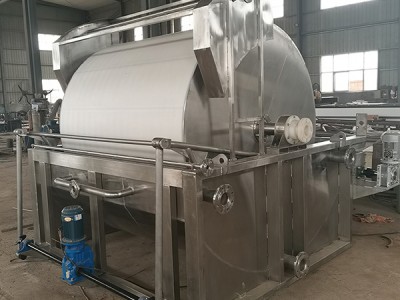
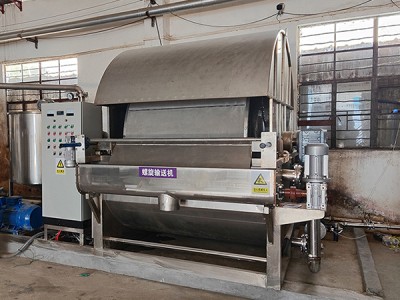
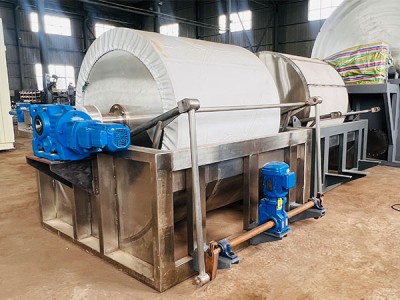
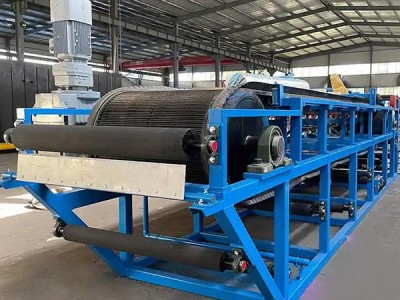
As a core equipment in industrial solid-liquid separation, the horizontal vacuum filter directly affects production efficiency, operating costs, and product quality through the control of its processing capacity and filter cake moisture content.
Key Factors Affecting Capacity and Moisture Content
The capacity and moisture content of horizontal vacuum filters are not independent indicators. Both are governed by three core factors: equipment design, operating parameters, and material properties. These factors are interrelated and mutually constrained, forming the key focus for equipment optimization.
1. Equipment Design: Equipment specifications, filter belt material and mesh size, structural design, and vacuum configuration directly determine the upper limit of performance.
2. Operating Parameters: The matching of vacuum level, filter belt speed, and belt tension directly affects filtration rate and dewatering performance.
3. Material Properties: Particle size distribution, solids concentration, and viscosity are fundamental influencing factors. Fine particles and high-viscosity materials tend to clog filter belt pores, while abnormal concentration results in reduced capacity and fluctuating moisture content.
Capacity Optimization
To optimize the capacity of Horizontal vacuum filters, a closed-loop management system should be established covering equipment selection, parameter adjustment, process improvement, and routine maintenance. Targeted adjustments based on actual production conditions are essential to maximize equipment performance.
Accurate Equipment Selection
Select appropriate equipment specifications and configurations according to production scale, material properties, and industry process requirements. For materials with different particle sizes, filter belt parameters can be customized to ensure filtration speed while preventing material loss.
Optimized Operating Parameters
Adjust key operating parameters based on material properties to balance filtration speed and filter cake formation. Properly control filter belt tension to ensure close contact between the belt and the vacuum box, reduce vacuum leakage, and improve filtration efficiency.
Process Flow Improvement
Enhance material filtration characteristics through pretreatment optimization. Improve material feeding by uniformly distributing slurry onto the filter belt via a feeding device to avoid local overloading, ensure uniform filter cake thickness, and increase capacity per unit area.
Establishment of Standardized Maintenance System
Implement routine maintenance procedures, regularly inspect the sealing performance of the vacuum system, and replace sealing components in a timely manner to prevent vacuum leakage.
Moisture Content Control
Filter cake moisture content is a core performance indicator of Horizontal vacuum filters. Under normal operating conditions, the unit can maintain moisture content below 10%. For granular materials such as quartz sand, typical dewatering results range from 15% to 25%, which can be further reduced via enhanced dewatering methods to meet deep-processing requirements across various industries.
Graduated Dewatering Design
A three-stage process is adopted: gravity pre-dewatering → vacuum high-dewatering → optional enhanced dewatering, enabling gradual moisture removal and overcoming the limitations of a single dewatering method.
Key Process Control
Customize filter belts for specific materials; maintain effective filter belt cleaning to prevent clogging; ensure stable negative pressure in the vacuum system; and use a water separator to recover fine particles for recirculation, minimizing material loss.
Closed-Loop Circulation
A combined “scraper + drum” system ensures residue-free filter cake discharge, preventing belt clogging caused by residual cake. Wastewater from belt cleaning is recycled after sedimentation, and fine solids are recovered and reprocessed, achieving dual recycling of water and materials.
Industrial Applications
The strategies for capacity optimization and moisture content control of horizontal vacuum filters must be flexibly applied according to the material characteristics and production requirements of each industry.
Quartz Sand Processing Industry
Given the wide particle size distribution and high impurity sensitivity of quartz sand, customized filter belts and graded dewatering processes are adopted. Compared with traditional filter presses, production efficiency is improved by 30%–50%, meeting various deep-processing requirements for construction-grade quartz sand.
Chemical Industry
When processing fine-particle and high-purity materials such as dyes and catalysts, efficient solid-liquid separation is achieved by optimizing vacuum level and filter belt parameters.
Mining Industry
For metal ores and non-metallic minerals, the filter reduces moisture content to 12%–20%, facilitating concentrate transportation and smelting.
Metallurgical Industry
In processes including electrolytic aluminum and zinc smelting, precise moisture control reduces waste residue volume, lowers downstream treatment costs, and improves resource utilization.
Capacity optimization and moisture content control of horizontal vacuum filters constitute a systematic engineering task. The core lies in the coordinated matching of equipment, operating parameters, material properties, and process flow. Through precise equipment selection, dynamic parameter adjustment, process improvement, and standardized maintenance, a dual improvement in throughput and dewatering performance can be achieved.
In industrial production, enterprises should formulate customized operating strategies based on their specific material characteristics and industry requirements, giving full play to the continuous, high-efficiency, and eco-friendly advantages of Horizontal vacuum filter. This not only increases production efficiency and reduces operating costs but also ensures product quality, providing an efficient and stable solution for industrial solid-liquid separation processes.