 English
 日本
日本 한국인
한국인 Français
 Deutsch
 español
 Italiano
 Portugal
 Việt Nam
 türkiye
 عرب
عرب Русский
 čeština
 แบบไทย
 Eesti
Eesti Gaeilge
 Hmoob
Hmoob íslenskur
 Cymraeg
 български
 اردو
اردو Polski
 Hrvatski
 українська
 bosanski
 فارسی
فارسی lietuvių
 latviski
 עִברִית
 Română
 Ελληνικά
 dansk
dansk Magyar
 norsk
norsk Suomalainen
 Nederlands
 svenska
 slovenský
 Slovenščina
 हिंदी
हिंदी Indonesia
 Melayu
 Malti
Malti Kreyòl ayisyen
 català
 বাংলা
বাংলা Српски
 o'zbek

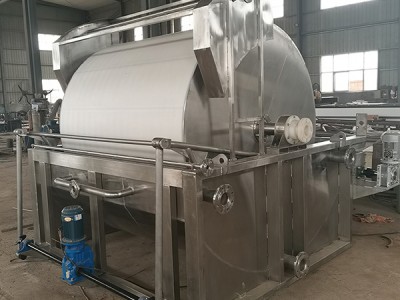
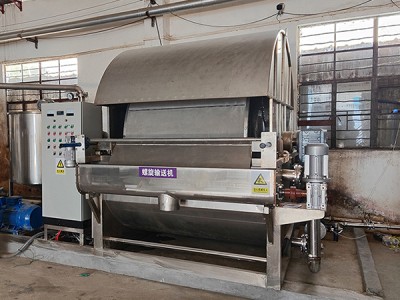
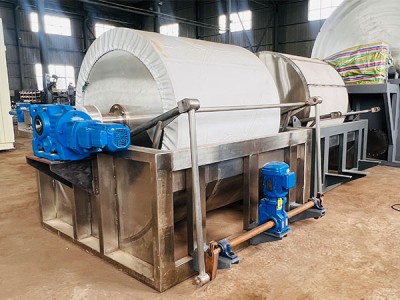
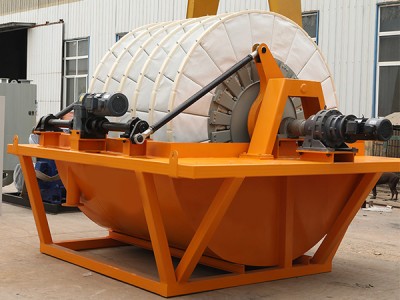
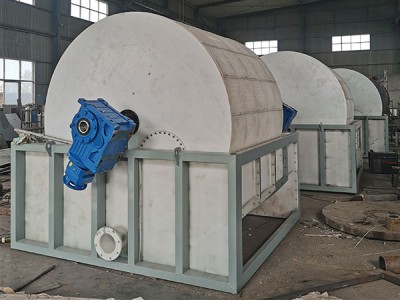
In industrial solid-liquid separation applications, vacuum disc filters have become essential equipment in the mining, chemical, and environmental protection industries due to their ability to operate continuously and handle large volumes. Their operating principle is similar to that of coffee filters and water purifiers in everyday life, as all achieve solid-liquid separation through “medium separation”; however, industrial-grade equipment is better suited to meet the demands of large-scale, high-standard production.
Working Principle
The vacuum disc filter relies on a combination of vacuum suction and rotating filter discs. The filter discs consist of filter cloth, a support mesh, and a drainage structure. During operation, half of the disc is submerged in the slurry tank containing the liquid to be processed, while the other half is exposed to the air. A vacuum pump generates continuous negative pressure, causing solid particles to adhere to the surface of the filter cloth and form a filter cake, while the liquid is drawn away by the negative pressure, thereby achieving continuous solid-liquid separation. This design is particularly well-suited for applications requiring high throughput and continuous operation.
Key Components and Functions
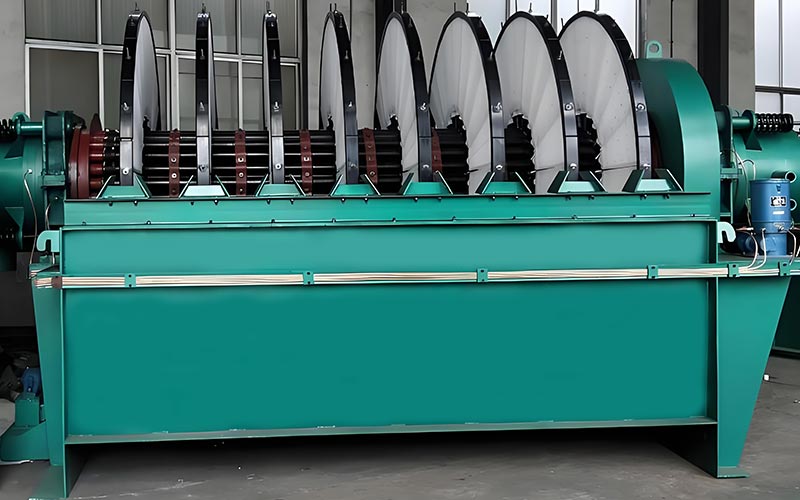
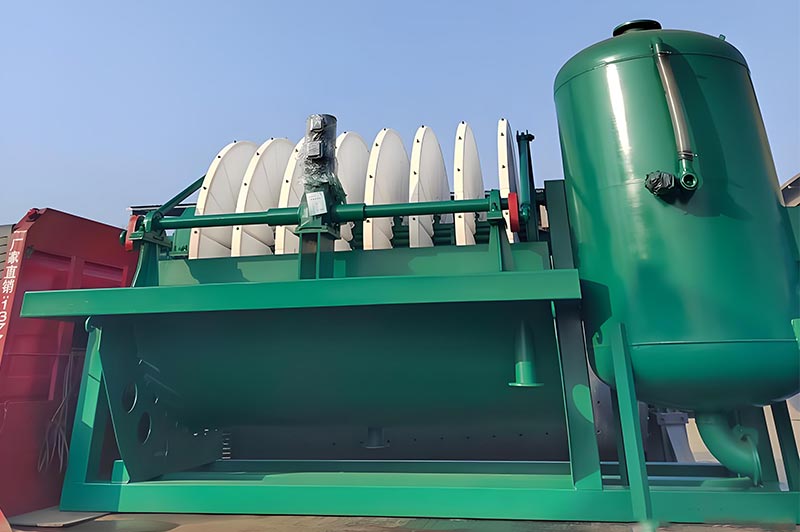
The stable operation of a vacuum disc filter depends on the coordinated functioning of its various components. The core components and their functions are as follows:
| Components | Core functions |
| Spindle and drive system | This drives the filter plates to rotate at a constant speed, providing the core power for the equipment's operation. |
| Filter disc assembly | The filter cloth is the core working surface for solid-liquid separation. |
| Slurry tank | Store the slurry to be filtered, ensuring the filter plates are stably submerged. |
| Vacuum system | Generates and maintains negative pressure to separate gas and water and protect the vacuum pump. |
| Unloading device | Peel off the formed filter cake and clean the filter cloth for recycling. |
· Energy-efficient and high-performance: Energy consumption is reduced by 30% compared to traditional filter presses; continuous vacuum operation ensures uninterrupted processing and higher efficiency.
· Stable Separation: Supports co-current and counter-current washing, with controllable filter cake moisture content; no relative friction between filter cloths ensures consistent filtration precision.
· Easy Operation and Maintenance: Highly automated with a built-in scraper and backflush cleaning system; filter cloths can be automatically regenerated; few wear parts result in simple daily maintenance and low operating costs.
Cross-Industry Applications
In addition to traditional mining and chemical industries, the equipment is also suitable for precision filtration needs across a wide range of industries:
· Food processing: Preserves the natural properties of ingredients during the refinement of starch and the extraction of plant proteins;
· Environmental protection: Reduces the moisture content of sewage sludge to below 60%;
· Pharmaceutical intermediates: Gentle vacuum filtration protects heat-sensitive active ingredients.
Key Operational Points
· During normal operation, ensure the slurry is at the proper liquid level and that the discharge port is free of blockages. Adjust the main shaft speed according to the ore volume (do not set it to zero to avoid a “system freeze”);
· Monitor the operation of the feed, discharge, and automatic drainage systems to ensure they are unobstructed;
· Monitor the signals on the control panel and simulation screen; if any abnormalities are detected, shut down the machine immediately for inspection and repair;
· Maintain a stable vacuum level. If fluctuations occur, promptly check the vacuum lines for leaks and address them.
Routine Maintenance and Precautions
· Regularly check the temperature of the motor and bearings, and ensure the gearbox has sufficient oil;
· Frequently inspect the filter cloth for damage; if any tears or blockages are found, replace or clean it immediately;
· Inspect the mixer seals to ensure the water seal is functioning properly; if there is severe leakage at the packing area, tighten the gland or replace the packing promptly;
· Lubricate all lubrication points regularly; in manual mode, start the lubrication motor once every 2–3 hours, running it for 2–5 minutes each time;
· Regularly replenish the grease in the grease reservoir to ensure the lubrication system operates normally.
Key Recommendations for Selection
When selecting a model, consider actual production requirements and focus on the following four key points:
· Material characteristics: Test key parameters such as slurry concentration and particle size distribution;
· Process requirements: Define core metrics such as filter cake moisture content and hourly processing capacity;
· Installation conditions: Ensure compatibility with on-site conditions, including space availability and power supply configuration;
· Ease of maintenance: Prioritize models that allow for easier filter cloth replacement and cleaning.