 English
 日本
日本 한국인
한국인 Français
 Deutsch
 español
 Italiano
 Portugal
 Việt Nam
 türkiye
 عرب
عرب Русский
 čeština
 แบบไทย
 Eesti
Eesti Gaeilge
 Hmoob
Hmoob íslenskur
 Cymraeg
 български
 اردو
اردو Polski
 Hrvatski
 українська
 bosanski
 فارسی
فارسی lietuvių
 latviski
 עִברִית
 Română
 Ελληνικά
 dansk
dansk Magyar
 norsk
norsk Suomalainen
 Nederlands
 svenska
 slovenský
 Slovenščina
 हिंदी
हिंदी Indonesia
 Melayu
 Malti
Malti Kreyòl ayisyen
 català
 বাংলা
বাংলা Српски
 o'zbek

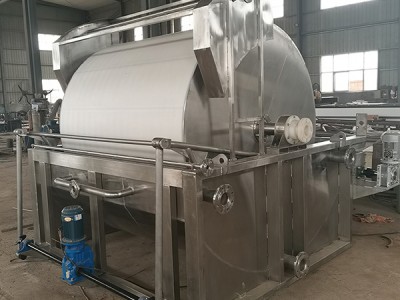
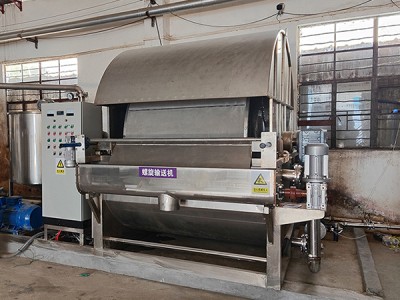
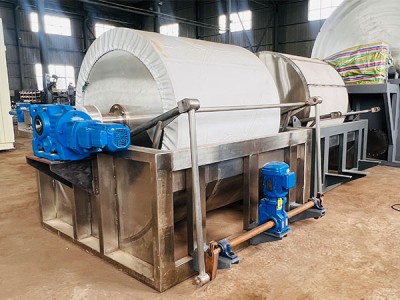
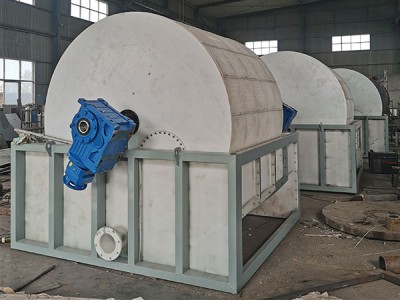
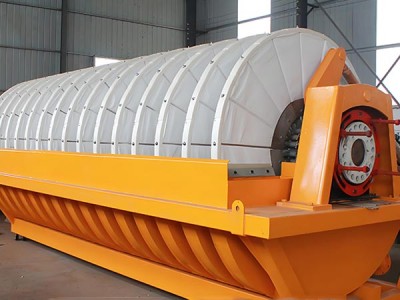
Filter cloth cleaning is critical to the long-term and stable operation of vacuum drum filters, directly affecting filter cloth service life, filtration efficiency and regulatory compliance.
I.Judgment of Cleaning Timing
Timely filter cloth cleaning can prevent permanent clogging. The cleaning process shall be initiated based on the following indicators:
Filtration pressure difference: increased by more than 30% compared with the initial state;
Reduced throughput: cake output per unit time drops by 15%–20%;
Cake moisture content: rises by over 5%, or incomplete cake discharge;
Filtrate clarity: excessive turbidity;
Regular cycle: continuous operation for 24 to 72 hours.
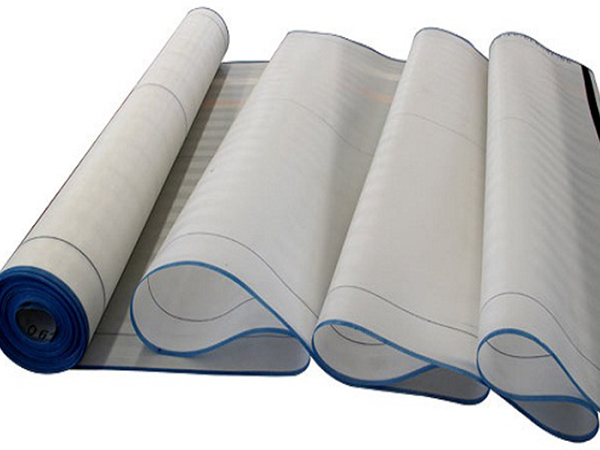
II.Core Cleaning Methods
1. On-line Backwashing
Principle: Low-pressure clean water or dedicated cleaning solution is used to backwash the pores of the filter cloth via the internal spray device of the drum, so as to remove loose particles adhering to the surface.
Operating Specifications:
Pressure control: 2–3 bar
Water temperature: Ambient temperature (20–30°C); temperature can be increased to 40–50°C for chemical fiber filter cloth.
Spray angle: 30–45° relative to the filter cloth surface, covering the cleaning area after material discharge.
Water quality requirements: The clean water shall meet European and American primary water standards to prevent secondary pollution.
2. Offline Chemical Cleaning
When on-line backwashing fails to resolve clogging, offline chemical cleaning is required. Please strictly comply with the operation specifications:
1)Cleaning agent selection
|
Pollutant type |
Recommended cleaning agents |
Material compatibility |
|
Inorganic scale (calcium carbonate, calcium sulfate) |
Citric acid (5%-8%), sulfamic acid (3%-5%) |
Polyester, PP, PTFE (resistant), Nylon (use with caution with citric acid). |
|
Organic dirt (oil, starch) |
Alkaline cleaning agent (NaOH 2%-3% + surfactant) |
Nylon, PP, PTFE (durable); Polyester (NaOH concentration ≤3%) |
|
Biofilm (microbial growth) |
Chlorine-containing disinfectant (sodium hypochlorite 500-1000ppm) |
Polyester, PP (resistant), PTFE (no effect), Nylon (prohibited) |
|
Compound dirt |
Alternate acid and alkali cleaning (acid first, then alkali, with rinses of clean water in between). |
PTFE and PP only (wide range of acid and alkali resistance) |
Safety Preparation: Wear chemical protective clothing and goggles, and ensure adequate ventilation.
Filter Cloth Removal: Take down the filter cloth in accordance with the equipment SOP to prevent fiber breakage caused by excessive pulling.
Soaking Treatment: Place the filter cloth in the cleaning tank. Ensure the cleaning liquid level covers the cloth by 5 cm, with a soaking time of 1 to 2 hours (maximum extended to 4 hours). Avoid prolonged soaking of nylon and polyester filter cloths.
Auxiliary Cleaning: Gently brush the filter cloth surface with a soft brush, focusing on unclogging blocked pores.
Rinsing and Neutralization: Rinse repeatedly with clean water until the filtrate pH value reaches 7–8, to prevent residual detergent from corroding the filter cloth.
Drying and Storage: Air-dry naturally or dry at low temperature. Fold and store in a dry and well-ventilated area.
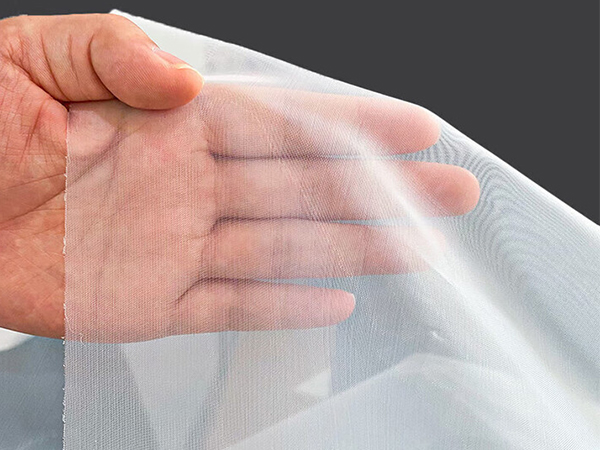
Ultrasonic Cleaning:
20–40 kHz ultrasonic vibration is adopted to remove dirt inside micropores. It is suitable for PTFE membrane filter cloths and pharmaceutical-grade fine filter cloths, boosting cleaning efficiency by 40%.
High-pressure Water Jet Cleaning:
Designed for heavy-duty mining filter cloths. The pressure shall be controlled at 5–8 bar, and filter cloth fixing devices are required for operation.
Steam Cleaning:
Only applicable to PTFE and glass fiber filter cloths. High-temperature steam is used to dissolve stubborn oil stains, and the operation must comply with EU steam safety standards.
|
Filter cloth material |
Prohibited cleaning agents |
Prohibited actions |
Things to note |
|
Polyester |
Strong alkaline cleaning agents (NaOH > 5%), chlorine-containing high-temperature cleaning solutions |
High-temperature drying (>120℃), steel wool scrubbing, and prolonged acid soaking. |
After cleaning, dry promptly to prevent mold growth (meeting European and American warehouse humidity standards of <60%). |
|
Polypropylene |
Strong oxidizing cleaning agents (concentrated nitric acid, potassium permanganate) |
High-temperature cleaning (>80℃), direct steam injection |
Benzene-containing solvents are prohibited. |
|
Nylon |
Chlorine-containing cleaning agents, strong acids, and strong alkalis |
Ultrasonic cleaning, long-term soaking |
The cleaning cycle needs to be shortened. |
|
PTFE and coating |
No absolute taboos |
High-pressure direct coating layer |
High-concentration cleaning machines can be used, but cost control is necessary. |
Air permeability recovery rate: The air permeability after cleaning shall be no less than 85% of the initial value.
Filtration accuracy: Pass the particle retention test.
Visual inspection: No residual dirt or damage on the filter cloth surface, and no obvious fiber shedding.
Service life verification: Standardized cleaning can extend the service life of filter cloth by 30%–50%.
Waste liquid treatment: Waste liquid from chemical cleaning must be neutralized and filtered, and discharged only after meeting discharge standards.
Cleaning agent selection: Biodegradable cleaning agents are preferred. Phosphorus-containing and heavy metal-containing detergents are prohibited.
Occupational health: SDS documents shall be provided for all cleaning agents, and operators must receive professional training.
Record keeping and traceability: Establish cleaning ledgers to record cleaning time, detergent type, operator and cleaning effect verification data.