 English
 日本
日本 한국인
한국인 Français
 Deutsch
 español
 Italiano
 Portugal
 Việt Nam
 türkiye
 عرب
عرب Русский
 čeština
 แบบไทย
 Eesti
Eesti Gaeilge
 Hmoob
Hmoob íslenskur
 Cymraeg
 български
 اردو
اردو Polski
 Hrvatski
 українська
 bosanski
 فارسی
فارسی lietuvių
 latviski
 עִברִית
 Română
 Ελληνικά
 dansk
dansk Magyar
 norsk
norsk Suomalainen
 Nederlands
 svenska
 slovenský
 Slovenščina
 हिंदी
हिंदी Indonesia
 Melayu
 Malti
Malti Kreyòl ayisyen
 català
 বাংলা
বাংলা Српски
 o'zbek

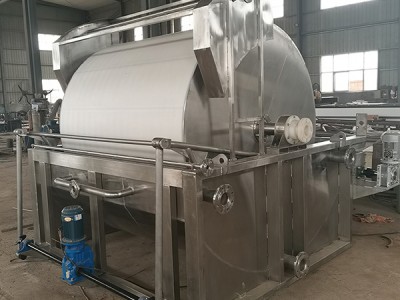
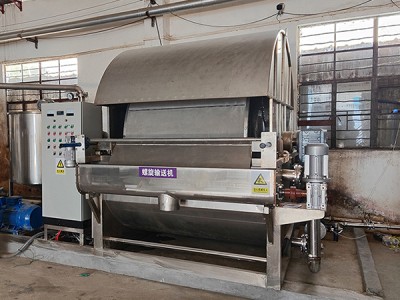
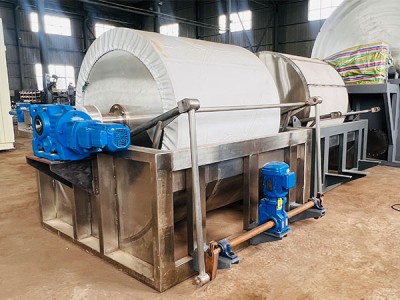
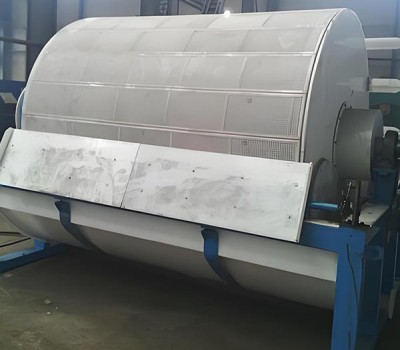
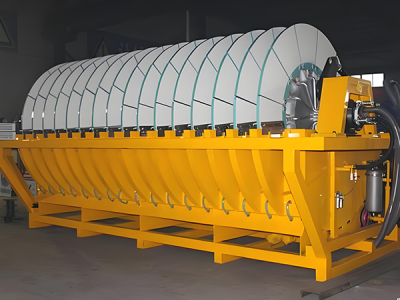
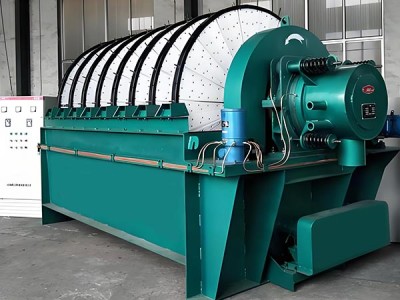
The rotary vacuum filter is a continuous solid-liquid separation device widely used in the chemical, metallurgical, food, and pharmaceutical industries. Its core working component consists of a rotating drum; through the action of vacuum suction, solid particles in the suspension adhere to the filter cloth on the drum surface, thereby completing processes such as filtration, washing, dehydration, and discharge. Thanks to its continuous operation characteristics, it has become one of the key pieces of equipment for achieving efficient solid-liquid separation in large-scale industrial production.
Core Advantages of Rotary vacuum filter
1. Continuous Automated Operation
Fully automatic continuous operation: The entire process of feeding, filtration, washing, drying and discharge is seamlessly connected without manual intervention, significantly reducing labor costs.
Stable operation: Boasting an availability rate of up to 98%, it delivers far higher production efficiency than batch-type filtration equipment.
One-click operation: The system can be started simply by setting parameters, featuring easy operation and reduced labor costs.
2. High-Efficiency Filtration and Processing Capacity
Large Capacity: Boasting a maximum filtration area of 200 square meters, it delivers a high throughput per unit time and is ideally suited for large-scale production.
High Filtration Efficiency: Vacuum negative pressure accelerates solid-liquid separation, making it particularly suitable for handling high-concentration suspensions and fine-grained materials.
Controllable Filter Cake Quality: The thickness of the filter cake can be precisely controlled by adjusting the drum rotation speed, meeting the requirements of different processes.
3. Excellent Washing and Drying Performance
Thorough Filter Cake Washing: Features high impurity displacement efficiency and uniform filter cake thickness, making it suitable for processes requiring high-purity products.
Low Moisture Content: The vacuum drying section effectively reduces the moisture content of the filter cake, improving product quality and subsequent processing efficiency.
Multi-Stage Process Integration: Filtration, washing, and re-drying can be completed in the same equipment, minimizing contamination from intermediate links.
4. Energy-Saving and Environmentally Friendly Advantages
Low Energy Consumption: Unlike high-pressure filtration equipment (e.g., centrifuges), it operates solely by virtue of vacuum suction, achieving a marked reduction in energy consumption.
Filtrate Recycling: It supports the recovery and reuse of filtrate, minimizing water resource waste and aligning with the concept of sustainable production.
No Sedimentation Tank Required: Certain models are capable of directly processing stock solution, cutting down civil engineering investment and reducing floor space.
5. Compact Structure and Easy Maintenance
Small Footprint: With a compact structure, the equipment is ideal for production environments with limited space.
Simple Maintenance: Featuring few wearing parts and a low failure rate, daily maintenance is mainly limited to filter cloth cleaning and regular inspections.
Efficient Filter Cloth Management: Equipped with an automatic flushing device, it extends the service life of the filter cloth and reduces the replacement frequency and associated costs.
6. Product Quality Assurance
Low-temperature Operation: The vacuum environment maintains a relatively low temperature, making it particularly suitable for processing heat-sensitive materials (e.g., pharmaceuticals, foodstuffs) without damaging active ingredients.
Closed Design: Can be equipped with a sealed enclosure to prevent material oxidation, contamination or volatilization, thereby enhancing product purity and safety.
Automated Error Prevention: Full-process automation reduces human operational errors and ensures consistent and stable product quality.
Applications of Rotary Vacuum Filters
Leveraging core advantages such as continuous operation, high solid recovery rate, and easy maintenance, rotary vacuum filters have been widely adopted across multiple industrial sectors:
Chemical Industry: Used for solid-liquid separation in the production of fuels, pigments, chemical fertilizers, soda ash, and other products, handling various suspensions generated after reactions.
Metallurgical Industry: Applied in hydrometallurgical processes to separate solid residues from ore leachate or recover metal concentrates.
Food and Pharmaceutical Industries: Suitable for sucrose crystallization filtration, citric acid extraction, antibiotic fermentation broth clarification, etc., meeting the industry's requirements for product purity.
Environmental Protection and Sewage Treatment: Treats sludge in industrial wastewater and domestic sewage to achieve sludge dewatering and volume reduction, facilitating subsequent disposal.
Mining Industry: Performs solid-liquid separation on ore pulp after mineral processing to recover useful minerals while treating tailings wastewater.
With its core advantages of continuous automation, high-efficiency processing, and easy maintenance, the rotary vacuum filter flexibly meets the treatment requirements of various complex suspensions—including corrosive, heat-sensitive, fine-grained, and high-concentration types. It not only ensures the production capacity required for large-scale mass production but also complies with the process standards for high-precision purification. As an optimal piece of equipment for industries to optimize solid-liquid separation processes, improve overall production efficiency, and facilitate sustainable production, it provides reliable support for enterprises to consolidate production stability and enhance industrial competitiveness.