 English
 日本
日本 한국인
한국인 Français
 Deutsch
 español
 Italiano
 Portugal
 Việt Nam
 türkiye
 عرب
عرب Русский
 čeština
 แบบไทย
 Eesti
Eesti Gaeilge
 Hmoob
Hmoob íslenskur
 Cymraeg
 български
 اردو
اردو Polski
 Hrvatski
 українська
 bosanski
 فارسی
فارسی lietuvių
 latviski
 עִברִית
 Română
 Ελληνικά
 dansk
dansk Magyar
 norsk
norsk Suomalainen
 Nederlands
 svenska
 slovenský
 Slovenščina
 हिंदी
हिंदी Indonesia
 Melayu
 Malti
Malti Kreyòl ayisyen
 català
 বাংলা
বাংলা Српски
 o'zbek

In the solid-liquid separation processes across chemical, pharmaceutical, metallurgical, environmental and other industries, the Vacuum rotary filter stands as one of the core pieces of equipment for large-scale solid-liquid separation, owing to its advantages of continuous and automated operation. Unlike batch filtration equipment, the rotary drum filter can simultaneously perform multiple processes—including filtration, washing, and discharging—during continuous operation. How exactly is this continuous operation achieved? Starting with the equipment structure and working principle, this paper systematically analyzes the technical mechanism that enables continuous operation in rotary drum vacuum filters.
Basic Structure and Working Principle
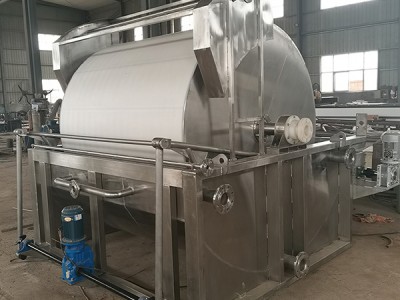
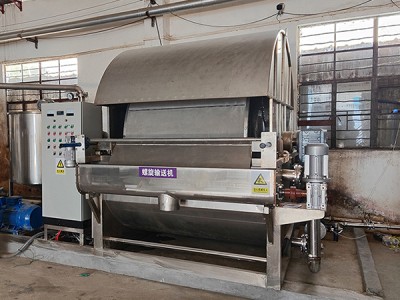
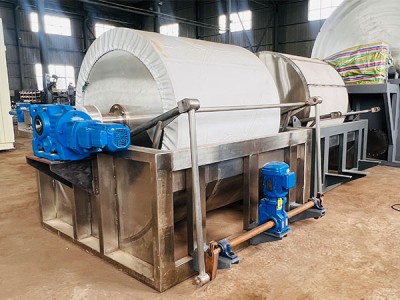
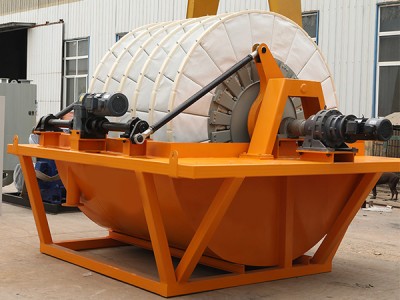
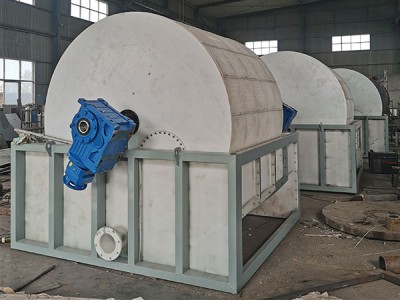
The core component of a Vacuum rotary filter is a horizontally mounted, continuously rotating cylindrical drum. The outer surface of the drum is covered with a filter medium (filter cloth or metal screen). The interior of the drum is divided into several independent fan-shaped filter chambers, each connected to an external vacuum system and compressed air system via a distribution head.
The core component of a Vacuum rotary filter is a horizontally mounted, continuously rotating cylindrical drum. The outer surface of the drum is covered with a filter medium (filter cloth or metal screen). The interior of the drum is divided into several independent fan-shaped filter chambers, each connected to an external vacuum system and compressed air system via a distribution head.
Driven by a drive unit, the drum rotates continuously at a low speed and is submerged in a tank containing the slurry to be filtered. As the drum revolves, each filter chamber sequentially undergoes processes including filtration, washing, dewatering, discharging, and regeneration, forming a complete operating cycle. Thanks to the continuous rotation of the drum, each filter chamber operates at a different process stage simultaneously, thereby realizing continuous production for the entire unit.
Solid-Liquid Separation by Vacuum Suction
Filtration constitutes the core stage for solid-liquid separation, taking place while the drum is submerged in the slurry tank.
Filtration constitutes the core stage for solid-liquid separation, taking place while the drum is submerged in the slurry tank.
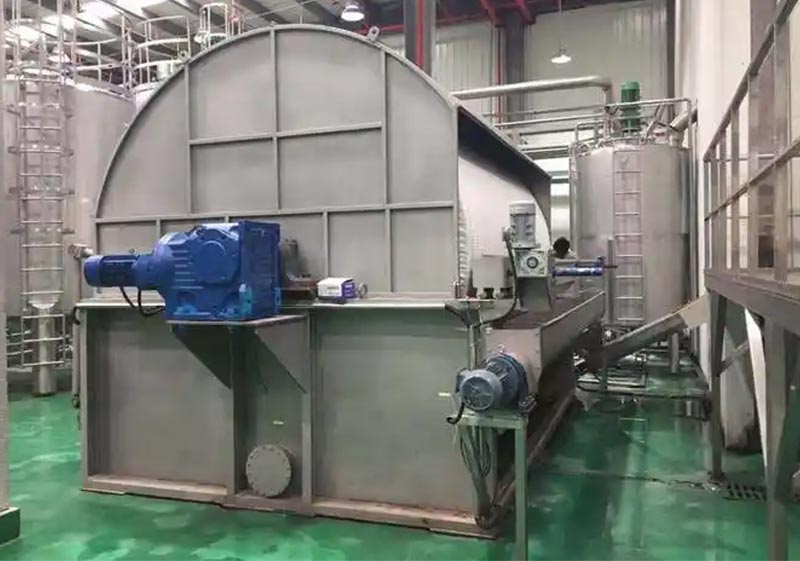
As a filter chamber rotates with the drum into the submerged zone, the distribution head connects the chamber to the vacuum system. Under vacuum suction, negative pressure forms inside the chamber, drawing liquid from the slurry through the filter cloth into the chamber interior. The liquid is then discharged via a gas-liquid separator, while solid particles are retained on the filter surface, gradually building up a filter cake layer.
As the drum continues rotating, the filter cake thickens progressively. Its thickness can be controlled by adjusting parameters such as drum rotational speed, slurry concentration, and vacuum level. When the filter chamber exits the slurry level, vacuum suction remains active for a period to remove residual free moisture from the cake — a stage known as dewatering or drying.
Continuous filtration relies on precise sequential control of vacuum conditions across individual filter chambers by the distribution head. The head features arc-shaped slots, ensuring that only chambers in the submerged and dewatering zones are connected to the vacuum system, so vacuum is applied within the correct zones.
Displacement Washing for Improved Product Purity
To remove residual impurities from the filter cake, the Vacuum rotary filter can integrate a washing stage following filtration, enabling continuous cake washing.
To remove residual impurities from the filter cake, the Vacuum rotary filter can integrate a washing stage following filtration, enabling continuous cake washing.
Washing typically occurs after the dewatering stage, once the cake has exited the slurry level. As a filter chamber rotates into the washing zone, the distribution head maintains vacuum, while washing nozzles mounted above the drum uniformly spray washing liquid onto the cake surface. Driven by vacuum suction, the wash liquid penetrates the cake layer, displacing residual feed liquid trapped in the cake pores and thus reducing impurity content.
Washing efficiency depends on factors including spray uniformity, wash liquid dosage, cake thickness, and vacuum level. For products requiring high purity, multi-stage washing zones can be installed to achieve counter-current or stepwise washing, optimizing effectiveness while controlling wash liquid consumption.
The washing and filtration processes are completed continuously on the same drum, eliminating the need to transfer the cake to separate equipment. This simplifies the process flow while reducing material loss and contamination risks.
Mechanical Discharge for Complete Filter Cake Removal
The discharge stage is critical for separating the filter cake from the filter cloth surface and directly affects the continuous operation of the equipment.
The discharge stage is critical for separating the filter cake from the filter cloth surface and directly affects the continuous operation of the equipment.
Once a filter chamber completes filtration, washing, and dewatering, it rotates into the discharge zone. At this point, the distribution head disconnects the vacuum circuit and may switch to compressed air back-blowing as needed. Within the discharge zone, the filter cake detaches from the filter cloth under the combined action of its own weight, mechanical scraping by a doctor blade, or back-blowing air flow.
Doctor blade discharge is the most common configuration. A blade parallel to the drum’s generatrix is installed at the drum surface, with a tiny gap maintained between the blade edge and the filter cloth. As the drum rotates, the blade scrapes the cake off the cloth, and the material drops into a receiving hopper or conveyor below. The gap between the blade and filter cloth must be precisely adjusted to ensure thorough discharge while avoiding damage to the cloth.
Back-flush assisted discharge is suitable for sticky materials or thin filter cakes. Compressed air is introduced into the filter chamber in the discharge zone, flowing backward through the cloth to create outward thrust that helps release the cake. Back-blow pressure and duration should be set appropriately according to material properties to prevent excessive air flow from reducing filter cloth service life.
After discharge, the exposed filter cloth passes through a regeneration zone (equipped with brush rolls or high-pressure water washing) to restore its filtration performance. It is then re-submerged into the slurry to begin the next cycle.
Core Mechanism of Continuous Operation: Zoning and Sequential Control
The technical core enabling continuous operation of a Vacuum rotary filter lies in the organic integration of zoning design and sequential control.
The technical core enabling continuous operation of a Vacuum rotary filter lies in the organic integration of zoning design and sequential control.
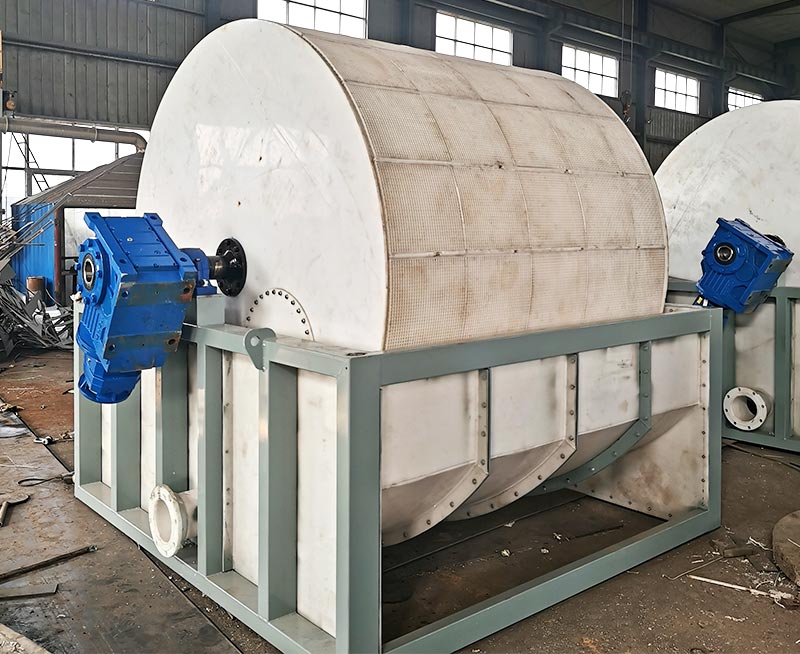
Zoning design divides the drum circumference into multiple functional zones. Each zone corresponds to a specific process: filtration in the submerged zone, dewatering in the drying zone, spray washing in the washing zone, cake removal in the discharge zone, and filter cloth regeneration in the regeneration zone. These zones are distributed circumferentially along the drum, forming a complete operating cycle.
Sequential control is realized by the distribution head—a key component of the Vacuum rotary filter. It contains arc-shaped slots of varying arc lengths, connected separately to the vacuum system, compressed air system, and atmosphere. As the drum rotates, the connecting pipes of each filter chamber pass through different slots of the distribution head in sequence, automatically performing vacuum suction, back-blowing, pressure relief, and other operations according to a preset sequence, without manual intervention.
Multi-chamber parallel operation provides the fundamental guarantee for continuous operation. Since the drum is divided into multiple independent filter chambers, while one chamber is in the discharge or regeneration phase, others remain engaged in filtration or washing. This parallel operating mode ensures the entire unit stays in production at all times, achieving truly continuous operation.
Effects of Process Parameters on Continuous Operation
The stability and performance of continuous operation in a Vacuum rotary filter are jointly influenced by several process parameters.
The stability and performance of continuous operation in a Vacuum rotary filter are jointly influenced by several process parameters.
Drum rotational speed determines the residence time for each process stage. Excessively high speed results in insufficient time for filtration, washing, and dewatering, leading to higher cake moisture content and poor washing efficiency. Excessively low speed reduces processing capacity. The rotational speed must be determined comprehensively based on factors such as the filtration characteristics of the material and the required filter cake thickness.
Vacuum level provides the driving force for filtration and washing. Insufficient vacuum leads to slow filtration rates and high cake moisture content. Excessively high vacuum tends to cause filter cloth clogging and fine particle penetration, which compromises filtrate clarity. The vacuum level should be optimized within the equipment design range according to material properties.
Wash liquid distribution affects washing efficiency. The uniformity of spray distribution, spray angle, and droplet dispersion all influence washing performance. In multi-stage washing, the allocation of wash liquid volume and concentration across each stage must be systematically considered.
Filter cloth selection directly impacts filtration precision, cake discharge ease, and cloth service life. The filter cloth material must be compatible with the chemical properties of the slurry; its weave structure should balance filtration precision and rate; and its surface treatment should facilitate clean cake release.
Through its technical architecture of zoning design, sequential control, and multi-chamber parallel operation, the Vacuum rotary filter achieves continuous integration of filtration, washing, and discharging within a single unit. Solid-liquid separation is realized via vacuum suction during filtration; impurities in the filter cake are removed through the combined action of spray washing and vacuum suction; and cake discharge is completed using a combination of doctor blade scraping and back-blowing. Precise sequential control by the distribution head ensures orderly coordination between process stages, while parallel operation of multiple filter chambers guarantees uninterrupted running of the equipment.
Compared with batch filtration equipment, this continuous operating mode offers distinct advantages, including high processing capacity, advanced automation, minimal manual intervention, and stable operation, making it an ideal solution for large-scale solid-liquid separation applications. A thorough understanding of the technical mechanism behind continuous operation of the Vacuum rotary filter carries important practical significance for equipment selection, process optimization, and operational maintenance.
Compared with batch filtration equipment, this continuous operating mode offers distinct advantages, including high processing capacity, advanced automation, minimal manual intervention, and stable operation, making it an ideal solution for large-scale solid-liquid separation applications. A thorough understanding of the technical mechanism behind continuous operation of the Vacuum rotary filter carries important practical significance for equipment selection, process optimization, and operational maintenance.