 English
 日本
日本 한국인
한국인 Français
 Deutsch
 español
 Italiano
 Portugal
 Việt Nam
 türkiye
 عرب
عرب Русский
 čeština
 แบบไทย
 Eesti
Eesti Gaeilge
 Hmoob
Hmoob íslenskur
 Cymraeg
 български
 اردو
اردو Polski
 Hrvatski
 українська
 bosanski
 فارسی
فارسی lietuvių
 latviski
 עִברִית
 Română
 Ελληνικά
 dansk
dansk Magyar
 norsk
norsk Suomalainen
 Nederlands
 svenska
 slovenský
 Slovenščina
 हिंदी
हिंदी Indonesia
 Melayu
 Malti
Malti Kreyòl ayisyen
 català
 বাংলা
বাংলা Српски
 o'zbek

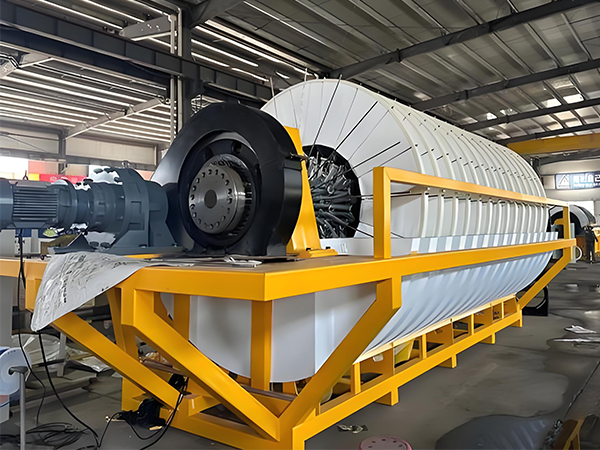
Disc vacuum filters are widely used in industries such as mining, chemical engineering, food processing and pharmaceuticals. To ensure efficient and safe operation of the equipment, the following precautions must be strictly observed.
I. Installation & Commissioning
Foundation and Levelness
The equipment must be installed on a solid, level concrete foundation with a levelness error not exceeding **0.5 mm/m**. Instability may cause deflection of filter discs, uneven wear of filter cloth, and even damage to the main shaft.
Foundation and Levelness
The equipment must be installed on a solid, level concrete foundation with a levelness error not exceeding **0.5 mm/m**. Instability may cause deflection of filter discs, uneven wear of filter cloth, and even damage to the main shaft.
Electrical System and Grounding Protection
Wiring must be completed by a certified electrician in accordance with local standards. The main equipment body and control cabinet must be reliably grounded to prevent accidents caused by static accumulation or electrical faults.
Wiring must be completed by a certified electrician in accordance with local standards. The main equipment body and control cabinet must be reliably grounded to prevent accidents caused by static accumulation or electrical faults.
II. Pre-Start Inspection
Many equipment failures stem from negligence prior to startup. Establishing a standardized pre-startup inspection checklist is a standard practice in factory management.
Vacuum Seal Inspection
Vacuum pressure provides the core driving force for filtration. Before startup, be sure to inspect the sealing condition of the distribution head, vacuum pipelines and filtrate pipes. Even minor leaks will not only reduce filtration efficiency but also cause a sharp increase in energy consumption of the vacuum pump.
Vacuum pressure provides the core driving force for filtration. Before startup, be sure to inspect the sealing condition of the distribution head, vacuum pipelines and filtrate pipes. Even minor leaks will not only reduce filtration efficiency but also cause a sharp increase in energy consumption of the vacuum pump.
Filter Cloth Installation and Tensioning
The filter cloth must be laid flat and free of wrinkles. Wrinkles will lead to uneven filter cake thickness and even short-circuiting resulting in turbid discharge. Verify that the filter cloth is properly tensioned to avoid discharge difficulties caused by slackness.
The filter cloth must be laid flat and free of wrinkles. Wrinkles will lead to uneven filter cake thickness and even short-circuiting resulting in turbid discharge. Verify that the filter cloth is properly tensioned to avoid discharge difficulties caused by slackness.
Lubrication System Check
Check that the oil level of the automatic lubrication system is normal. For large industrial filters, ensure that grease is accurately supplied to the main shaft and gear meshing points to prevent dry grinding.
Check that the oil level of the automatic lubrication system is normal. For large industrial filters, ensure that grease is accurately supplied to the main shaft and gear meshing points to prevent dry grinding.
III. Refined Control During Operation – Balancing Efficiency and Quality
Precise Adjustment of Vacuum Level
A higher vacuum level is not always better. Excessively high vacuum may cause filter cloth clogging or filter cake cracking, which in turn reduces dewatering efficiency.
Precise Adjustment of Vacuum Level
A higher vacuum level is not always better. Excessively high vacuum may cause filter cloth clogging or filter cake cracking, which in turn reduces dewatering efficiency.
Recommended range: generally controlled at -0.04 to -0.08 MPa. For fine-particle materials, a staged vacuum strategy is recommended:
low vacuum in the initial stage for cake formation, and high vacuum in the later stage for dewatering.
low vacuum in the initial stage for cake formation, and high vacuum in the later stage for dewatering.
Matching Rotational Speed to Filter Cake Thickness
Excessively high speed results in overly thin filter cake and poor energy efficiency; excessively low speed leads to insufficient processing capacity.
Excessively high speed results in overly thin filter cake and poor energy efficiency; excessively low speed leads to insufficient processing capacity.
Dynamically adjust the speed using a frequency converter and optimize in real time based on feed concentration. Generally, the optimal filter cake thickness is **10–30 mm**.
Liquid Level Control:Stable slurry level in the tank is critical. An excessively low level will draw in air and break the vacuum, while an excessively high level may cause overflow. Installation of an automatic liquid level controller is recommended.
IV. Shutdown Procedure
Stop feeding first while keeping the vacuum system running until the filter cake is completely discharged. Then shut down the vacuum pump and cut off the main power supply.
Stop feeding first while keeping the vacuum system running until the filter cake is completely discharged. Then shut down the vacuum pump and cut off the main power supply.
Clean the filter cloth, filter discs and related pipelines in a timely manner to remove residual slurry and prevent scaling or corrosion. For corrosive materials, special cleaning and protection procedures shall be carried out.
Drain all residual materials from the equipment, close all relevant valves, and clean the equipment surface thoroughly.
IV. Maintenance
To Reduce Failure Rate and Extend Service Life
To Reduce Failure Rate and Extend Service Life
1. Regular Maintenance Items
Daily: Check the cleanliness and integrity of filter cloth, leakage of seals, lubricating oil level, and abnormal noise during operation.
Weekly: Clean vacuum pipelines, inspect motor temperature and vibration, and tighten all connecting bolts.
Monthly: Replace lubricating oil, check seals and pressure of the hydraulic system, and calibrate sensor accuracy.
Quarterly: Overhaul filter disc bearings and transmission system, inspect filter cloth wear and replace if necessary, and evaluate the operating condition of the vacuum pump.
Daily: Check the cleanliness and integrity of filter cloth, leakage of seals, lubricating oil level, and abnormal noise during operation.
Weekly: Clean vacuum pipelines, inspect motor temperature and vibration, and tighten all connecting bolts.
Monthly: Replace lubricating oil, check seals and pressure of the hydraulic system, and calibrate sensor accuracy.
Quarterly: Overhaul filter disc bearings and transmission system, inspect filter cloth wear and replace if necessary, and evaluate the operating condition of the vacuum pump.
2. Wear Parts Management
Spare wear parts such as filter cloth, seals and bearings shall be original parts or internationally standardized alternatives to ensure proper compatibility with the equipment.
Spare wear parts such as filter cloth, seals and bearings shall be original parts or internationally standardized alternatives to ensure proper compatibility with the equipment.
3. Special Environment Protection
For outdoor installation, adequate protection against rain, sunlight and frost is required. In winter, accumulated water inside the equipment must be drained to prevent pipeline cracking due to freezing.
When used in flammable and explosive environments, the equipment must comply with explosion-proof standards, and any unauthorized operation is strictly prohibited.
For outdoor installation, adequate protection against rain, sunlight and frost is required. In winter, accumulated water inside the equipment must be drained to prevent pipeline cracking due to freezing.
When used in flammable and explosive environments, the equipment must comply with explosion-proof standards, and any unauthorized operation is strictly prohibited.
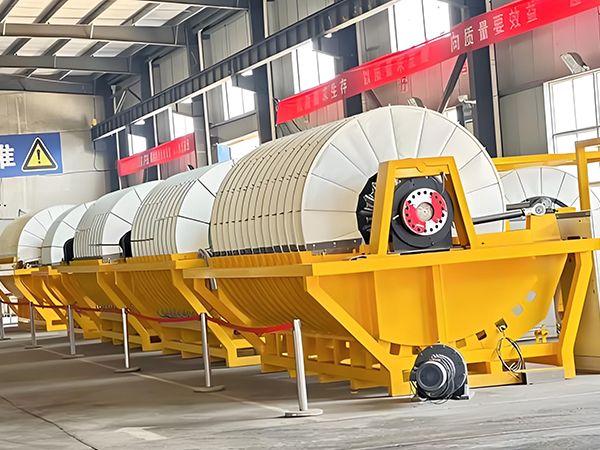
Structural Advantages of Disc Vacuum Filters
1. The distribution head consists of three zones: filtration, drying and discharge. The angles of each zone are defined by static pads secured with countersunk screws and are fully adjustable. On the premise of ensuring satisfactory slurry adsorption, appropriately enlarging the filtration zone increases filter cake thickness and improves production capacity; expanding the drying zone reduces moisture content in the filter cake and optimizes filtration quality.
1. The distribution head consists of three zones: filtration, drying and discharge. The angles of each zone are defined by static pads secured with countersunk screws and are fully adjustable. On the premise of ensuring satisfactory slurry adsorption, appropriately enlarging the filtration zone increases filter cake thickness and improves production capacity; expanding the drying zone reduces moisture content in the filter cake and optimizes filtration quality.
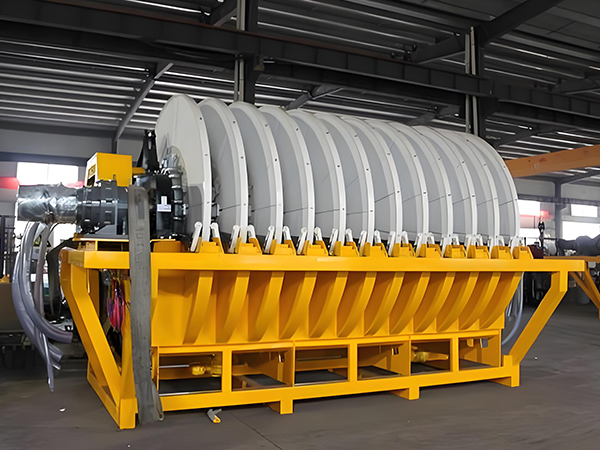
2. The filter disc is composed of 28 polypropylene sector plates. The material features high temperature resistance and acid/alkali resistance, with each sector plate weighing only 15 kg, making it lightweight and practical. The sector plates are fixed by locking rings welded to the central shaft, allowing convenient assembly and disassembly during filter cloth replacement, greatly improving maintenance efficiency.
3. The bearing housing bush and liner are bonded together with epoxy resin and reinforced with countersunk copper screws. The liner adopts powder metallurgy sintered copper-based dry friction material (oil-retaining bearing). Its surface oil storage holes retain lubricant for a long service life; the equipment can operate continuously for 3–6 months with a single lubrication, effectively reducing failure rates and labor intensity.
4. The tank adopts a bottom feed design, which fundamentally eliminates slurry sedimentation. This enables truly agitation-free operation during filtration and ensures stable production.
5. The reducer is connected to the worm shaft via a MAL-type safety friction coupling (torque-limiting coupling) with an intermediate friction drive unit. In the event of equipment overload, this unit slips accurately to provide reliable overload protection and precise stop positioning.
6. The scraper is made of strong alkali-resistant and high-temperature-resistant plastic instead of traditional steel, significantly reducing abrasion to the filter cloth and doubling its service life.
7. The equipment is equipped with a PLC control system supporting variable frequency speed regulation and forward/reverse rotation. Operating speed can be freely adjusted within the range of 0.15–5 r/min, offering flexible operation to adapt to various production requirements.
8.The whole machine features excellent sealing performance. Filtration, drying and discharge are carried out in a fully enclosed state, ensuring a clean, leak-free on-site environment and complying with environmental protection requirements.