 English
 日本
日本 한국인
한국인 Français
 Deutsch
 español
 Italiano
 Portugal
 Việt Nam
 türkiye
 عرب
عرب Русский
 čeština
 แบบไทย
 Eesti
Eesti Gaeilge
 Hmoob
Hmoob íslenskur
 Cymraeg
 български
 اردو
اردو Polski
 Hrvatski
 українська
 bosanski
 فارسی
فارسی lietuvių
 latviski
 עִברִית
 Română
 Ελληνικά
 dansk
dansk Magyar
 norsk
norsk Suomalainen
 Nederlands
 svenska
 slovenský
 Slovenščina
 हिंदी
हिंदी Indonesia
 Melayu
 Malti
Malti Kreyòl ayisyen
 català
 বাংলা
বাংলা Српски
 o'zbek

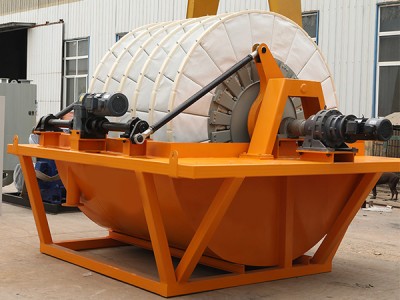
Vacuum disk filters operate with a set of combined sector filter discs. Under a vacuum negative pressure environment, the equipment continuously completes the full process of filter cake formation, material dewatering and automatic discharging, featuring high automation and continuous operation performance. Currently, the industry offers a wide range of filter equipment including vacuum drum filters, vacuum belt filters and ceramic disk filters. During the equipment selection phase of a project, accurately clarifying the application advantages and technical limitations of different filter types can fundamentally avoid selection mismatches and ensure stable and full-capacity operation of the production line.
Actual Working Conditions of Vacuum Disk Filters
Most customers fall into a typical misconception during equipment selection: they believe vacuum disk filters feature universal adaptability and can handle all types of slurry materials. However, in practical engineering applications, this equipment has definite material adaptation ranges and working condition boundaries. Operation beyond rated working conditions is the fundamental cause of insufficient production capacity, high filter cake moisture content and frequent equipment failures.
Applicable Working Scenarios of Vacuum Disc Filters
High-flow slurry conditions with medium and coarse particles and fast sedimentation speed
The vacuum disk filter delivers excellent adaptability to medium-to-coarse-grained slurries with good sedimentation performance, such as iron concentrate, copper concentrate, washed coal concentrate, and various tailings. It is applicable to slurry concentrations ranging from 20% to 60%. Capable of meeting high-flow and continuous solid-liquid separation requirements, the equipment features large processing capacity per floor area and outstanding overall production efficiency, serving as the core dehydration equipment for bulk mineral slurries.
Project scenarios with limited plant space and compact layout requirements
Under the same filtration area, the vertical disc structure of the vacuum disk filter occupies far less floor space than vacuum belt filters and plate and frame filter presses. It is perfectly suitable for old plant renovation, new projects with compact workshop space and limited site volume ratio. The equipment can maximize the available filtration area within minimal floor space, fully meeting the layout demands of space-constrained working conditions.
Conventional dehydration scenarios prioritizing controlled capital investment and simple operation & maintenance
The vacuum disk filter requires no auxiliary systems such as complex acid cleaning or ultrasonic cleaning. It features a simple overall structure, high automation level and low maintenance threshold. It is ideal for projects that do not require extremely strict filter cake moisture content (allowing standard moisture ranges), and focus more on controllable equipment investment, hassle-free later-stage maintenance and stable continuous operation of production lines.
Abrasive material conditions prone to clogging precision filter media
For materials with high coarse particle content and abrasive properties, the filter cloth equipped on vacuum disk filters offers better particle impact resistance and wear resistance compared with precision filter media such as ceramic filter plates. It effectively avoids medium damage and frequent clogging, reduces the frequency of medium replacement and downtime maintenance costs, and is highly suitable for dehydration operations of high-abrasive coarse slurries.
Scenarios Not Recommended for Vacuum Disk Filter Application
Working conditions with ultra-fine, high-viscosity colloidal and muddy materials
For materials dominated by ultra-fine powder, colloids and high-viscosity sludge, the extremely small particle size and high specific filtration resistance will easily cause filter cloth blinding during operation. Even by increasing the vacuum negative pressure of the equipment, the dewatering efficiency and filter cake moisture content can hardly be improved, failing to meet the designed production requirements.
Working conditions requiring extremely high filtrate clarity
Vacuum disk filters adopt filter cloth as the filtration medium with limited interception precision. Fine particles tend to penetrate the filter cloth and result in turbid filtrate. For scenarios requiring zero impurities and ultra-high clarity of filtrate, ceramic disk filters are highly recommended, while vacuum disk filters are not suitable.
Working conditions requiring counter-current washing processes
The vertically arranged filter discs of vacuum disk filters form thin filter cakes with short retention time, making sufficient counter-current washing impossible and resulting in poor washing performance. For projects with material washing requirements, vacuum drum filters or vacuum belt filters are the preferred options instead of disk-type filters.
Most underperformance issues of commissioned filtration projects are not caused by equipment quality defects, but by working conditions and material properties beyond the equipment’s adaptive boundaries. During procurement and selection, purchasers shall not rely merely on theoretical parameters, filtration area and equipment quotation. It is necessary to sort out core data in advance, including material D50 particle size, slurry concentration, pH value, slurry temperature, and target filter cake moisture content. If conditions permit, conducting small-scale filtration tests is recommended. The equipment specification shall be determined based on measured data such as filter cake thickness, moisture content and processing capacity per unit area, so as to fundamentally avoid selection mismatch risks.
Horizontal Comparison Between Vacuum Disk Filters and Similar Equipment for Optimized Selection
1. Vacuum Disk Filter vs Ceramic Disk Filter
The two types of equipment feature similar external structures but adopt completely different filtration media, which directly determines their capital investment requirements, operational and maintenance costs, and maximum dewatering performance limits.
| Comparison Items | Vacuum Disk Filter (Filter Cloth Media) | Ceramic Disk Filter |
| Filtration Media | Adopts nylon or polyester filter cloth, structurally supported by sector filter plates. | Equipped with microporous ceramic filter plates as the core filtration medium. |
| Capital Investment Cost | Low overall equipment cost with low upfront capital investment and minimal project financial pressure. | High overall equipment cost, 40% to 60% higher than conventional vacuum disk filters. |
| Material Tolerance Adaptability | Good resistance to particle impact; not easily clogged by coarse-grained materials. Prone to filter cloth blinding when processing ultra-fine materials. | Ideal for ultra-fine particle materials. Hard coarse particles may cause impact damage to ceramic plates; organic matter and ions easily form scaling and block micropores. |
| Filtrate Quality | A small quantity of fine particles may penetrate the filter cloth, resulting in moderate filtrate clarity. | Delivers high filtrate clarity and solid interception rate; the filtrate can be directly reused. |
| Daily Maintenance | Filter cloth replacement is simple and easy to operate. The replacement cycle is 3 to 6 months, subject to actual wear conditions. | Mandatory configuration of acid cleaning and ultrasonic cleaning systems is required. Ceramic filter plates need replacement every 1 to 2 years with high spare parts costs. |
| Applicable Positioning | Suitable for projects pursuing large processing capacity, controllable equipment costs, and dehydration of mainly coarse-grained materials. | Designed for fine-grained material processing projects with strict requirements on filter cake moisture content and filtrate quality. |
Many buyers hold a common misconception that ceramic disk filters are always superior to conventional vacuum disk filters. For materials with a high proportion of coarse particles, blindly choosing ceramic disk filters will lead to impact damage to ceramic filter plates and frequent acid cleaning operations, resulting in a higher full life cycle cost in the long run.
Vacuum Disk Filter
Strength: Features large filtration area per unit floor space, suitable for ultra-high processing capacity working conditions.
Weakness: Poor filter cake washing performance.
Vacuum Drum Filter (Scraper / Filter Cloth Discharge Type)
Strength: Equipped with mature filter cake washing technology, ideal for processing viscous materials.
Weakness: Requires larger floor space to achieve the same processing capacity compared with vacuum disk filters.
Vacuum Disk Filter
Strength: Enables continuous dewatering with a compact and space-saving structure.
Weakness: Produces thin filter cakes and is not applicable for thorough washing of thick filter cake layers.
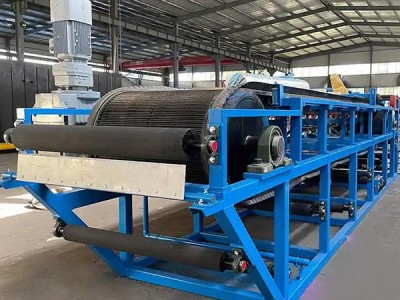
Vacuum Belt Filter
Strength: Supports sufficient filter cake washing and complete multi-stage counter-current washing processes.
Weakness: The equipment features an elongated body structure, requiring sufficient reserved longitudinal space in the workshop.
Key Parameters for Long-Term Stable Operation (Beyond Filtration Area)
1. Distribution Head Sealing Structure
As the core vulnerable component of vacuum disk filters, the distribution head switches working stations for filtration, dewatering, and blowback discharging. The sealing surface material and spring compression structure directly determine the vacuum leakage rate. Wear on the distribution head seal will result in insufficient overall vacuum degree. Even with an oversized vacuum pump, the filter cake moisture content will still exceed the standard. During procurement, verify the friction pair material of the distribution head and confirm whether it is equipped with a wear compensation structure to reduce subsequent maintenance frequency.
2. Tank Agitation Mechanism Selection
Mineral slurry features fast sedimentation speed. Insufficient agitation will cause sludge deposition at the tank bottom, leading to uneven slurry adsorption and excessively thin filter cakes on partial filter discs. Swing-type agitators are preferred for high-sedimentation slurries, as they effectively reduce material deposition compared with conventional blade agitators. For corrosive working conditions, the material of the tank and filter disc frame must be strictly verified; ordinary carbon steel is not applicable for acidic slurries.
3. Blowback Discharge System Matching
Vacuum disk filters strip filter cakes from filter cloth through instantaneous compressed air blowback. Blowback pressure and timing control directly determine the discharge efficiency. For viscous material conditions, simply increasing blowback pressure is ineffective; parameters must be matched with filter cloth material, and auxiliary scrapers can be equipped for specific working scenarios. Incomplete discharge causes continuous material accumulation on the filter cloth surface and results in rapid filter cloth blinding.
4. Vacuum System Configuration — Larger Vacuum Pumps Do Not Equal Better Performance
Many buyers blindly select vacuum pumps with excessive pumping speed. In actual production, vacuum pipeline leakage and distribution head air leakage are the main causes of insufficient vacuum degree. Priority shall be given to improving overall equipment tightness before matching vacuum pump specifications. Meanwhile, a properly arranged gas-liquid separator is essential to prevent filtrate backflow and vacuum pump damage.
5. Customized Filter Cloth Material Selection
Filter cloth is not a universal component. Wear-resistant nylon filter cloth is suitable for highly abrasive mineral slurries, while acid-resistant polyester filter cloth is applied for acidic working conditions. Excessively large filter cloth openings allow fine particle penetration, whereas excessively small openings easily cause cloth blinding. Professional manufacturers shall provide customized filter cloth selection based on material particle size and pH value, instead of adopting a unified standard filter cloth for all working conditions.
Common Fault Causes and Key Maintenance Points After Operation
On-site frequent faults of vacuum disk filters are mainly categorized into three types: excessively high filter cake moisture content, filter cloth blinding, and incomplete cake discharge. Most users tend to attribute these problems to equipment quality defects. In fact, the vast majority of issues result from improper system matching and insufficient parameter commissioning, rather than inherent faults of the equipment itself.
Persistently High Filter Cake Moisture Content
In addition to conventional vacuum leakage failures, priority should be given to checking the slurry immersion ratio of filter discs and main shaft rotating speed. Excessively fast rotating speed greatly shortens the time for filter cake formation and negative-pressure dewatering, leading to substandard filter cake moisture even if the vacuum degree reaches the rated value. For fine-particle materials, proper dosing of flocculants at the front process to improve filter cake air permeability is more effective than blindly increasing vacuum pump displacement. Furthermore, excessively high vacuum degree should be avoided. Over-high vacuum may cause filter cake cracking and air short-circuiting, which weakens dewatering performance and increases unnecessary power consumption.
Rapid Filter Cloth Blinding and Short-Term Capacity Attenuation
For materials with high fine sludge and colloid content, conventional blowback discharge cannot completely clean the filter cloth, resulting in pore blockage and continuous production capacity decline. For such working conditions, installation of an on-line high-pressure flushing system is recommended. In addition, excessive dosing of flotation agents and flocculants in the upstream process will leave residual chemicals that block filter cloth pores. Optimizing the front-end process flow is essential to eliminate cloth blinding fundamentally.
Low Discharge Efficiency and Frequent Filter Cloth Sticking
In cases of material sticking and incomplete cake discharge, firstly calibrate the blowback pressure and blowing timing, and verify whether the selected filter cloth matches the actual material working conditions. For extremely viscous materials, parameter adjustment delivers limited improvement, indicating poor adaptability of vacuum disk filters. It is recommended to switch to alternative filtration equipment such as vacuum drum filters or vacuum belt filters.
Unlike ceramic disk filters that require complicated acid cleaning and ultrasonic cleaning procedures, vacuum disk filters only require basic routine inspection for daily maintenance. Key inspection items include regular check of distribution head seal wear, operating clearance of the agitation mechanism, and timely detection of filter cloth damage and aging. Meanwhile, the tank shall be completely emptied after equipment shutdown to prevent slurry sedimentation and solidification, which may cause equipment jamming and filter cloth blockage.
Additional Key Considerations for Procuring Vacuum Disk Filters
Based on extensive project experience with mining and chemical industry clients, there are many easily overlooked key factors beyond the equipment itself during vacuum disk filter selection and procurement.
Localized Adaptation of Electrical Control Systems
The equipment electrical control system shall comply with local voltage and frequency standards of the project site. The PLC system supports multi-language switching, and is equipped with complete English-version operation manuals, equipment drawings and standardized spare parts lists to meet on-site operation, filing and maintenance requirements for clients.
01
Universal and Standardized Configuration of Wear Parts
High-frequency vulnerable parts including distribution head seals, filter cloths and bearings adopt internationally universal standard specifications as priority configuration. This enables clients to purchase and replace spare parts locally, eliminating long-term reliance on cross-border delivery from manufacturers. It effectively shortens the spare parts replacement cycle and reduces clients’ operation and maintenance costs.
02
Comprehensive Remote and On-Site Commissioning Service Support
Most construction sites are understaffed with professional technical personnel. Qualified equipment manufacturers shall provide standard remote commissioning and online fault diagnosis services, as well as remote installation guidance and parameter debugging support. These professional services solve common on-site problems including difficult technical implementation and delayed fault handling for project operation.
03
Upgraded Overall Equipment Anti-Corrosion Technology
For harsh working conditions such as high temperature and high humidity, heavy salt spray in mining areas, or highly corrosive material slurries, all carbon steel structures of the equipment shall be treated with enhanced heavy-duty anti-corrosion coating. This improves the equipment’s rust resistance, adapts to severe overseas operating environments, and extends the service life of outdoor installed equipment.
04
Conclusion: When is a Vacuum Disk Filter the Optimal Solution
In actual equipment selection and procurement, simply comparing filtration area and unit equipment quotation is not advisable. A three-step practical evaluation process is recommended:
First, verify core material parameters including particle size, slurry concentration and corrosiveness to confirm that all indicators are within the equipment’s adaptive working boundaries.
Second, check whether the distribution head sealing structure, agitation mechanism, blowback discharge system and filter cloth material are fully matched with on-site working conditions.
Third, comprehensively evaluate the full life cycle cost, including operational power consumption, wear parts loss, maintenance difficulty, as well as the universality of spare parts and the convenience of local procurement.
If conditions permit, laboratory material testing is highly recommended. Selection decisions shall be based on measured data of actual processing capacity and filter cake moisture content, so as to fundamentally avoid underperformance after official commissioning.