 English
 日本
日本 한국인
한국인 Français
 Deutsch
 español
 Italiano
 Portugal
 Việt Nam
 türkiye
 عرب
عرب Русский
 čeština
 แบบไทย
 Eesti
Eesti Gaeilge
 Hmoob
Hmoob íslenskur
 Cymraeg
 български
 اردو
اردو Polski
 Hrvatski
 українська
 bosanski
 فارسی
فارسی lietuvių
 latviski
 עִברִית
 Română
 Ελληνικά
 dansk
dansk Magyar
 norsk
norsk Suomalainen
 Nederlands
 svenska
 slovenský
 Slovenščina
 हिंदी
हिंदी Indonesia
 Melayu
 Malti
Malti Kreyòl ayisyen
 català
 বাংলা
বাংলা Српски
 o'zbek

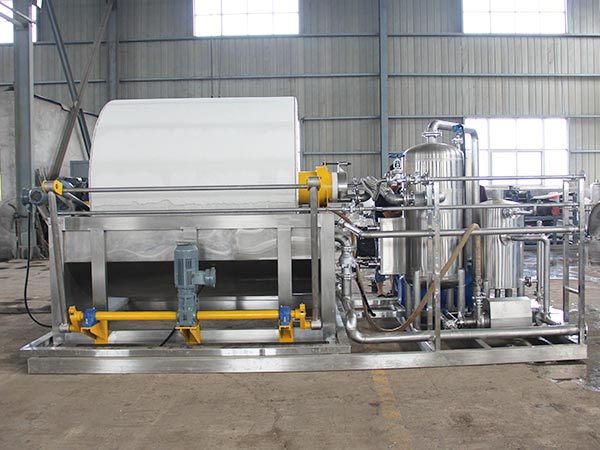
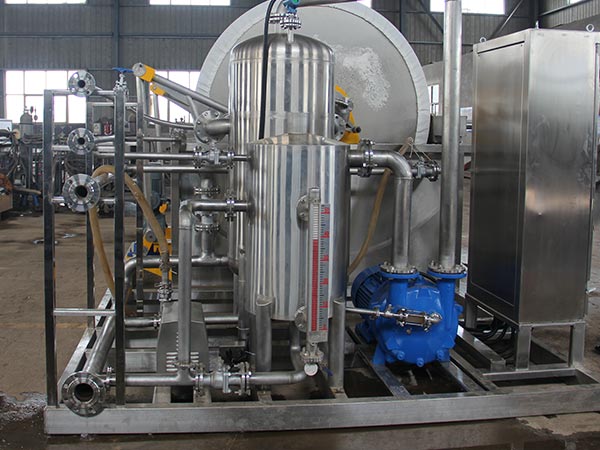
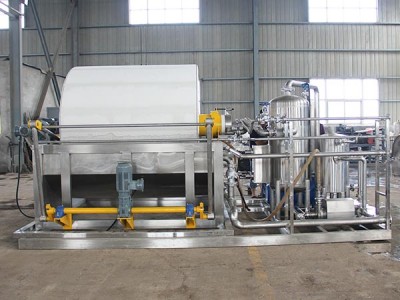
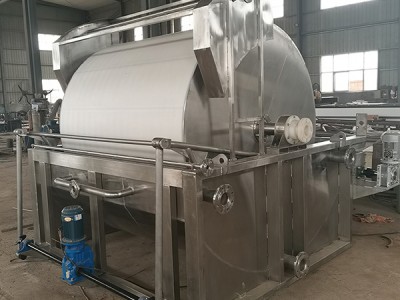
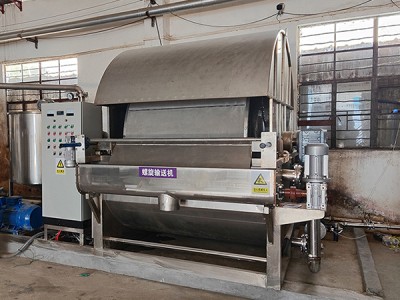
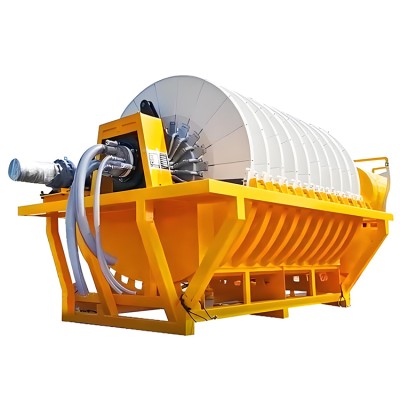
Chemical filter are solid-liquid separation devices specifically designed for chemical production scenarios. Their core function is to separate solid particles from liquid media within solid-liquid mixtures, meeting chemical process requirements for material purity, recovery rates, or environmental discharge standards.
Chemical filter fall under continuous vacuum filtration equipment. Their core structure consists of a rotating porous drum covered with a filter medium, where vacuum suction drives the solid-liquid separation process. Compared to batch filtration equipment, they are better suited for large-scale continuous production in chemical manufacturing.
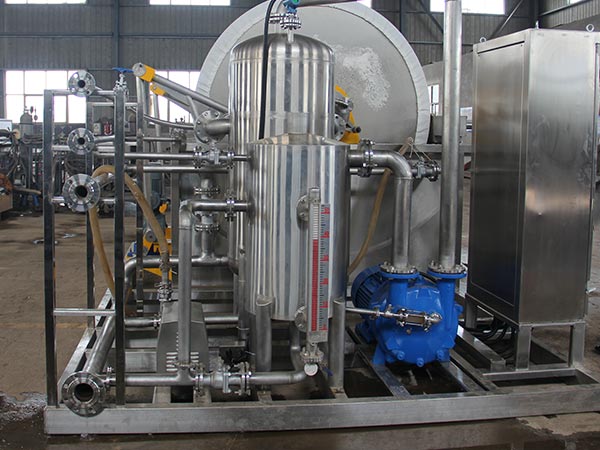
Advantages of Chemical Filtration Machines:
· Operation Mode: Continuous automated operation, capable of unattended operation with PLC control systems.
· Processing Capacity: High single-unit throughput with low filter cake moisture content.
· Material Compatibility: Drum, slurry tank, and other material-contacting components can be constructed from 304/316L stainless steel, Hastelloy, titanium alloy, or lined with rubber/plastic.
· Media Flexibility: Supports interchangeable filter media with varying materials and pore sizes.
· Energy Efficiency & Environmental Performance: Controllable vacuum system energy consumption, high filter cake dryness, and recyclable wash liquids.
Structural Components of Chemical filter:
| Component Name | Function Description | Material Selection |
| Drum body | Horizontally rotating cylinder with perforated surface, internally partitioned into multiple fan-shaped filter chambers. | Carbon steel, stainless steel (304/316L), titanium alloy (depending on corrosion resistance requirements) |
| Distribution Head | Enable dynamic switching between the filter chamber and the vacuum/compressed air system to ensure synchronized operation across all processes. | Wear-resistant alloy, PTFE seal |
| Slurry Tank and Agitator | Holds the slurry to be filtered and agitates it to prevent solid particles from settling. | Lined with rubber/anti-corrosion coating, equipped with frame-type/paddle-type agitators |
| Filter media | Typically filter cloth, with metal mesh used in certain special operating conditions. | Acid and alkali resistant, high temperature resistant, wear-resistant material; select based on material properties. |
| Washing System | Spray system, providing countercurrent/co-current scrubbing solution | Stainless steel pipe + nozzle, adjustable flow and pressure |
| Transmission and Control System | Drive the drum to rotate at a constant speed, controlling parameters such as vacuum level and wash volume. | Speed-reducing clutch + variable frequency control, PLC automation system |
Filtration Methods for Chemical Filters:
Based on the filtration mechanism and material characteristics, chemical filters primarily employ the following two filtration methods:
1. Surface Filtration Method:
Core Principle: Solid particles are retained on the surface of the filter medium, forming a filter cake layer that itself becomes the primary filtration barrier.
Applicable Scenarios: Chemical production involving materials with larger solid particles (particle size > 1μm) and higher slurry concentrations, such as pesticide technical grade slurry, dye crystallization slurry, and chemical fertilizer granulation mother liquor.
2. Depth Filtration Method:
Core Principle: Solid particles enter the pores within the filter medium, achieving separation through adsorption and retention without significant filter cake formation.
Applicable Scenarios: Materials with fine solid particles and low slurry concentration, such as catalyst recovery in fine chemicals and pretreatment of chemical wastewater.
Why is filtration so crucial to the chemical industry?
Filtration stands as one of the core unit operations in chemical production, with its significance manifesting across four dimensions that directly impact product quality, production efficiency, and corporate profitability.
1. Product Purity Control: Chemical products demand stringent impurity levels. Filtration effectively removes solid contaminants from materials, ensuring product purity meets industry standards or customer specifications.
2. Process Efficiency Enhancement: Continuous filtration equipment enables uninterrupted material processing, aligning with the continuous operation requirements of chemical production lines. This eliminates the time-consuming start-stop cycles of batch equipment, boosting overall production efficiency.
3. Resource Recovery and Cost Savings: Filtration recovers valuable solids or liquid phases from slurries, enabling resource recycling and reducing raw material consumption and production costs.
4. Environmental Compliance: Wastewater and residues from chemical production often contain hazardous substances. Filtration reduces suspended solids in wastewater or enables dry separation of residues, meeting environmental discharge standards and preventing regulatory penalties.
Filter Media
Filter media serve as the core consumables in chemical filtration equipment, directly impacting filtration efficiency and filter cake quality. For chemical processing applications, commonly used filter media and their selection criteria are outlined below.
Common Filter Media Types:
1. Synthetic Fiber Filter Cloth: Materials include polyester, polypropylene, nylon, and polytetrafluoroethylene (PTFE). Among these, PTFE filter cloth resists strong acids and alkalis, making it suitable for highly corrosive chemical materials. Polypropylene filter cloth resists organic solvents and is suitable for solvent-based slurries.
2. Metal mesh: Stainless steel or titanium alloy materials with uniform pore size and high strength, capable of repeated cleaning and reuse. Suitable for high-temperature, high-viscosity materials.
3. Filter Paper/Filter Plates: Made of cellulose or glass fiber, suitable for depth filtration of fine particles in fine chemical processing.
Core Criteria for Media Selection:
1. Chemical properties of the material;
2. Particle size and shape of solids;
3. Filtration temperature and pressure;
4. Difficulty of filter cake removal.
Application Fields of Chemical filter
With their continuous operation, high efficiency, and adaptability, these machines are widely used across multiple chemical sectors.
1. Pesticide Chemicals: Solid-liquid separation of technical-grade slurries for insecticides, fungicides, herbicides, etc., along with filter cake washing and drying.
2. Dye and Pigment Chemicals: Filtration of crystalline slurries for reactive dyes, disperse dyes, organic pigments, etc., to separate solid products from mother liquors.
3. Fertilizer Chemicals: Filtration and recovery of granulation mother liquors in fertilizer production (urea, ammonium phosphate, potassium chloride, etc.), plus purification of fertilizer crystals.
4. Fine Chemicals: Solid-liquid separation for pharmaceutical intermediates, food additives, fragrances, and other specialty chemicals to ensure product purity.
5. Petrochemicals: Solid-liquid separation during crude oil dehydration, residual oil filtration, lubricant refining, and catalyst recovery/regeneration.
6. Environmental Protection: Pretreatment of chemical wastewater (removing suspended solids) and drying/separation of industrial residues to meet environmental discharge standards.
Common Troubleshooting
Fault Symptoms | Possible causes | Solution |
Decrease in filtration rate | Filter cloth clogging/damage; | Clean/replace filter cloth; |
Insufficient vacuum pressure; | Inspect vacuum pump and seals; | |
Abnormal slurry concentration. | Adjust feed concentration. | |
The moisture content of the filter cake is too high. | Insufficient spin time; | Reduce rotational speed; |
Inadequate vacuum pressure; | Inspect the vacuum system; | |
Excessive washing. | Reduce the amount of washing water. | |
Incomplete unloading | Blade wear; | Replace the scraper blade; |
Insufficient backflush pressure; | Increase the backflush pressure; | |
High filter cake stickiness. | Switch to a folding belt discharge system. | |
The filtrate is turbid. | Filter cloth damage; | Repair/replace filter cloth; |
Uneven precoat; | Reapply precoat; | |
Excessively fine slurry particles. | Increase the dosage of filter aids. |
Hot Tags: