 English
 日本
日本 한국인
한국인 Français
 Deutsch
 español
 Italiano
 Portugal
 Việt Nam
 türkiye
 عرب
عرب Русский
 čeština
 แบบไทย
 Eesti
Eesti Gaeilge
 Hmoob
Hmoob íslenskur
 Cymraeg
 български
 اردو
اردو Polski
 Hrvatski
 українська
 bosanski
 فارسی
فارسی lietuvių
 latviski
 עִברִית
 Română
 Ελληνικά
 dansk
dansk Magyar
 norsk
norsk Suomalainen
 Nederlands
 svenska
 slovenský
 Slovenščina
 हिंदी
हिंदी Indonesia
 Melayu
 Malti
Malti Kreyòl ayisyen
 català
 বাংলা
বাংলা Српски
 o'zbek

Product Description
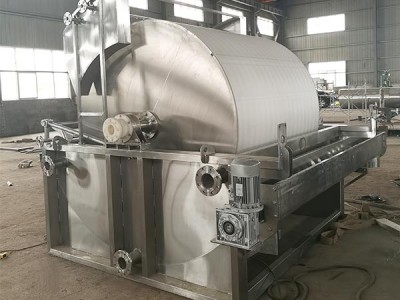
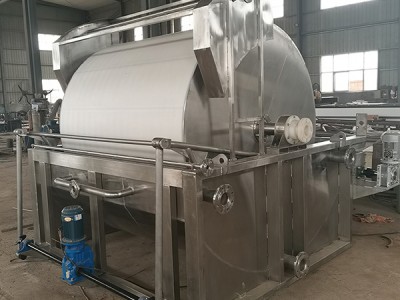
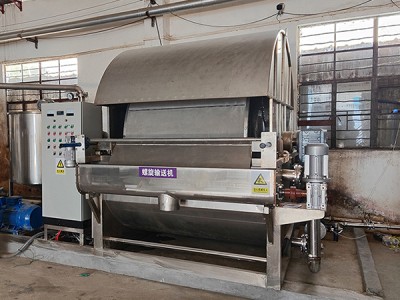
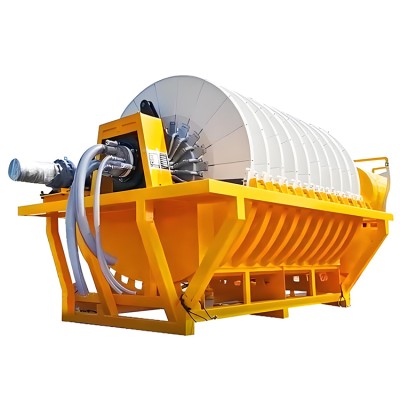
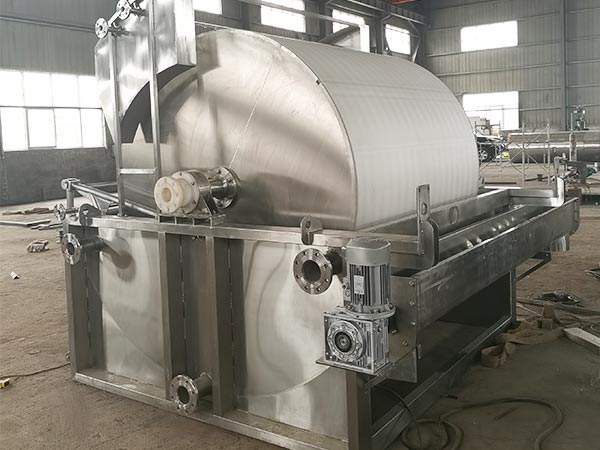
The potato vacuum filter is a solid-liquid separation device used in potato starch processing. It employs vacuum suction to rapidly draw moisture through filter cloth from potato pulp, achieving efficient separation of starch from the slurry. Featuring a compact structure and high automation, this equipment is suitable for medium to large-scale potato deep-processing production lines, significantly enhancing production efficiency and product quality.
After undergoing washing, crushing and filtering, sand and mud removal, and concentration and refining, potatoes proceed to the starch dehydration stage. The refined starch slurry contains excessively high moisture content and cannot be directly dried. Dehydration treatment is required to reduce the moisture content in the starch slurry, ensuring the quality of the finished starch product.
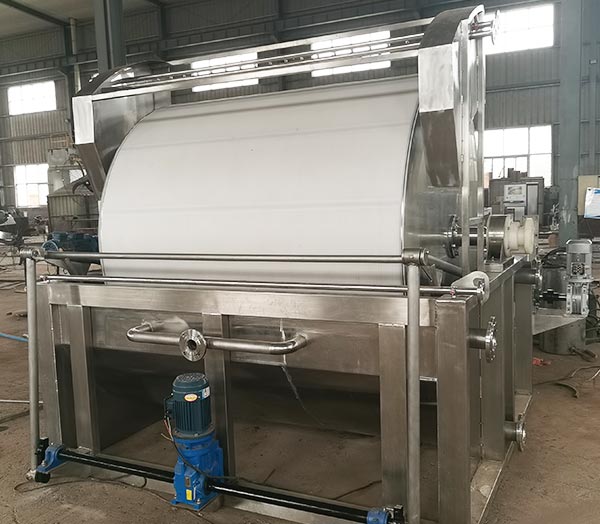
Working Principle of Potato Vacuum Filter:
Adsorption Stage: A variable-speed motor drives the hollow drum to rotate slowly within the pulp tank. The vacuum pump creates a negative pressure environment of -0.04 to -0.09 MPa inside the drum. Under pressure differential, the starch slurry adsorbs onto the surface of the drum filter cloth, forming a uniform starch pre-coat layer.
Dehydration Stage: As the drum conveys the material into the dehydration zone, the vacuum is maintained. Free water between starch particles passes through the pre-coat and filter cloth, entering the liquid-gas separator via suction pipes and distribution valves. Here, liquid and gas are separated: liquid is discharged by a centrifugal pump, while gas is purified by the vacuum pump before being vented.
Discharge Stage: When the starch filter cake reaches the preset thickness, the drum moves to the discharge zone. A high-hardness alloy scraper removes the thickened, flake-like starch. The filter cloth undergoes automatic cleaning before commencing the next cycle, requiring no manual intervention throughout the entire process.
Product Advantages
High Separation Efficiency
Strong vacuum suction and rapid filtration significantly reduce dehydration time.
Superior Starch Quality
Gentle filtration minimizes starch particle damage, enhancing starch whiteness and purity.
High Automation
Features automatic feeding, sludge discharge, and cleaning functions to minimize manual intervention.
Stable Operation
Smooth running with low noise enables continuous long-term operation.
Easy Maintenance
Simple filter cloth replacement and straightforward equipment structure minimize maintenance costs.
Energy and Water Efficiency
Significantly reduces energy and water consumption compared to traditional dehydration methods.
Performance Parameters
| Throughput | 5-25m³/h |
| Vacuum level | -0.06~-0.09MPa |
| Filter cloth velocity | 0.5-3m/min |
| Power | 5.5–30 kW (depending on model) |
| Drive Method | Variable Frequency Drive |
| Material | The main body is constructed of SUS304 stainless steel, offering corrosion resistance and easy cleaning. |
| Weight | Approximately1,500–4,000kg |
Scope of Application:
The potato dehydrator is suitable for drying various starches, primarily including: sweet potato starch, potato starch, cassava starch, mung bean starch, corn starch, wheat starch, kudzu starch, etc. It can also be used for drying other heat-sensitive powdered or flaked materials requiring rapid drying, as well as for drying and dehumidifying powdered materials in pharmaceutical, chemical, food, building materials, and plastics industries.
Multi-domain Food Application Expansion:
Grain Deep Processing: Corn syrup filtration, gluten dehydration, impurity separation in rice flour production.
Fruit and Vegetable Processing: Juice and vegetable juice clarification filtration, fruit pulp dehydration and concentration.
Sugar Production: Impurity filtration of fructose syrup, maltose, and glucose solutions to enhance syrup clarity.
Other Applications: Solid-liquid separation in soy products, wort filtration in brewing, dehydration in modified starch production.
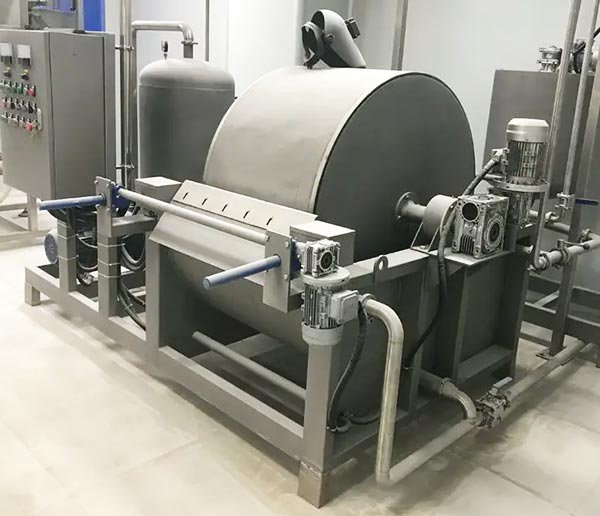
Potato Dehydrator
Different root crops vary in internal composition, botanical properties, and starch content. To maximize starch extraction rates during processing, equipment specifications and types must be tailored to the botanical characteristics of each raw material. Custom-designed equipment is then deployed for actual production. Only through this approach can the advantages of filter processing be fully realized—delivering high efficiency, energy savings, time reduction, labor reduction, and superior quality.
Following the cleaning, crushing and filtering, sand and mud removal, and concentration and refining stages, the starch enters the dewatering process. The refined starch slurry contains excessively high moisture content and cannot be dried directly; it requires dewatering treatment. This significantly reduces the moisture content of the starch slurry, facilitating drying and ensuring the product quality of the starch.
Hot Tags: